MacBook Neo and iPhone 17e: Apple’s new budget tier

Why Apple's new entry devices matter
Apple has quietly expanded its hardware lineup with a clear aim: capture buyers who previously avoided the company because of price. The headline device is the MacBook Neo, introduced at $599 and described inside Apple as its first true low-end laptop. At the same time Apple refreshed the iPhone portfolio with the iPhone 17e and rolled out updated MacBook Pro, MacBook Air, Studio Display and iPad Air models. These moves are more strategic than incremental — they reshape who can buy Apple hardware and how organizations evaluate macOS and iOS deployments.
MacBook Neo: a practical take
At $599, the MacBook Neo targets a segment Apple has largely ceded to Chromebooks and budget Windows laptops. Pricing alone makes it notable; for the first time the company is offering a full macOS experience at a price point that many students, parents and small businesses can realistically budget for.
What this means in practice:
- Affordability without Apple’s usual premium sticker: For buyers wanting macOS, the Neo gives a path in without having to compromise on the Apple ecosystem (iCloud, continuity features, optimized Safari, etc.).
- A fit for common use cases: Expect web-based work, office apps, light photo editing, remote learning and dev tasks like coding in editors or running lightweight command-line tools to be smooth. Heavy video editing or large compilation workloads may still favor higher‑end MacBook Air/Pro models.
- Easier fleet purchases: IT teams with limited budgets (schools, startups, nonprofits) can provision Mac hardware for more users while retaining centralized management through Apple Business/School Manager.
Concrete example: a coding bootcamp replacing aging loaner laptops. The Neo lets the program supply macOS-capable machines for terminal-based development, pair programming, and web app testing, while keeping the hardware spend closer to Chromebook-level budgets.
iPhone 17e: a baseline iPhone
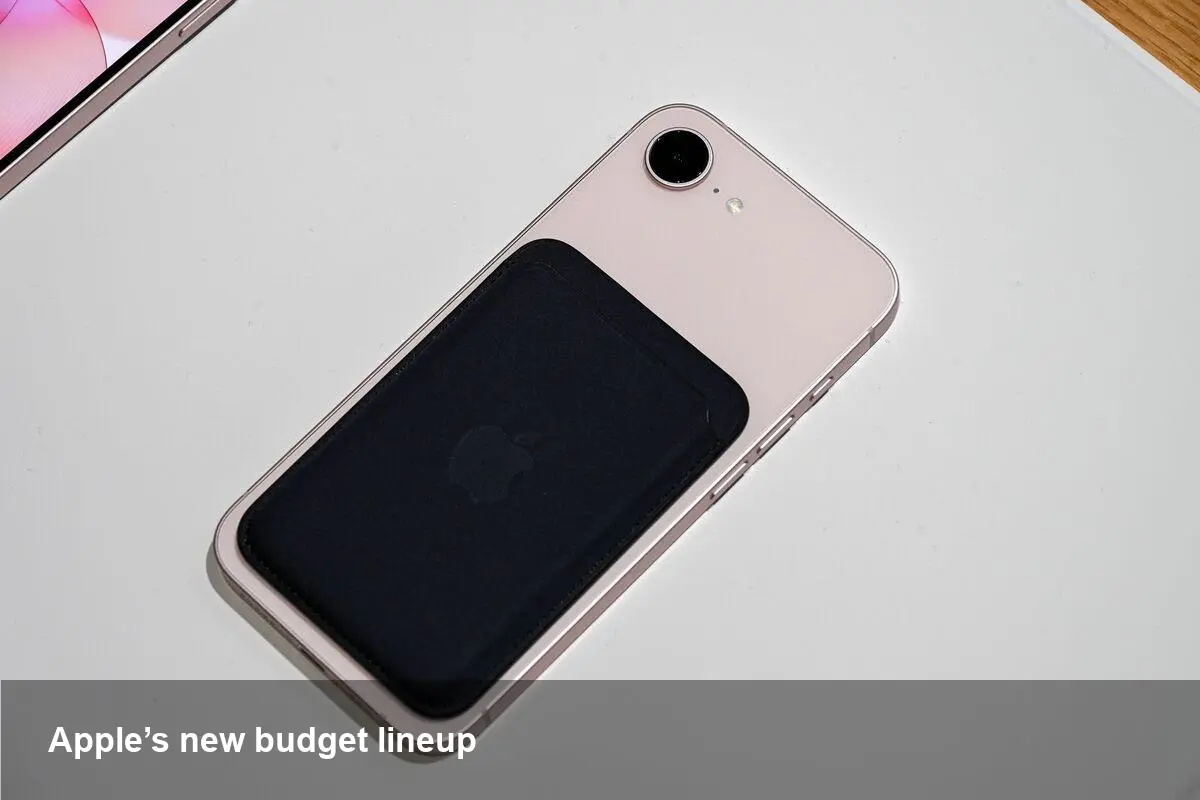
The iPhone 17e acts as a more affordable entry point into the iPhone family. For many users the core benefit is parity in software experience — the same iOS releases, app ecosystem and ecosystem features such as AirDrop, FaceTime and continuity remain intact.
Practical scenarios:
- Families who want a durable, supported iPhone for a child or elder without paying for flagship camera systems.
- Businesses issuing devices for frontline staff where tethering to Apple’s ecosystem matters (device management, secure messaging, app deployment) but flagship performance is unnecessary.
For mobile developers this is important: the 17e becomes another baseline device to test on, representing a slice of hardware with modest performance but full iOS capability.
What this means for developers and IT teams
Developers
- Testing matrix: Add the Neo and 17e to your device matrix for real-world coverage. The Neo demonstrates how macOS behaves on lower-cost hardware, and the 17e represents entry-level iOS performance.
- Optimization lens: Expect more users on modest hardware. App teams should revisit startup times, memory usage, and offline behavior to ensure a good experience on budget devices.
IT and procurement
- Cost-benefit: Buying Macs at sub-$1,000 prices changes the calculus for many organizations. It lowers total-cost-of-ownership barriers where macOS-specific software or workflows are important.
- Management consistency: Businesses can standardize on Apple management tools and benefit from the relatively uniform update cadence of macOS and iOS across premium and entry devices.
Limitations and trade-offs
No product is without compromise. The Neo is built to be accessible, not to dethrone the Pro line. Expect limitations in areas that matter to power users: GPU performance, sustained CPU loads, and advanced display or port options. Battery life will be appropriate for the class but likely shorter under heavy workloads than in Apple’s higher-end machines.
Similarly, the 17e will omit flagship camera and silicon performance. If your workflow depends on high-frequency compute tasks (e.g., AR processing, heavy ML on-device) you’ll still prefer a Pro-class device.
Business and market implications
- Market expansion: Apple is prioritizing market share in segments dominated by cheaper alternatives. This can increase hardware volume and broaden the install base for services like iCloud+, Apple Music, and App Store purchases.
- Competitive pressure: Chromebook makers and low-cost Windows OEMs now face a credible macOS-backed alternative at similar price points. That could trigger feature and value-focused counteroffers.
- Resale and support ecosystems: More affordable Apple devices could shift the used hardware market and widen accessory demand for cases, chargers and enterprise MDM tool integrations.
Three implications to watch in the next 12–18 months
- Higher OS parity expectations: As entry devices get more capable, users will expect the same software updates and features as premium models — pushing Apple to maintain OS parity across price tiers.
- Software optimization becomes more strategic: App developers and Apple itself will need to keep efficiency high so that mainstream apps feel fast on lower-end hardware.
- Education and enterprise adoption accelerates: Lower price points could tip procurement decisions at school districts and SMBs toward macOS, especially where software compatibility and security are priorities.
Who should consider these devices now
- Students and educators who want macOS for curriculum or development work without the premium cost.
- Small businesses needing managed devices with secure, consistent updates.
- Families and first-time iPhone buyers who prioritize the iOS ecosystem over raw hardware performance.
If you’re a power user (pro video editors, 3D artists, or machine learning engineers), stick with the MacBook Air/Pro lines. For everyone else, the MacBook Neo and iPhone 17e open practical, lower-cost doors into Apple’s ecosystem — and that changes the purchasing landscape.
Deciding which device fits your needs will depend on the workloads you run and whether ecosystem benefits outweigh raw specs. For many, these new models will be the tipping point to give Apple a serious look.