Lego’s Smart Brick Brings Lights, Sound to Minifigs

- Key takeaways:
- Lego introduced a sensor-packed Smart Brick and Smart Play platform to add lights, sound, and interactivity to physical builds.
- Three Star Wars Smart Play sets launch March 1 (preorders begin Jan 9): Luke’s X‑Wing ($100), Darth Vader’s TIE Fighter ($70), Throne Room Duel ($160).
- Smart Brick is a 2x4-sized module with a 4.1mm mixed-signal ASIC, LEDs, sensors, a speaker, wireless charging, and a self-organizing BrickNet protocol.
- Lego says the system is not internet-connected, uses encryption and safety controls, but experts warn of residual hacking risks.
What Lego unveiled at CES
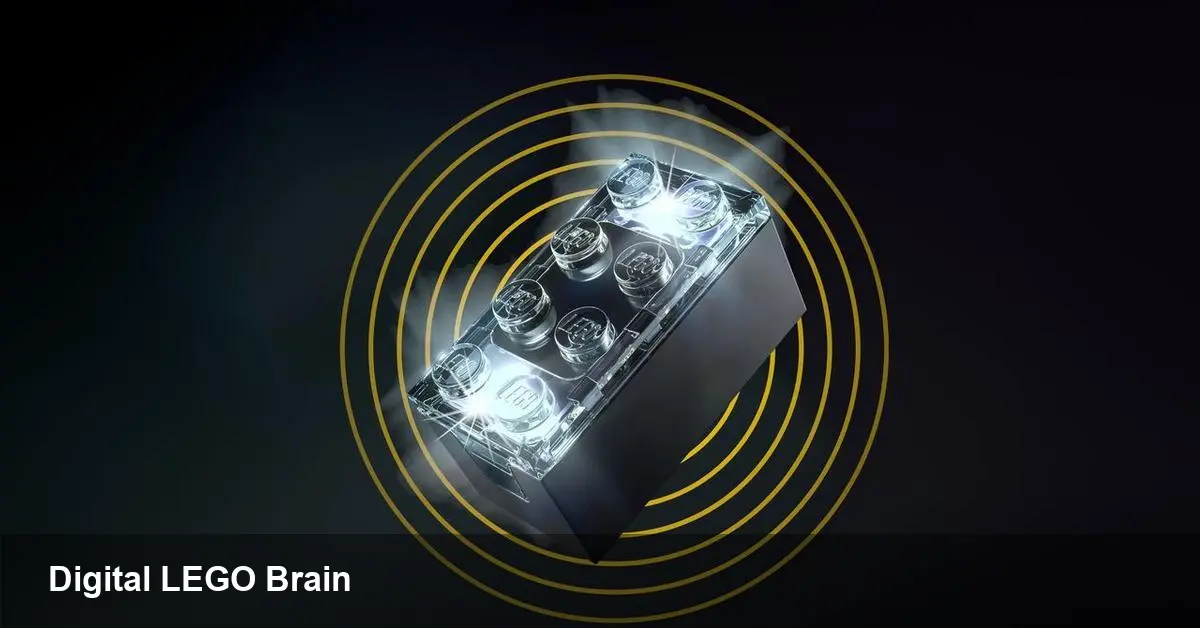
Lego announced Smart Play, a new platform built around a compact, tech-packed Smart Brick that fits like a normal 2x4 brick. The aim is to add reactive lights and sound to builds without requiring screens.
Launch sets, dates, and pricing
Three Star Wars Smart Play kits arrive March 1 and are available for preorder starting January 9. The lineup includes:
- Luke’s Red Five X‑Wing — 584 pieces, two Smart Minifigures, five Smart Tags; $100.
- Darth Vader’s TIE Fighter — 473 pieces; $70.
- Throne Room Duel — 962 pieces, three Smart Minifigures (Vader, Palpatine, Luke); $160.
Each set pairs a central Smart Brick with Smart Minifigures and Smart Tags to trigger scene-appropriate engine noises, lightsaber hums, theme music, and other sound effects.
How the Smart Brick works
The Smart Brick contains a custom 4.1‑millimeter mixed‑signal ASIC that runs Lego’s Play Engine. It packs an LED array, accelerometers, light and sound sensors, a miniature speaker, and a copper coil assembly for tag recognition.
Lego describes a proprietary Brick-to-Brick position system and a Bluetooth-based "BrickNet" protocol that create a self-organizing network between bricks and figures. That design means Lego says no hub or constant app connection is needed during play.
Power and charging
The brick uses an internal battery Lego says will survive long periods of inactivity. To charge bricks without disassembling creations, Lego is offering a wireless charging pad that can power multiple Smart Bricks at once.
Safety, privacy, and development
The Smart Play platform was developed by Lego’s Creative Play Lab with help from Capgemini’s Cambridge Consultants. Lego claims more than 20 patented "world-firsts" in the technology.
Lego stresses the system is not internet-connected and that it includes encryption and privacy controls. Still, play researchers warn that any networked toy can attract security scrutiny. Katriina Heljakka of the University of Turku notes the broader conversation about an "internet of toys" and hacking risks.
Inside Lego, simplicity was a core goal. "We didn't want a power switch on the side, or even a reset button," Tom Donaldson, head of the Creative Play Lab, said, emphasizing the engineering challenge of making the brick reliably invisible in normal play. Julia Goldin, Lego's chief product and marketing officer, added the platform is "completely expandable," designed to encourage repeat and multigenerational play.
Bottom line
With Smart Brick Lego is trying to blend classic tactile play with embedded electronics—keeping builds physical while adding context-aware sound and light. The Star Wars launch will be the first real test of whether the technology enhances, rather than replaces, traditional Lego play.