IXI Autofocus Glasses Could Replace Multifocals Next Year

- Key Takeaways:
- IXI’s prototype glasses use cameraless infrared eye tracking and liquid‑crystal lenses to automatically switch prescriptions.
- The system consumes around 4 milliwatts and uses battery cells similar in size to AirPods for a full day’s use.
- Lenses integrate with existing prescriptions (including astigmatism correction) and still work as normal glasses when unpowered.
- IXI has partnered with Swiss lens-maker Optiswiss and aims for a high-end optician launch after medical certification.
What IXI is building
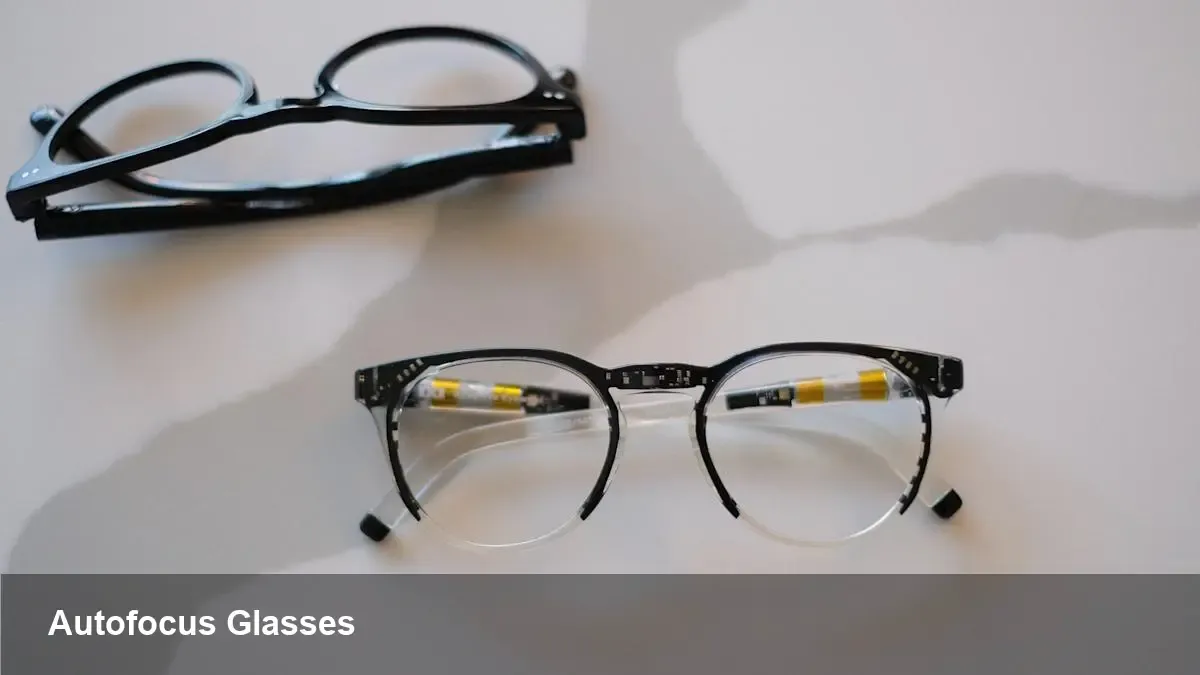
IXI is developing lightweight, stylish autofocus glasses aimed primarily at age-related farsightedness (presbyopia). The startup showed working prototype lenses and 22‑gram prototype frames at CES, positioning the product as a luxury option sold through opticians.
Design and positioning
The electronics—memory, sensors and eye tracker—sit in the front frame and the inner arm near the hinge. Charging connects via a port built into the left hinge, and a single charge is intended to last a full day.
How the autofocus system works
IXI’s system relies on cameraless eye tracking rather than power-hungry cameras. CEO and co‑founder Niko Eiden described a network of LEDs and photodiodes around the lens periphery that use invisible infrared light to measure eye movement and convergence.
Low-power eye tracking
By using a handful of analog infrared channels, IXI avoids the millions-of-pixels processing needed for camera systems. The company reports the tracker consumes roughly 4 milliwatts while detecting gaze, blinking and focus shifts.
Liquid‑crystal lenses
Prototype lenses are thin stacks of liquid crystal and an ITO (indium tin oxide) conductive layer that switch almost instantly into the required prescription. The layers are thin enough to integrate existing prescriptions and provide cylindrical correction for astigmatism.
Practical use and health sensing
When the lenses detect your eyes shifting to a near focus, they switch to the near prescription; when you look farther away, they revert. If the battery runs out, the glasses still function as a standard prescription pair but without the near boost.
Health and behavioral data
IXI’s sensors can also report blink rate, dry eye detection, attentiveness and posture-related information to a companion app. Eiden suggested metrics like blink rate can reflect focus, fatigue or anxiety, potentially enabling future adaptive corrections.
Road to market
IXI has partnered with Optiswiss for lens manufacturing and still needs medical certifications before commercial sales. The company aims to ship its first consumer product next year and will sell through traditional opticians as a premium option.
Outlook
If IXI clears regulatory hurdles and scales production, its cameraless, low-power approach could modernize eyewear for millions with presbyopia and reduce reliance on multifocals and bifocals.