Inside the Galaxy Z Roll 5G: Motorized rollable phone explained

Why the Galaxy Z Roll 5G matters
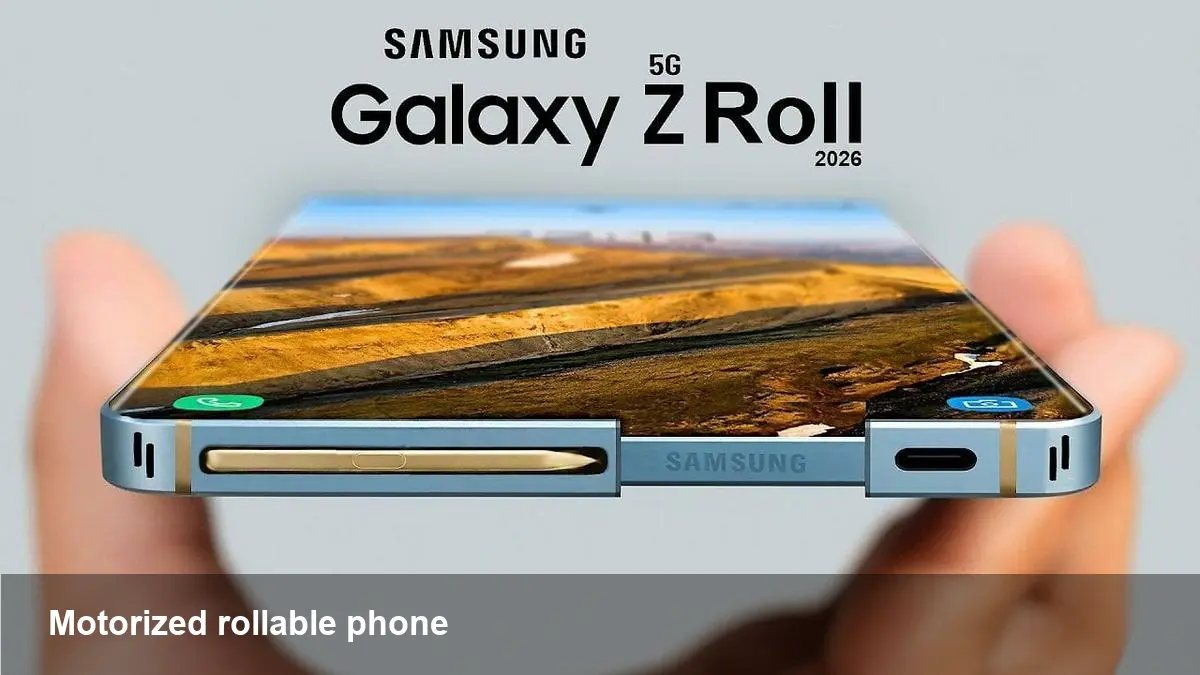
Samsung helped make foldables mainstream with the Galaxy Z Fold and Z Flip lines. The next leap—the rollable phone—aims to move beyond the visible crease and fixed hinge geometry. Leaks around the Galaxy Z Roll 5G indicate two headline specs that underline the engineering trade-offs: a motorized expandable display to remove the fold crease, and an exceptionally large battery (around 8,000 mAh) paired with 100W wired charging.
That combination signals a product built for extended tablet-like sessions, while trying to maintain pocketable form factors. If the rumors are accurate, the Z Roll 5G isn’t just incremental; it’s part of a larger transition in how mobile devices manage flexible screens and power delivery.
How a motorized rollable display changes the device experience
Traditional foldables rely on a hinge that bends the display, which inevitably creates a crease. A motorized rollable display extends or retracts the flexible panel smoothly, so the screen lies flat without a permanent fold line. For users this means:
- A seamless canvas for reading and long-form video. No distracting seam across the middle of the screen.
- Variable display sizes: small for single-hand use, larger for split-screen productivity or media playback.
- Mechanical complexity: motors, rails, and sensors are added components, increasing points of failure and repair cost.
Practical use case: imagine opening a news article while commuting with a compact device, then sliding the display out at your desk to create a 7–8" workspace for split-screen document editing—without switching to a tablet.
The battery and charging trade-offs
An 8,000 mAh battery is unusually large for a phone chassis and suggests Samsung expects heavy use in expanded mode. Pairing that capacity with 100W wired charging shortens refill times but brings considerations:
- Thermal management: fast charging generates heat that must be managed so as not to damage flexible display materials or degrade battery longevity.
- Charge cycle implications: higher power throughput stresses battery chemistry differently; software-managed charging profiles and safeguards are essential.
- Real-world convenience: 100W wired support means near-tablet battery life with phone-level recharge times—valuable for power users who rely on long sessions of streaming, gaming, or editing.
For commuters and professionals who switch between phone and tablet modes during the day, the combo of big battery and fast charging reduces downtime while keeping the device relatively thin when retracted.
What this means for app developers and UI designers
Rollable screens break assumptions baked into many mobile apps. Developers and product managers should start planning for dynamic display width and aspect ratios rather than static sizes.
Concrete changes to consider:
- Responsive layouts that adapt to continuous width changes (not just orientation). Implement fluid grids and breakpoints that can change mid-session as the screen extends.
- State continuity: when the screen is expanded or retracted, apps should preserve context. For example, a video call should keep camera framing and controls in place when the viewport grows.
- Multi-window strategies: use the extra real estate for complementary information (chat + document, timeline + preview) rather than duplicating content.
Android developers should look into WindowManager and Jetpack libraries that support multi-window and foldable features. Testing on emulators and physical devices that can simulate continuous expansion will be vital.
Business implications for OEMs, carriers, and accessory makers
Rollable phones raise new commercial opportunities and challenges:
- Service and warranty: motorized mechanisms require new repair workflows; manufacturers and carriers will need to price service plans accordingly.
- Accessories: cases, stands, and docks must accommodate moving parts and changing dimensions—opportunities for modular accessories that lock the device in an expanded mode.
- Carrier bundles: large batteries and 5G connectivity position these phones as productivity tools; carriers can market them with data plans and device financing aimed at business customers.
Companies that move quickly to optimize UX, create tailored enterprise offerings, or offer convenient servicing may secure early-adopter revenue.
Limitations and practical concerns
No technology is without drawbacks. Expect these issues to surface with early rollable devices:
- Durability: moving parts add failure modes; dust ingress and wear over thousands of cycles are real concerns.
- Thickness and weight: accommodating an 8,000 mAh battery and motor increases device mass relative to conventional phones.
- Cost and repairability: higher bill-of-materials and complex repairs will push retail prices up and raise long-term ownership costs.
Users should weigh how often they’ll actually need the expanded display against these trade-offs before upgrading simply for novelty.
Longer-term implications (three things to watch)
- Platform-level standards: as rollables proliferate, platform vendors and OS teams will introduce APIs and design guidelines for continuous displays. Expect more robust SDKs for state continuity and transitions.
- Convergence with surfaces: rollables could blur the line between phone and tablet for professionals who want a single device for content creation and consumption. This will pressure app ecosystems to build more capable, adaptable interfaces.
- New business models around hardware servicing: manufacturers that combine extended warranties, fast swap programs, or subscription-based device insurance will lower adoption barriers.
Where this fits in your device strategy
If you’re building apps or planning device procurement for a team, treat rollables as a new device class. Start testing responsive layouts now and consider pilot programs for power users who will benefit most from an expandable screen and long battery life. For consumers, a rollable could replace both a phone and a compact tablet—if you accept higher upfront cost and potentially more complex servicing.
Rollable phones like the Galaxy Z Roll 5G (if the leaks hold true) are an intriguing step: they solve visible crease issues and deliver tablet-sized screens in a pocketable frame, but they also introduce mechanical complexity and new power-management demands. For developers and product teams, the opportunity is to rethink app behavior across continuously changing viewports; for buyers, it’s about balancing novelty against durability and cost.