I Switched to eSIM in 2025 — Here’s Why I Regret It

Key Takeaways:
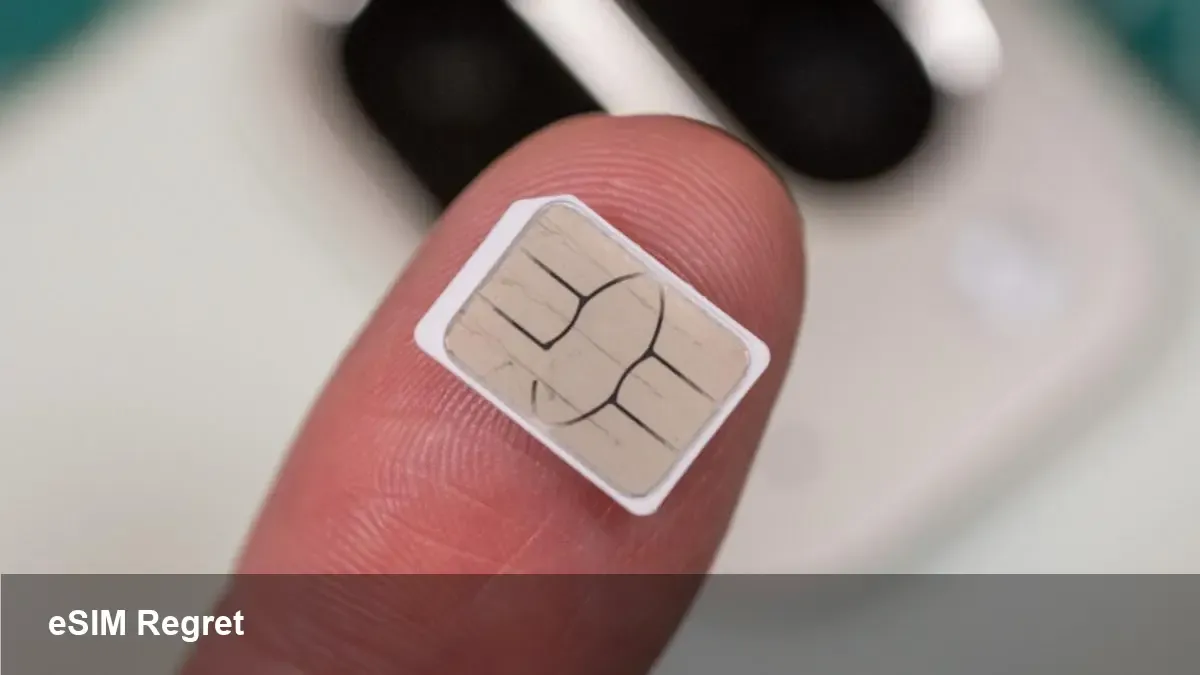
- eSIMs are soldered, programmable SIMs introduced in 2016 that let manufacturers remove physical SIM slots.
- Major phones (Apple iPhone 14 onward; Google Pixel 10 US models) have moved to eSIM-only in some regions.
- eSIM transfers can fail and carriers relying on SMS for verification can lock you out—forcing store visits to restore service.
- Some carriers (Google Fi) and account-linked app flows reduce risk; SMS-based authentication is increasingly inadequate.
The hardware trade-off: space for battery
eSIMs freed up internal space by replacing removable nanoSIMs, allowing OEMs to reclaim room for larger batteries or other components. The eSIM standard, introduced around 2016, also enables multiple profiles on a single soldered chip and prevents physical SIM theft.
Apple led the charge toward mandatory eSIM with the iPhone 14, and Google made the US Pixel 10 models eSIM-only this year. Manufacturers claim gains are worth it — Apple’s international iPhone 17 variants with SIM slots reportedly have an ~8% smaller battery than eSIM-only versions — but that’s only part of the story.
What goes wrong: transfers, corruption, and verification
Real-world failures
In practice, eSIMs can become corrupted or fail to transfer cleanly between devices. When that happens, the recovery path often depends on how your carrier verifies account ownership.
Carriers typically use SMS to confirm identity when making account changes. If your phone number is temporarily inactive because the eSIM transfer failed, you can’t receive the verification text, leaving you unable to re-download an eSIM remotely.
The costly fallback: retail visits
That gap turns what used to be a quick SIM swap into an hour-long trip to a physical store. If you’re not already logged into your carrier’s account app, many support channels are blocked because the carrier relies on sending codes to the very number you’ve lost access to.
Better approaches and quick fixes
Account-linked eSIM downloads
Some providers do it better. Google Fi lets users download eSIMs through the Fi app, secured by the Google account, removing the SMS dependence. Using carrier apps, passkeys, authenticator apps, and other out-of-band recovery methods reduces the risk of lockout.
Practical advice
If you must adopt eSIM, enable your carrier’s app, link the account to a secure identity provider (Google or Apple), and set up alternative multi-factor methods. Keep backup access to critical services that use your phone number for MFA.
Bottom line
Physical nanoSIMs are small but nearly foolproof: you can move them between phones in seconds without calling support. eSIMs bring technical benefits and slight battery gains, but today’s carrier verification practices make them riskier for anyone who might need to move numbers or recover access. Until carriers stop defaulting to SMS for account control, eSIM will remain a convenience with frustrating edge cases.