How a low-cost MacBook could win over Windows users

A moment Apple could seize
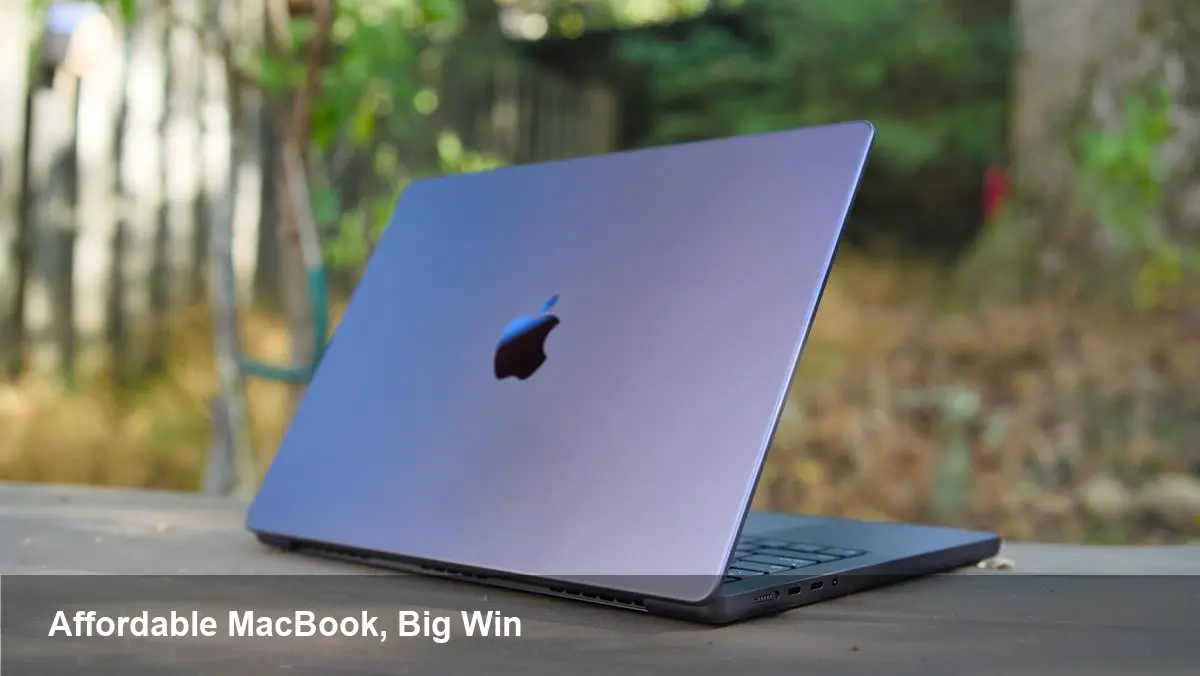
Apple doesn't need a revolutionary feature to convert Windows users — it needs a price point and a clear value proposition. The MacBook line, powered since 2020 by Apple's M-series silicon, brought major gains in battery life, thermals, and app performance. Those technical advantages matter, but price is the gatekeeper. A genuinely low-cost MacBook would make the benefits visible to a much larger audience: students, small businesses, and budget-minded buyers who today pick Windows laptops by default.
Why Windows users might be ready to switch
Several dynamics make Windows users a realistic target for conversion:
- Consistent hardware improvements: Apple's M-series chips delivered across-the-board gains in efficiency and sustained performance. For many users, this translates to longer battery life and quieter machines.
- Platform fatigue: Periodic instability in the Windows ecosystem, coupled with the frequency of forced updates and driver hassles on low-cost PCs, leads some users to prioritize reliability over ecosystem loyalty.
- Services lock-in: Once on macOS, users are more likely to adopt iCloud, Apple Music, and other paid Apple services, which increases lifetime revenue per user for Apple.
These factors don't magically erase ecosystem switching costs — software compatibility, workflows, peripherals, and enterprise management matter — but a lower entry price reduces the friction to try macOS in the first place.
What a “cheap MacBook” needs to actually convert users
If Apple wants to convert Windows users by offering a cheaper MacBook, price alone won't be enough. Here are practical product choices that would tip the scales.
- Competitive base price: A sub-$800 price point (or aggressive trade-in bundles) positions a MacBook in the same consideration set as popular Windows thin-and-light models.
- Modern internals: An efficient M-series chip with at least 8 CPU cores and a capable GPU, 8–16 GB unified RAM option, and SSD options starting at 256 GB. Buyers should get the same real-world benefits (battery, responsiveness) they see in pricier Macs.
- Durable battery and charger policy: Long battery life is a headline metric; including a reliable charger and good charging speeds matters to the target segment.
- Software and accessory compatibility: Built-in support for common enterprise MDM, minimal friction for external displays and hubs, and included essentials like a reliable webcam and microphone.
The combination of a modest price and a tangible performance advantage is what would create the perception of better value compared with equivalent Windows machines.
Two concrete scenarios where a cheap MacBook changes decisions
1) The college switch: A student chooses between a $600 Windows laptop and a $749 MacBook. The MacBook lasts a full day, runs native productivity apps, and handles light media editing without fans roaring. The student values reliability and resale value; the Mac becomes a stronger candidate.
2) Small office refresh: A small marketing agency currently buys low-cost Windows notebooks and deals with frequent hardware failures and support calls. A slightly higher upfront cost for durable MacBooks could lower support overhead and increase employee satisfaction, making a Mac rollout cost-effective over 2–3 years.
These are practical use cases where total cost of ownership and user experience outweigh initial sticker shock.
Developer and IT admin implications
- App compatibility: Apple silicon runs Intel-era macOS apps via Rosetta, and many popular dev tools already offer native ARM builds. A cheap MacBook broadens the pool of macOS developers, encouraging more native ARM optimization.
- Virtualization and Windows: Boot Camp is gone on Apple silicon; Windows for ARM runs through virtualization (Parallels, VMware). For developers who need Windows apps, virtualization performance is improving but may still be a friction point for some workflows.
- Enterprise management: Apple's M-series Macs integrate with modern MDM tooling. IT teams will evaluate device enrollment, SSO integration, and endpoint security—areas where Apple has been investing.
For teams that build cross-platform apps or services, a more accessible Mac option reduces the internal friction of supporting macOS as a dev and test target.
Risks and trade-offs for Apple and buyers
- Margin pressure: Lowering entry prices can compress margins on hardware. Apple would likely make up revenue through services, accessories, or component sourcing efficiencies.
- Cannibalization: A lower-cost MacBook could eat into sales of higher-margin MacBook Air models if not positioned carefully.
- Compatibility edge cases: Users who rely on legacy Windows apps or specialized peripherals may still find the Windows ecosystem necessary.
For buyers, the biggest trade-off is familiar: is it worth exchanging some Windows-only compatibility for better battery life, fewer maintenance headaches, and tighter hardware–software integration?
What this means for competitors and the market
1) PC OEMs could be forced to improve software polish and build quality at lower price tiers. If Apple constrains the low-cost segment while offering better battery and sustained performance, it changes buyer expectations. 2) Microsoft’s Windows-on-ARM efforts may accelerate. To compete on battery and efficiency, Windows players will push ARM optimizations, tighter OEM partnerships, and perhaps closer Windows–services integration. 3) A cheaper MacBook would accelerate developer demand for native ARM versions of popular tools, helping the larger ARM transition in desktop computing.
Business value beyond the upfront sale
Lowering the price barrier expands Apple's funnel for services: iCloud storage, AppleCare, content subscriptions, and app store purchases. Each converted user represents recurring revenue over years rather than a one-off device sale. For startups and small businesses, the promise of lower IT support costs and higher employee satisfaction can justify the switch financially.
If Apple wants more Windows users to try macOS, the lever isn't mystery features — it's accessible hardware that demonstrably improves daily life. A well-priced, capable MacBook could be the nudge many users need to take the plunge.