How a Foldable iPhone Could Change Multitasking

What the rumor says — and why it matters
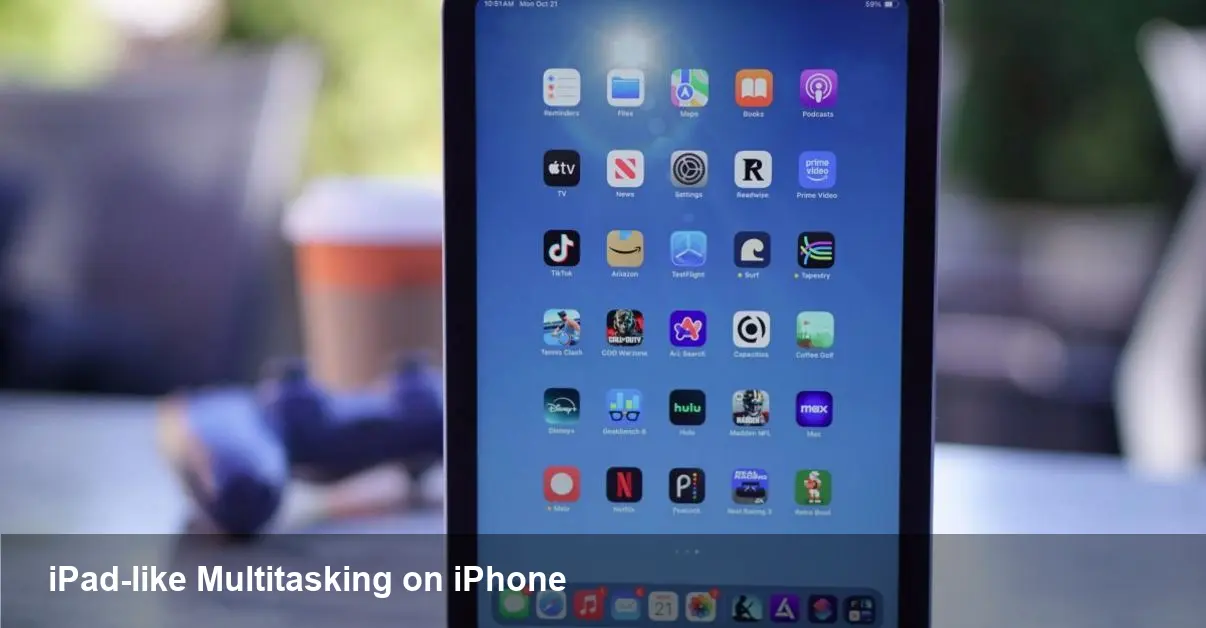
Apple is rumored to be working on a foldable iPhone that can behave more like an iPad when opened: multiple apps visible side-by-side, a larger canvas for content and multitasking, but reportedly without Face ID and not running native iPad apps. The report (sourced to Bloomberg’s Mark Gurman) frames the device as a bridge between the iPhone’s portability and the iPad’s productivity layout.
If these elements land in a shipping product, the change won’t just be a new form factor: it will shift expectations about how iPhone apps should behave when they have significantly more screen real estate and when users routinely run two apps at once.
Practical scenarios: how people would use a foldable iPhone
- Journalist on the go: split Safari and Notes side-by-side to research and draft a story without switching apps.
- Sales rep during demos: run a presentation on one half while taking customer notes or running a CRM lookup on the other.
- Developer or designer: preview app UI on one pane while inspecting logs or documentation on the other, using the device as a compact workstation.
These are simple examples, but they show the core shift — the foldable iPhone won’t just add pixels. It changes workflows by making simultaneous, contextual app interactions a daily habit.
What developers need to prepare for now
Even if Apple doesn’t let iPad-only apps run on the foldable iPhone, developers will still need to adapt. Here’s a practical checklist:
- Embrace adaptive layouts: design with fluid constraints so your UI scales gracefully from narrow, folded states to wide, open states. Think flexible columns rather than fixed pixel widths.
- Support multiple scenes/windows: prepare for users opening two instances of your app side-by-side. Use UIScene (UIKit) and the multi-window APIs in SwiftUI so state management remains predictable.
- Test split interactions: ensure input focus, keyboard handling, drag-and-drop, and copy/paste behave when your app shares the screen with another.
- Handle odd aspect ratios: a folded device introduces unique aspect ratios and hinge-related safe areas. Use safeAreaInsets and test for cutout/hinge occlusion.
- Provide responsive assets: scalable icons, higher-resolution images, and vector assets avoid pixelation when the app expands.
- Rethink authentication: reports suggest the device may lack Face ID. Make passkeys, Touch ID, or PIN flows frictionless and prepare for enterprise SSO/MDM edge cases.
Start building these considerations into roadmaps now — the frameworks are likely to evolve, but responsive fundamentals will remain relevant.
For product and UX teams: design patterns that could win
If users get used to side-by-side apps on a phone-sized device, certain interaction patterns will become standard:
- Persistent secondary panes: a compact, always-visible context pane (chat, notes, controls) that complements the primary app.
- Compact-modular navigation: collapsing navigation drawers or contextual toolbars that reveal more controls when space permits.
- Continuity-aware sessions: preserving work across folded/unfolded transitions without losing state or forcing app restarts.
Teams should prototype feature parity for large-screen behaviors within their current iPhone apps so users get a coherent experience on larger canvases.
Business implications and where this fits in Apple’s lineup
A successful foldable iPhone could eat into small iPad sales, capture users who want one device for both consumption and productivity, and nudge enterprises toward more mobile-first workflows. But the decision to disable iPad apps (per the rumor) changes the equation: businesses won’t be able to simply push iPad-optimized apps to these devices — instead, they’ll expect robust, adaptive iPhone apps that scale.
For developers and SaaS companies, this creates opportunity and cost. Opportunity: first-mover advantage on optimized experiences, deeper engagement through multitasking features. Cost: extra engineering to support multiple states and more QA permutations.
Limitations and trade-offs to keep in mind
- No Face ID: if the device skips Face ID, biometric authentication will need to rely on alternatives. That affects secure workflows (mobile payments, enterprise access) and how quickly users can authenticate in split-view contexts.
- App compatibility gap: not running native iPad apps means apps designed for the iPad won’t automatically leverage the device’s larger canvas; developers must adapt phone apps instead.
- Durability and weight: foldable hardware has historically traded off thickness and durability for versatility. Expect higher price points and ruggedness questions compared with standard iPhones.
- Battery and thermals: more screen area equals more power draw; battery life in real-world multitasking use will be a key buying criterion.
Three forward-looking implications
1) Responsive-by-default becomes the norm. If Apple releases a foldable iPhone, adaptable UI will stop being optional. Teams must deliver interfaces that scale across an even broader range of physical device states.
2) Apple’s frameworks will steer the market. When iOS adds official APIs for hinge-aware layouts or multitasking behaviors, those will define best practices. Early adopters who align to these APIs will gain user trust quickly.
3) Authentication models will diversify. Without Face ID, we’ll likely see renewed investment in passkeys, Touch ID variants, and smarter session persistence that balance security with fast, frictionless multitasking.
What to do next if you’re building mobile products
- Audit your app for responsive layout issues and test with plenty of window sizes. Use simulators to approximate large, wide states.
- Prioritize multi-window support and robust state handoff between scenes.
- Re-evaluate authentication flows to ensure smooth behavior when face-based unlock is absent.
- Prototype multitasking scenarios that showcase unique value: note-taking alongside reading, simultaneous chat and task lists, or dual-pane editing.
Apple’s rumored foldable iPhone is less about novelty and more about forcing a rethink of single-app-at-a-time mental models on the iPhone. Whether you’re shipping a consumer app, an enterprise tool, or tooling for remote teams, treating the smartphone as a flexible workspace now will save engineering cycles later and make your product feel native to these larger, multitasking devices.