Google Pixel 10a Review: Practical, Not Revolutionary

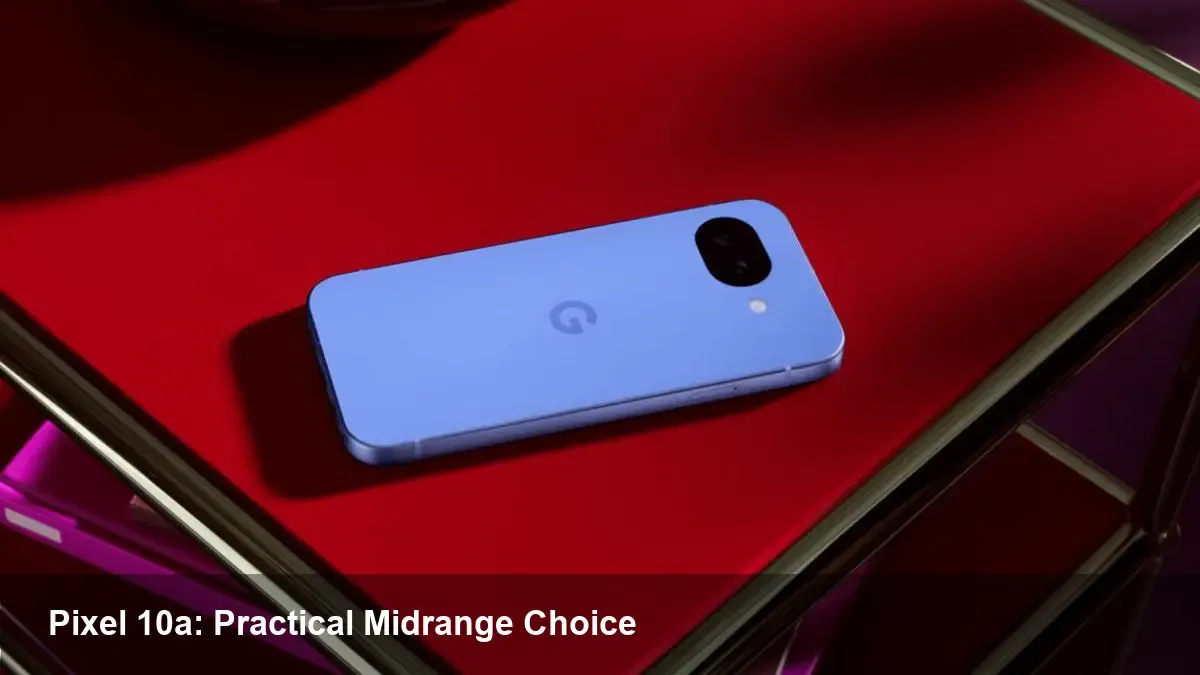
Where the Pixel 10a fits
Google has scheduled the Pixel 10a for release on March 5, priced at $499. That puts the device squarely in the premium mid‑range segment — a sweet spot for buyers who want cleaner Android software and timely updates without paying flagship money. The central theme of this refresh is obvious: the Pixel 10a prioritizes Pixel software features and steady value over flashy new hardware.
Quick background: why the A-series matters
The Pixel A-series has been Google’s vehicle to extend the Pixel experience to a wider audience. Historically, these phones deliver many of Google’s signature software advantages — computational photography, system‑level AI features and early access to Android improvements — while trimming costs on materials, cameras, or chips. For many users the tradeoff has been worthwhile: the same software-led camera tricks and a near‑stock Android experience for a fraction of a flagship price.
What to expect in practical terms
If you’re sizing up the Pixel 10a, prepare for conservatism rather than reinvention. The phone’s design and component choices are intentionally restrained: think tried‑and‑true chassis lines, mid‑tier internals, and cameras that rely on Google’s software rather than flagship‑grade sensors. The payoff is a device that feels familiar, runs Android smoothly for everyday tasks, and benefits from Google’s ongoing software updates.
Real-world scenarios where this matters:
- Everyday photography: Casual photographers will get strong results thanks to Google’s image processing. Low-light and portrait shots remain where Pixel devices typically excel, even if the hardware isn’t cutting‑edge.
- Commuter and work phone: For knowledge workers who need reliable email, calendar, VPN, and video calls, the Pixel 10a keeps costs down while providing solid software security and integration with Google Workspace.
- Developer test device: Developers who want a clean, unskinned Android build for testing or debugging apps can use the Pixel 10a as an affordable reference device, especially for validating Google Play and Android feature compatibility.
Pros and tradeoffs
Pros:
- Software first: The Pixel 10a brings the Pixel family’s software enhancements — image processing, AI features, and Android polish — to a lower price point.
- Value positioning: At $499, it targets buyers who want more than budget hardware but don’t need flagship performance.
- Predictable experience: Conservative design choices mean fewer surprises and a more stable daily experience.
Tradeoffs:
- Incremental hardware: Don’t expect top‑tier processors, the latest display tech, or the largest batteries. Heavy gaming or demanding multitasking will expose limitations compared with pricier flagships.
- Design familiarity: If you want a major aesthetic or mechanical upgrade year‑over‑year, this model won’t deliver it.
- Camera hardware ceilings: While computational photography goes a long way, there are limits to what software can do with entry‑level sensors.
For startups and IT teams: why it might make sense
Companies provisioning devices for field staff, sales teams, or pilots will find the Pixel 10a attractive for three reasons:
- Cost predictability: $499 gives a clear per‑unit budget without sacrificing key functionality.
- Software continuity: Google’s software updates and security patches reduce long‑term maintenance risk compared with obscure OEMs.
- Familiar Android: Standardized Android builds lower onboarding friction and simplify MDM profiles and app deployment.
However, if your teams run GPU‑intensive mobile apps, AR workloads, or extended video capture, investing in higher‑end devices will pay off.
What developers should care about
- Testing baseline Android behavior: The Pixel 10a is a good, relatively inexpensive device for ensuring compatibility with core Android APIs and Google Play services.
- AI/ML feature parity: If your app relies on device‑level ML features or Pixel‑exclusive capabilities, confirm the Pixel 10a supports the same runtime or fallback paths as higher‑end Pixels.
- Performance budgeting: Use the 10a to test performance optimizations for mid‑range hardware — memory use, thread contention, and thermal throttling are more likely to show up here than on flagship phones.
Concrete tip: use a Pixel 10a alongside a flagship device in your QA farm. That contrast highlights regressions that matter to the majority of buyers.
Competitive context and market implications
At $499, the Pixel 10a competes with capable midrange models from Samsung, OnePlus, and others who also balance price and features. Google’s advantage is the software layer: unique camera processing, system AI features, and an unobstructed Android experience. For competitors, this means hardware alone won’t win midrange customers — software and long‑term updates are increasingly decisive.
This release also signals Google’s product strategy: invest in software differentiation and extend flagship user experience across price bands, instead of pushing radical hardware innovations in every SKU.
Looking ahead: three implications
- Software becomes the primary lever. Expect Google to continue shipping compelling software features to A‑series phones, narrowing perceived gaps without needing expensive components.
- Midrange users will see more AI. As on‑device AI matures, expect more A‑series phones to inherit assistant and camera features that used to be exclusive to flagships.
- Competitive pressure on OEMs. Rivals will need stronger software roadmaps and update commitments to match Pixel’s value, shifting marketing toward longevity and experience.
Who should buy — and who should wait
Buy if you want a dependable Pixel experience at a reasonable price, need a second phone for work, or want an affordable device for app testing. Skip it if you demand the fastest chip, the fanciest display, or flagship camera hardware for professional content creation.
The Pixel 10a won’t be a revolution, but for many buyers it will be a pragmatic upgrade: familiar, capable, and focused on what Google does best — software that elevates modest hardware. If that aligns with your priorities, the March 5 release at $499 is worth a close look.