Galaxy Z TriFold Hands-On: 10‑inch Triple‑Fold Reveal

- Key Takeaways:
- Samsung’s Galaxy Z TriFold unites a 10-inch tablet-sized interior with a second fold for an extra display section.
- In-hand feel is surprisingly familiar to the Z Fold line but includes added ridges and a stronger grip.
- Folding and unfolding feel mostly natural; the TriFold uses strong haptics to warn against incorrect folding.
- Early impressions highlight media and full tablet apps as the strongest use cases; price may hover near $2,500.
First impressions at CES 2026
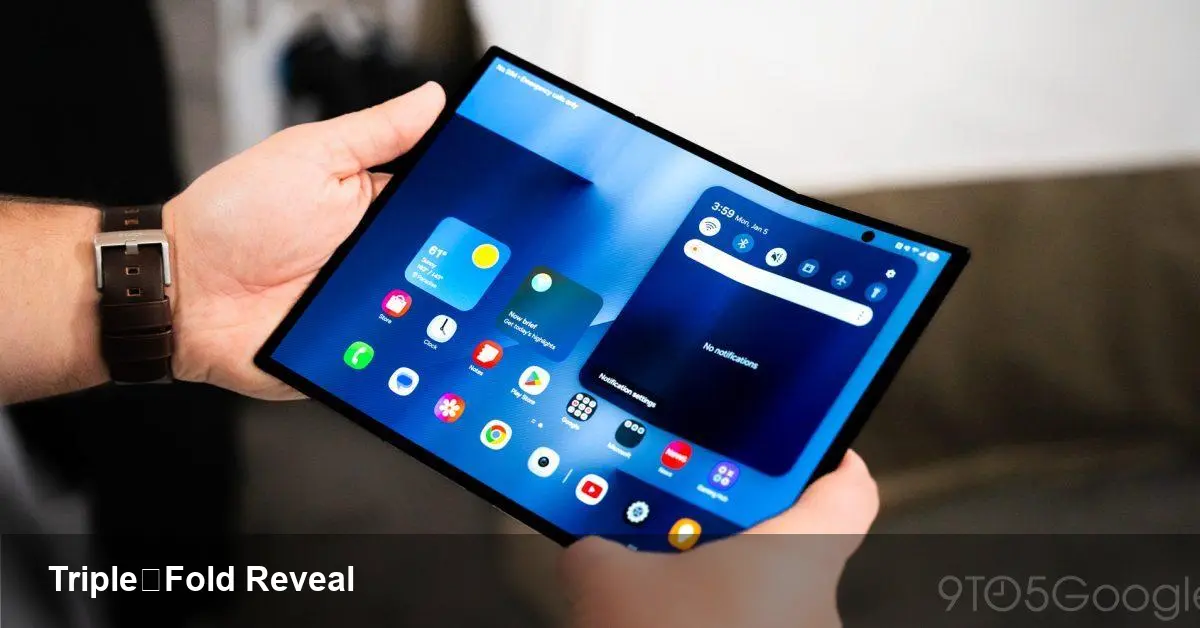
I spent a short demo session with Samsung’s Galaxy Z TriFold at CES 2026, and its real-world presence matters more than specs alone. The device feels like a Galaxy Z Fold-class phone that unexpectedly opens into a full 10-inch tablet.
The extra folding section is immediately obvious in the hand. Even in a brief test it felt unlike any single- or dual-fold device I’ve used recently.
Design and tactile experience
Physically the TriFold resembles the Galaxy Z Fold 6 family but adds a third panel that creates distinct ridges where the screen joins. Those ridges add grip and a tangible sense of depth.
I didn’t find the additional profile off-putting — if anything, it made holding the device more secure. Compared to daily use on a Galaxy Z Fold 7, the TriFold didn’t feel cumbersome despite the extra panel.
Display, apps, and use cases
Unfolded, the TriFold’s roughly 10-inch canvas reads like a pocketable tablet. That size benefits two clear scenarios: media consumption and full tablet apps.
Streaming video and many games will gain from the broader, more natural aspect ratio. Native tablet apps and desktop-class websites also make better use of the space, and the TriFold pairs well with a wireless keyboard for light laptop-like workflows.
Folding mechanics and feedback
Unfolding the TriFold felt intuitive; folding it back into its compact shape took a moment to learn. The device delivers strong vibration feedback when folded incorrectly, which prevents accidental closures during first use.
I expect the folding motion to feel smoother as the hinge breaks in, but early testing showed a steeper learning curve than a two-panel fold.
Price, availability, and who should care
Samsung’s TriFold is clearly aimed at enthusiasts who want a pocketable tablet and are willing to pay a premium. Early reports suggest a price near $2,500, which will limit mainstream adoption.
If you prioritize a true tablet experience without carrying a separate device, the TriFold is worth trying in person. For average smartphone users, the cost — and the adjustment to tri-fold mechanics — may be a dealbreaker.
Bottom line
The Galaxy Z TriFold makes a strong first impression at CES 2026: a real tablet-sized experience in a phone-sized package, notable haptics and a distinct physical feel. It’s an exciting step for foldables, but wide appeal will hinge on price and long-term durability.