Galaxy S26 Ultra and the Missing Qi2 Magnets

What happened (short version)
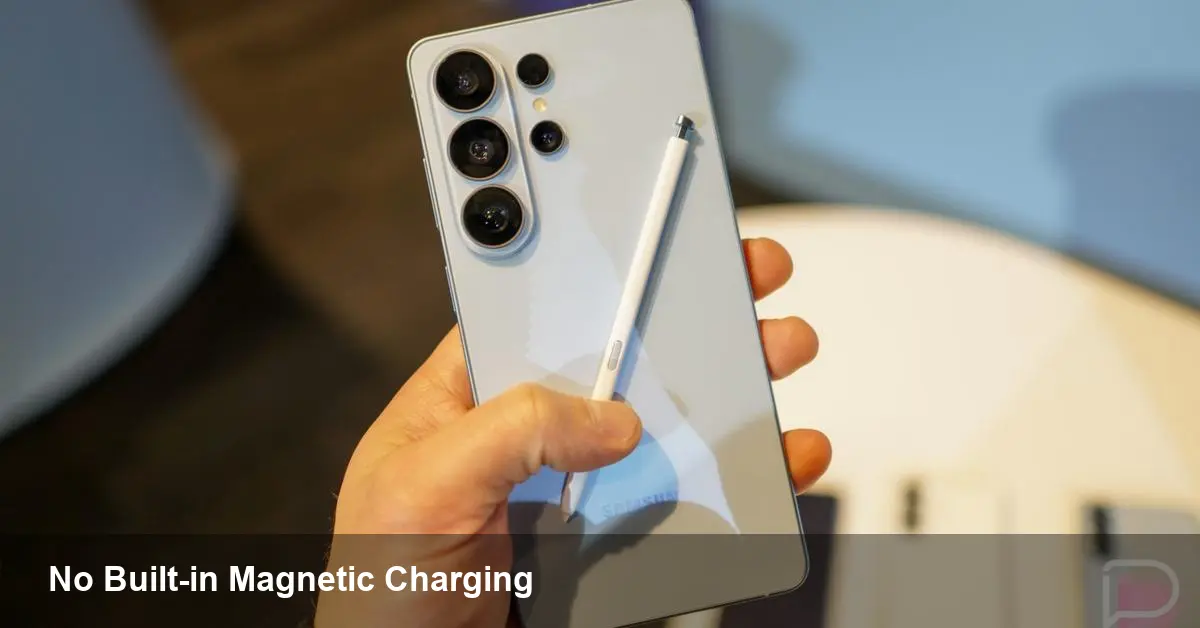
Samsung's Galaxy S26 Ultra launches without built-in magnets for the Qi2 magnetic charging/attachment standard. That means the phone won't natively snap to Qi2-compatible chargers, wallets, or other magnetic accessories the way iPhones (and some other Android phones) do with MagSafe-style setups.
Quick background: magnets, MagSafe, and Qi2
Magnetic attachment systems became mainstream when Apple introduced MagSafe for the iPhone lineup. MagSafe couples a ring of magnets with a charging coil to ensure consistent alignment and allow a small ecosystem of attachable accessories. Qi2 is the Wireless Power Consortium's attempt to standardize that model across manufacturers — a cross-vendor spec that makes magnetic snap-on charging and accessories interoperable. Over the past year many accessory makers and a few phone companies embraced the concept, building magnet-friendly phones and chargers.
Why Samsung’s choice matters in practice
For end users, the omission is simple and visible: a Galaxy S26 Ultra without built-in magnets won’t reliably cling to Qi2 chargers or magnetic wallets without an extra case or adapter. Here are practical scenarios:
- Daily commute: If you like dropping your phone onto a magnetic car vent charger for one-handed docking, the S26 Ultra won’t stick without a magnetic case or mount adapter.
- Wireless charging: Qi2 chargers are designed to align the coil precisely. Without magnets, you may experience slower charge or frequent misalignment on chargers optimized for magnetic attachment.
- Accessories: Card wallets, ring grips, and small modular camera lenses that rely on magnetic alignment won’t attach securely unless they include their own magnets or you use a compatible case.
For accessory makers and retailers, a magnet-less flagship from Samsung narrows the immediate market for native, case-free Qi2 accessories aimed at Galaxy owners.
Likely engineering reasons (what’s probably behind the decision)
Samsung doesn’t owe a public explanation, but the tradeoffs are straightforward and worth considering:
- Internal space and layout: Ultra phones pack large camera arrays, multiple antennas, and complex thermal systems. A ring of magnets and the supporting structure take space and may conflict with other components.
- Wireless performance and heat: Samsung may prioritize coil geometry and heat dissipation for higher sustained charging rates, which can be constrained by a magnet ring or specific coil placement.
- Interference with other hardware: Magnets can interact with sensors, the haptics motor, or the S Pen (in past Ultra models) if not carefully engineered.
- Product differentiation and ecosystem control: Samsung may prefer to support magnet accessories via cases or optional modules rather than bake a single approach into the chassis.
These are plausible design choices rather than an indictment — engineers balance many competing priorities when designing a flagship.
Workarounds and what consumers should do
If you want MagSafe-like convenience with a Galaxy S26 (or S26 Ultra), you have practical options:
- Buy a magnetic case: Many third-party case makers now sell cases with integrated magnet rings that mimic Qi2 alignment. They keep the phone protected and enable snap-on accessories.
- Use adapter plates: Thin magnetic plates that stick to the back can enable compatibility with chargers and mounts, though they add thickness and may affect heat.
- Choose accessories that don’t rely on phone magnets: Some chargers use stronger clamps or puck-style chargers that hold alignment without magnets.
If you value native magnet attachment as a deciding factor, consider it during purchase — either choose a phone with built-in magnets or plan to buy a compatible case.
Business and developer implications
This decision ripples beyond convenience:
- Accessory market segmentation: Accessory makers will need to support two cohorts — phones with integrated magnets and those that require cases/adapters. That forces additional SKUs, testing, and customer education.
- Retail and bundling strategies: Carriers and retailers might bundle magnetic cases with Samsung flagships to provide parity with MagSafe-capable phones. That raises cost and logistics questions.
- Innovation and differentiation: Third-party case makers have an opening to innovate — thin magnet arrays, heat-tolerant adhesives, or modular mounts that compensate for the lack of built-in magnets.
For startups building physical accessories (wallets, chargers, mounts) this fragmentation is a business opportunity: design for compatibility with both magnet-enabled and magnet-less phones, and highlight universal mounting options.
What this means for Samsung’s ecosystem and its competitors
Not including magnets signals a choice, not necessarily a long-run strategy. A few implications to watch:
- Fragmented user experience: If Samsung continues down this path, Galaxy owners may face inconsistent accessory interactions compared to iPhone users or other Android phones that support Qi2.
- Market pressure: Strong consumer demand for magnetic accessories could push Samsung to include magnets in a future model or to ship compatible accessories out of the box.
- Standardization tension: Qi2 exists to reduce fragmentation; prominent players opting out — even temporarily — slows that unification.
Future scenarios and takeaways
- Samsung may add Qi2 magnets in a future refresh once component and thermal tradeoffs are resolved, or if accessory sales signal sufficient demand.
- Accessory makers will adapt: expect a proliferation of cases and adapters aimed specifically at Galaxy owners. If you build accessories, plan for hybrid strategies (magnet + clamp) to reach more customers.
- Consumers should weigh convenience against protection: a magnetic case restores MagSafe-like convenience while protecting the device, but it’s an extra purchase.
The bottom line: the Galaxy S26 Ultra’s omission of built-in Qi2 magnets changes how you’ll attach chargers and accessories, but it doesn’t block the ecosystem. If magnetic snaps are important to your workflow — for car mounting, quick wireless charging, or magnetic wallets — factor that need into your buying decision and accessories budget. For accessory makers and retailers, it's a reminder that hardware choices by major OEMs can create product and market gaps worth filling.