Galaxy Buds4: What Samsung’s new earbuds mean for users and developers

Where Galaxy Buds4 fits in Samsung’s audio lineup
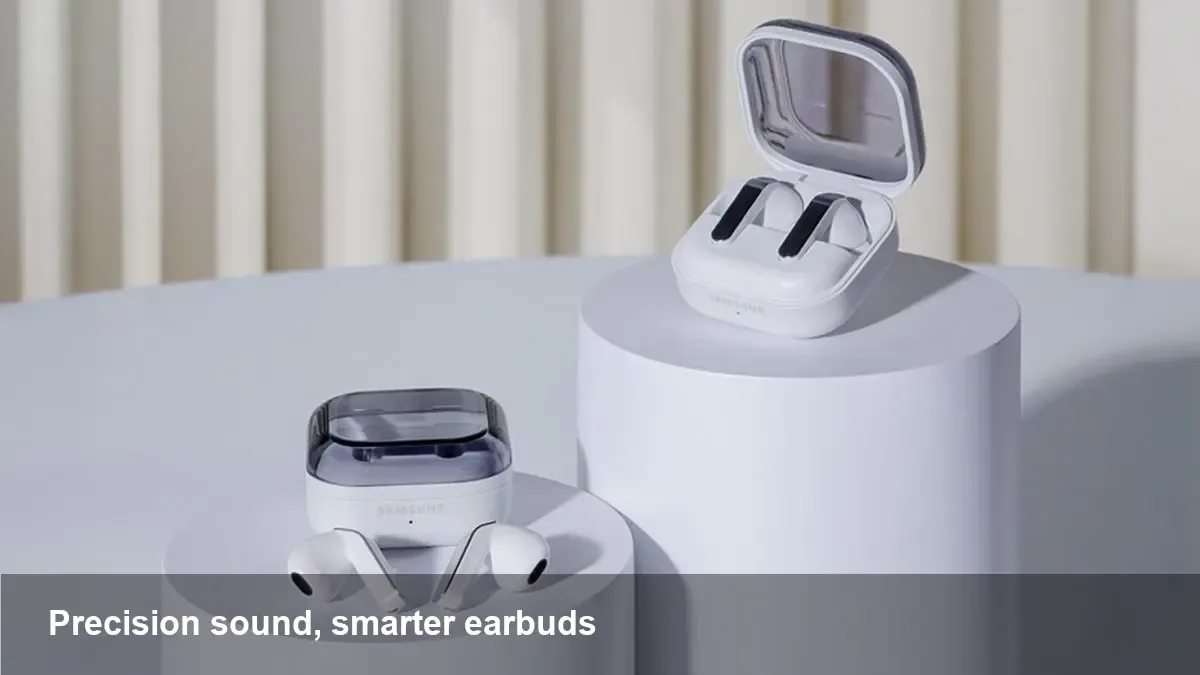
On February 25, 2026 Samsung Electronics introduced the Galaxy Buds4 series during Galaxy Unpacked 20. The announcement extends Samsung's long-running push into true wireless earbuds, a product line that has evolved from basic Bluetooth earpieces into a full-featured audio ecosystem that ties hardware, software and services together.
Samsung's Buds family has been both a showcase for handset features (seamless pairing with Galaxy phones and tablets) and a battleground with Apple, Sony and others for sound, battery life and noise control. The Buds4 series arrives with a clear emphasis on two broad themes Samsung highlighted at the event: precision audio and smarter, more context-aware behavior.
Quick background for context
Samsung is one of the largest consumer electronics companies in the world and has used Galaxy hardware to build an ecosystem that spans phones, tablets, watches and earbuds. The Galaxy Buds line has been an important vector for the company’s audio innovations—introducing features such as device auto-switching, deep integration with Galaxy phones, and software-driven sound personalization—and Buds4 looks like the next iteration of that strategy.
What to expect in everyday use
Samsung framed the Buds4 series around delivering clearer, more consistent listening experiences across common mobile use cases. Rather than listing raw specs, think in terms of practical differences you’ll notice day to day:
- Commuting and travel: Expect better ambient/noise handling that aims to reduce the annoyance of trains and buses while preserving situational awareness. That matters for safety and for quick interactions with the world (a single tap to hear more of your surroundings, for example).
- Work and calls: Improved voice pickup and smarter noise filtering should make conference calls less tiring and reduce background distractions. For hybrid workers who switch between laptop and phone, tighter multi-device connectivity reduces handshake time.
- Home and fitness: Adaptive modes that shift emphasis between bass and clarity help whether you’re on a run, listening to a podcast or controlling smart-home devices with voice.
Because Samsung emphasized software and “intelligent design,” expect more automatic adjustments and longer-term learning about your preferences instead of only manual toggles.
Why developers and startups should care
Wireless earbuds are no longer just audio peripherals. They are sensors, notification channels and points of integration with mobile operating systems. For developers and startups, Buds4 presents a few concrete opportunities:
- Audio-first experiences: Apps that offer spatial audio, voice-guided workflows, audio journaling, or language learning can lean on improved device-level audio processing to deliver more immersive or clearer experiences without building their own DSP stacks.
- Context-aware apps: If Buds4 expand or expose APIs for in-ear detection, ambient-awareness modes, or telemetry about ANC state, apps can adapt behaviors — for example, lower verbosity of push notifications during focused listening or switch to voice-mode when workouts are detected.
- Accessibility improvements: Better microphone arrays and on-device processing can make assistive listening apps, live captions, and translation tools more reliable.
For product teams, the lesson is simple: audio hardware improvements reduce the engineering burden on app-level audio processing while opening new hooks for richer experiences.
Business value and competitive positioning
Samsung’s strategy with Buds4 is clearly ecosystem-driven. Tight integration with Galaxy phones and services enhances device stickiness—users who buy Samsung phones and watches are more likely to stay in the ecosystem if audio accessories offer distinct advantages.
From a market standpoint, the Buds4 series targets a middle-to-premium segment where consumers expect a mix of convenience features, sound quality, and intelligent behavior. For Samsung, every incremental improvement in pairing, call quality, or battery/performance trade-offs can translate into higher accessory attach rates and subscription conversions (cloud audio services, codecs, or bundled health and assistant features).
For retailers and partners, the message is about offering demos that highlight context-aware features rather than raw technical numbers. Real-world scenarios sell earbuds better than marketing specs.
Practical scenarios: three day-in-the-life examples
- The commuter: Morning subway noise is damped automatically. A quick voice query while running between stops returns directions, and the earbuds briefly open ambient sound so the user can hear an announcement.
- The hybrid worker: Buds4 connects to laptop for a video call, then switches to phone for an incoming call seamlessly. An improved mic array keeps the team conversation intelligible even when the user is in a busy cafe.
- The creator: A podcaster uses the earbuds to monitor audio while recording on a phone. Intelligent monitoring and low-latency behavior reduce retakes.
Each scenario underscores the value of software-driven audio responsiveness coupled with reliable hardware.
Limitations and where Samsung will still need to prove itself
Samsung’s announcements are promising but not a guarantee of flawless in-field performance. Historically, claims around adaptive noise control and battery gains can vary by real-world conditions and firmware maturity. Key questions to watch:
- How quickly will firmware updates iterate to fix edge-case audio issues? AirPods and other competitors have shown that post-launch software tuning matters more than launch-day specs.
- Will Samsung open meaningful APIs for developers, or keep advanced capabilities locked behind platform exclusives? Broader access will determine whether third-party apps can truly leverage the hardware.
- How well will the Buds4 handle cross-platform scenarios for users who own non-Samsung phones? Seamless experiences are valuable only when they extend beyond a single vendor ecosystem.
Implications for the next two years
- Earbuds will become richer input/output devices, not just playback accessories. Expect more features that turn earbuds into contextual interfaces for notifications, health signals and ambient computing.
- Software-defined audio will continue to be the differentiator. Companies that iterate quickly via firmware and cloud settings will outcompete those relying solely on hardware upgrades.
- Increased platform openness (APIs, SDKs) could spawn new genres of apps—real-time language overlays, collaborative listening sessions, or audio-based multiplayer experiences.
If Samsung follows up with solid firmware support and developer tooling, the Galaxy Buds4 series could be a practical step toward earbuds being a primary interface for everyday tasks—especially inside a mobile-first ecosystem. For buyers, the decision will come down to how well the promised intelligence and convenience translate into daily reliability.