CES 2026 Monitor Highlights: Dell, Lenovo, Samsung and OLED

• Dell debuts its largest UltraSharp: a 51.5" Thunderbolt 4 monitor aimed at professionals. • Lenovo shows a tall 16:18 ThinkCentre X AIO Aura Edition tailored for creators and data work. • OLED panel makers return to RGB-stripe and V-stripe layouts to reduce text fringing. • Samsung expands glasses-free 3D to 32" 6K at 165 Hz; Nvidia’s G-Sync Pulsar monitors start shipping.
Dell’s UltraSharp U5226KW: scale and connectivity
Dell pushed sheer size at CES with the UltraSharp U5226KW, a 51.5-inch 21:9 monitor targeted at professionals who run many apps simultaneously. The panel is 6144×2560 (about 129 PPI) and uses IPS Black technology for deeper contrast.
Connectivity is a headline feature: an integrated Thunderbolt 4 hub with up to 140 W power delivery, a pop-out box offering 27 W USB-C and 10 W USB-A, and an integrated KVM that supports up to four PCs. Pricing started at $2,800–$2,900 depending on stand options.
Lenovo’s tall ThinkCentre X AIO Aura Edition
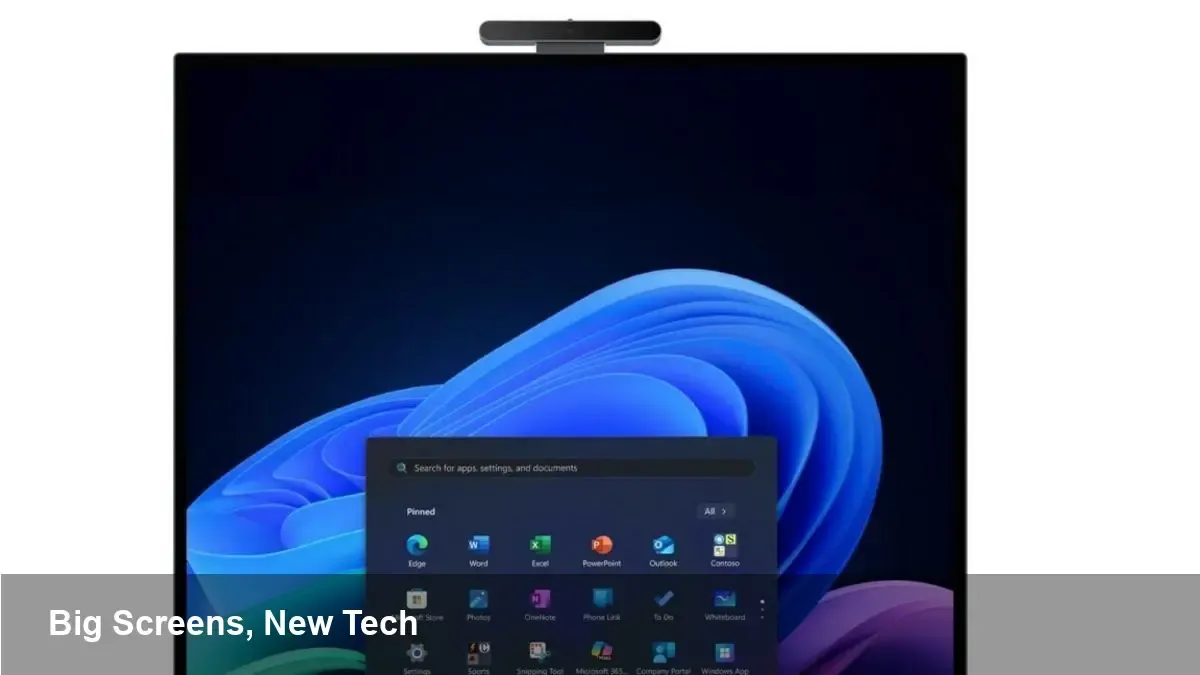
Lenovo introduced a square-like all-in-one with a 16:18 aspect ratio and a 27.6" IPS 2560×2880 display designed for creators, programmers, and data professionals. The extra vertical space is intended to show two A4 pages or full datasets without scrolling.
Under the hood: up to an Intel Core Ultra X7 Series 3 CPU, up to 64 GB LPDDR5x RAM, and two M.2 SSD slots. Software features include Lenovo DeskView for digitizing documents and Share Zone to let the screen serve both the AIO and a connected system. No price or ship date yet.
OLED: RGB-stripe and V-stripe return for text clarity
LG Display and Samsung Display announced new OLED panels that move away from older WOLED and triangular QD-OLED subpixel arrangements toward vertical RGB-stripe (LG) and V-stripe (Samsung) layouts. These structures reduce ClearType fringing and improve text legibility on Windows.
Panel improvements promise higher refresh rates by increasing the emissive pixel area, and Asus, MSI, Gigabyte, and others plan RGB-stripe or V-stripe monitors this year.
Samsung’s Odyssey 3D goes 6K and larger
Samsung upgraded its glasses-free Odyssey 3D to a 32" 6K IPS panel (6144×3456) with a 165 Hz refresh rate; at 3K the monitor can run at 330 Hz. The display supports HDMI 2.1 and DisplayPort 2.1. Game support is expanding but still limited (about 29 3D titles listed in the Microsoft Store).
Expect a premium price (likely over $2,000) and a need for strong GPUs to drive high-resolution, high-refresh 3D content. Monitors Unboxed coverage: https://www.youtube.com/watch?v=8-ivQHibIKs&t=110s
Nvidia G-Sync Pulsar and motion clarity
G-Sync Pulsar is shipping in monitors from Acer, Asus, and MSI and uses a pulsed backlight to cut perceived motion blur while working with variable refresh rates. Models include Acer Predator XB273U F5, Asus ROG Strix Pulsar XG27AQNGV, and MSI MPG 272QRF X36.
What to watch
CES 2026 signaled two trends: larger, productivity-focused displays and panel-level changes (RGB/V-stripe OLED) that make OLEDs more suitable for everyday desktop work. Expect prices to remain premium initially, but these shifts will broaden monitor choices through the year.