Apple Reportedly Testing a Flip-Style Foldable iPhone — What That Would Mean

What was reported
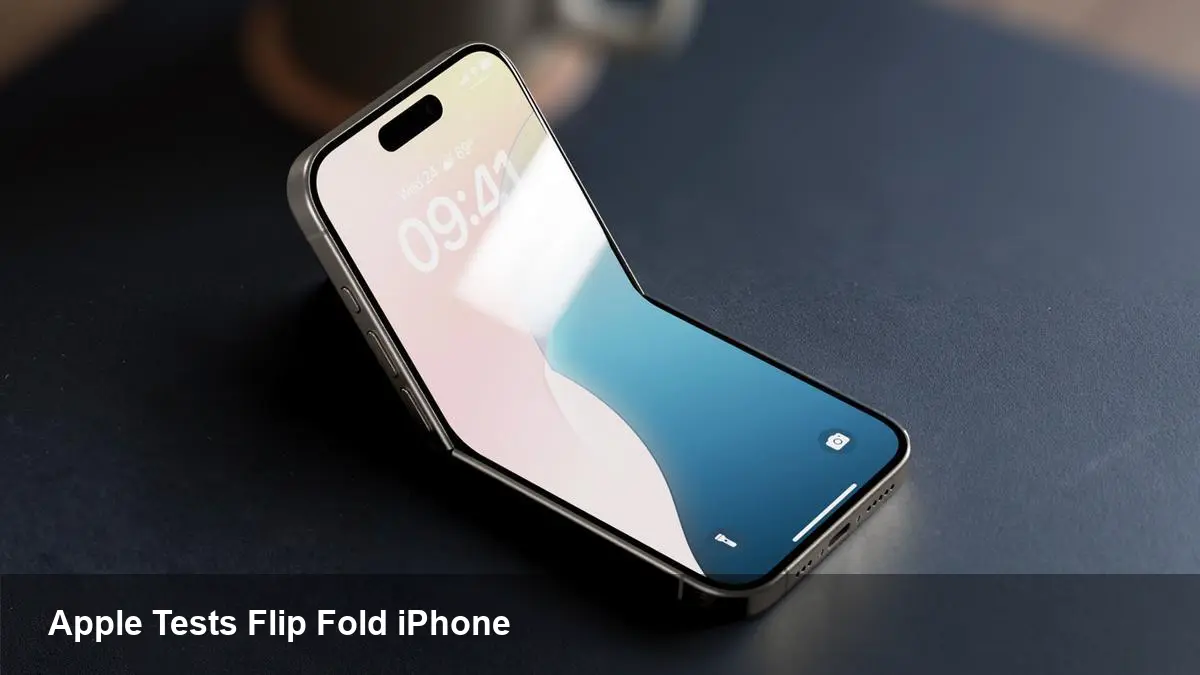
A string of supply-chain indicators and a social-media tipster have put a new idea into the rumor mill: Apple is reportedly evaluating a clamshell, or flip-style, foldable iPhone. Unlike the larger book-style foldables that open like a small tablet, a flip phone folds vertically to offer a compact, pocket-friendly footprint when closed.
The claim traces back to a well-known regional leaker who cites suppliers and verification signals in Asia. If accurate, Apple’s exploration would position it to compete directly with existing clamshell devices such as Samsung’s Galaxy Z Flip series and Motorola’s modern Razr line.
Note: this story is driven by testing and supply-chain chatter rather than an official product announcement, so timelines — if a consumer model ever ships — remain uncertain.
Why Apple would test a flip design
Apple has historically prioritized fit-and-finish, durability, and software polish. A flip form factor responds to several market forces:
- Demand for compact phones: Many users want flagship performance in a smaller pocketable device. A clamshell delivers a full-size display without the footprint of a standard slab.
- Competitive pressure: Samsung and Motorola already sell polished clamshell foldables. If Apple wants to capture a share of the foldable segment, a flip model could be the easiest entry point.
- Differentiated use cases: A small external screen can host quick actions and notifications without opening the device, creating new interaction patterns that Apple could own via iOS features.
Engineering challenges and what Apple must solve
Turning a prototype into an Apple-quality product is nontrivial. Key engineering hurdles include:
- Hinge and durability: Apple would need a hinge mechanism that withstands hundreds of thousands of cycles while remaining thin and reliable.
- External cover display: A usable small screen on the outside must balance readability, power draw, and responsiveness for quick tasks like media controls, messages, or camera preview.
- Camera and Face ID: Apple may have to adapt Face ID or combine it with other biometric approaches if the main camera module is partly obscured when the phone is closed.
- Waterproofing and repairability: Small tolerances make ingress protection and modular repair work harder; Apple has historically faced scrutiny around repair costs and longevity.
Practical use cases for a flip-style iPhone
Consumers and professionals could exploit the form factor in several ways:
- Everyday carry: A full-sized display that folds to half the height is easier to pocket, reducing the friction of carrying a flagship.
- Quick interactions: A cover display for drive-time navigation glance, reply-to-messages, or music controls without unfolding.
- Content capture: When folded, an external preview could make selfies and vlogging simpler by using the main camera for higher-quality results.
- Discrete notifications: Users who dislike large, always-on displays could rely on a small closure screen for minimal interruptions.
What developers should expect
Apple’s advantage historically comes from marrying hardware and software. For developers, a clamshell introduces opportunities and obligations:
- New APIs and states: Apps should be ready to respond to folded and unfolded states — showing condensed UIs on a cover screen and expanded interfaces when the phone opens.
- Widget and glance experiences: Small, glanceable interactions could become more important. Developers will need to design micro-interactions that surface value quickly.
- Multitasking models: Although clamshells are more constrained than book-style foldables, split or contextual views could still be useful for messaging, music controls, and camera apps.
Competitive and business implications
If Apple moves forward with testing, the ripple effects will be broad:
- Pricing and positioning: Expect a premium price relative to mainstream iPhones, at least initially, due to complex manufacturing and novel components.
- Supply chain dynamics: Suppliers that can reliably produce thin hinges, flexible displays, and exotic camera modules will gain importance.
- Market segmentation: Apple could cater to users who want flagship performance in a compact package, while still offering larger Pro models for power users.
Privacy, security and service considerations
The presence of a cover screen raises privacy tradeoffs. Quick notification previews are convenient but risk exposing sensitive information on a small external display. Apple would likely lean on familiar mitigations — granular notification controls and lock-screen policies — but how those translate to a small cover display will matter.
Repairability and long-term service costs will also be in the spotlight. Foldable hinges and flexible panels can be expensive to fix, and Apple’s approach to repairs (in-house, authorized repair partners, or self-service) will affect buyer confidence.
Three takeaways for the future
1) Software will determine success: Apple’s differentiator won’t just be the hinge. Well-designed iOS features for folds — optimized cover-screen widgets, fold-state continuity, and developer tooling — will make the experience feel native.
2) The market could bifurcate: A flip-style iPhone would expand the iPhone lineup into a new niche: compact flagship. That could push competitors to sharpen their own offerings or accelerate rollouts of book-style foldables.
3) Launch timing is unpredictable: Apple is methodical. A device entering testing doesn’t guarantee a release next quarter. Expect multiple prototype cycles — and possibly years — before a polished product reaches consumers, if it ever does.
Supply-chain signs that Apple is experimenting with a clamshell iPhone are notable because they show Cupertino taking foldable formats seriously. For consumers, a flip iPhone promises pocketable flagship performance and new quick-access experiences. For developers and businesses, it would mean preparing for compact UI patterns and glanceable interactions. Whether Apple ultimately ships a flip-style foldable — and when — remains open, but the testing phase alone signals how the foldable category is reshaping mainstream smartphone strategy.
Note on keywords: This article references the core topics including “[MAINKEYWORD]”, “[SECONDARYKEYWORD1]” and “[SECONDARYKEYWORD_2]”.