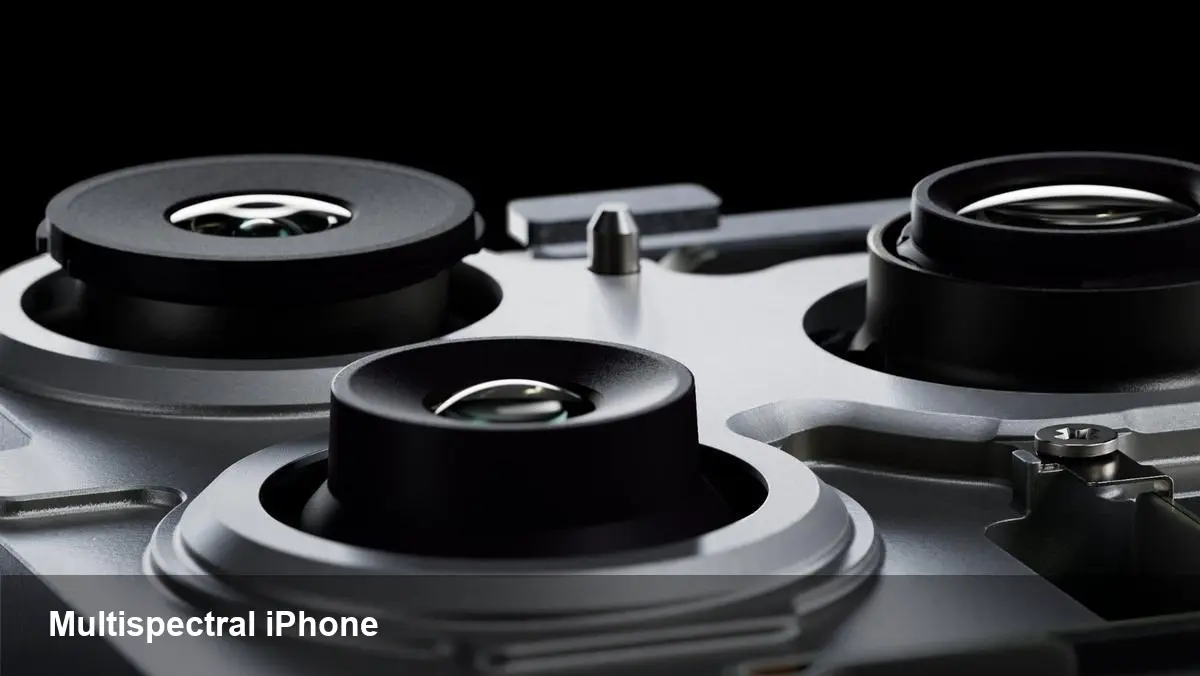
Apple Eyes Multispectral Imaging for Future iPhones

- Key Takeaways:
- Apple is reportedly evaluating multispectral imaging components in the iPhone supply chain, per Weibo leaker Digital Chat Station.
- Multispectral imaging captures light across multiple wavelength bands (beyond RGB), enabling material detection and improved scene analysis.
- The technology could enhance Visual Intelligence, on-device machine learning, portrait and depth performance, but it remains exploratory.
- Adoption would require more complex sensors and could raise cost and space challenges inside iPhone designs.
What Apple is testing
Apple is said to be looking into multispectral imaging components, according to a supply-chain post shared on Weibo by leaker Digital Chat Station. The claim indicates evaluation at the component level rather than active prototype testing.
This suggests Apple is exploring the idea internally but hasn’t begun formal trials in prototype iPhones yet.
How multispectral imaging differs
Traditional phone cameras use red, green, and blue channels to form color images. Multispectral systems capture additional narrow bands—often including near-infrared—that sensors normally miss.
Those extra bands provide data about how materials reflect different wavelengths, which can reveal surface properties invisible to RGB sensors.
Potential benefits for iPhone cameras
Multispectral data could help Apple's image pipeline and on-device Visual Intelligence. By distinguishing materials more reliably, the system could improve subject separation for portraits and reduce errors around hair, fabric, or reflective surfaces.
It could also boost object recognition, scene understanding, and depth estimation for AR and photography features. Mixed-lighting scenes may be processed more accurately when the software has access to broader spectral information.
Technical and product trade-offs
Adding spectral sensitivity usually means more complex sensor designs, additional optical filters, or stacked sensor layers. Those changes can increase component costs and take up internal space—important constraints in iPhone engineering.
Battery use, raw data bandwidth, and on-device processing demands for handling multispectral inputs would also need addressing, potentially requiring upgrades to Apple’s ISP and Neural Engine.
Supply-chain context
The report reiterates Apple’s exploratory stance: components are being evaluated in the supply chain but formal prototype testing hasn’t been confirmed. That makes near-term inclusion in an iPhone unlikely.
Apple continues to iterate on camera hardware—recent rumors also point to variable apertures and telephoto improvements—but multispectral imaging, if adopted, is more likely a medium- to long-term development.
What to expect next
Watch for follow-up reports from supply-chain insiders and patent activity from Apple. Real-world deployment would likely appear only after extensive prototyping and software integration to justify the hardware complexity.