Anker's 15W Qi2 Charging Pad: Big Value at $14.99

Why this deal matters
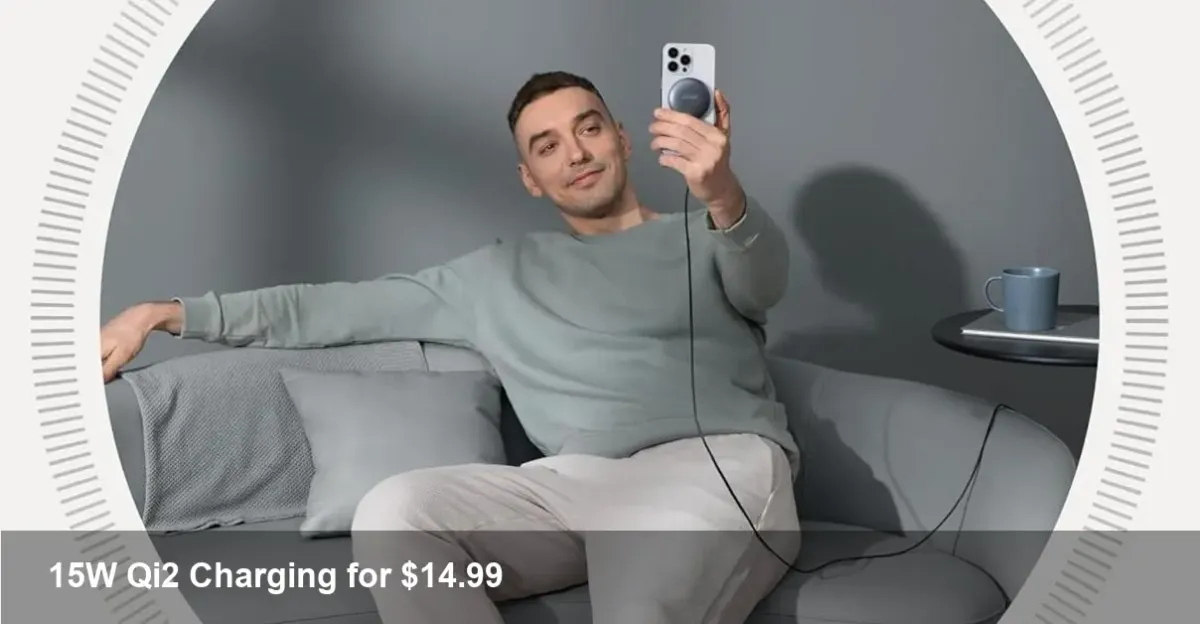
Anker’s compact wireless charging pad has shown up in Amazon’s Big Spring Sale priced at $14.99, and it’s worth a second look if you want simple, reliable charging without paying for gimmicks. The pad targets the new Qi2 ecosystem and can deliver up to 15W to compatible phones — the same practical top speed many flagship phones will accept on wireless mats today.
This isn’t a high-end MagSafe puck with a rigid magnetic array, nor is it meant to replace ultra-fast wired chargers. What it does offer is a low-cost, standards-based way to get faster wireless charging for Qi2-capable devices — which is a good deal at roughly a dollar per watt.
A quick primer on Anker and Qi2
Anker is a well-known accessory maker that focuses on chargers, power banks and cables. Their products are popular for combining dependable hardware with approachable prices.
Qi2 is the Wireless Power Consortium’s newer generation of the Qi wireless charging standard. It keeps backward compatibility with established Qi devices while adding improvements that aim to standardize magnetic alignment and certain safety and negotiation behaviors between chargers and phones. For everyday buyers this translates into better alignment, more efficient energy transfer for compatible phones, and fewer random drops in charging speed due to misalignment.
Real-world performance and what to expect
- Charging rate: The pad is rated to deliver up to 15W to devices that negotiate that speed. In practice, many phones will use 7.5–15W depending on model, battery temperature, and case thickness.
- Power source: To reach the top wireless output, pair the pad with a sufficiently powerful USB-C power adapter (Anker and others usually recommend a 20W PD adapter or higher). Using a weaker USB-A or low-wattage adapter will cap wireless output.
- Heat and throttling: Wireless charging generates more heat than wired charging. During long charging sessions you may see the phone slow down charging to manage temperature.
Practical example: Drop a modern flagship phone that supports Qi2 on the pad overnight and you’ll typically wake up to a mostly or fully charged device without fuss. On a desk, the pad removes cable clutter and gives you a convenient resting spot for quick top-ups between meetings.
Who should buy this pad
- Frugal buyers who want a no-frills wireless charger that adheres to the newer Qi2 standard.
- People replacing a worn-out charger in a bedroom or office and who don’t need MagSafe-style magnetic snap alignment.
- Small teams or offices buying bulk charging points for hot-desking where low cost per pad matters.
If you need a magnetic puck for vertical, snap-on mounting (like MagSafe accessories), this Anker pad won’t behave the same. It’s a flat mat intended for convenience rather than phone mounting.
How to get the best results
- Use an appropriate power adapter: Pair the pad with a 20W USB-C PD adapter or better to reach the 15W ceiling.
- Keep cases thin: Thick or metal-reinforced cases can reduce speed or block charging entirely. Remove heavy wallet cases or cards.
- Watch placement: Even with Qi2’s alignment improvements, place the phone centrally on the pad for optimal transfer.
- Monitor temperature: If your phone gets hot, interruptions or slower charge rates are normal — move the device away from heat sources or remove the case.
Comparison and value
At $14.99 this pad competes with many basic Qi chargers and undersells many branded MagSafe accessories. Compared with wired 30–65W chargers, wireless charging is slower and less efficient, but the convenience of dropping a phone down without plugging in remains a strong selling point for many users.
If you prefer a magnetic snap and vertical use for video calls, look at MagSafe-compatible chargers. If your priority is cheap, dependable bedside charging for multiple devices in shared spaces, this Anker pad is hard to beat for the price.
Limitations to consider
- Speed ceiling: 15W wireless is fine for daily use, but wired charging remains notably faster and more efficient.
- Not a snap-on MagSafe replacement: If your workflow relies on magnetic alignment for kickstand-style uses, pick a different product.
- Heat management: All wireless charging pads have to balance speed against thermal throttling; expect variable results depending on ambient temperature and case choices.
What this means for users and accessory makers
1) Faster wireless charging is becoming affordable: When recognizable brands ship Qi2-capable hardware at low price points, wireless charging moves from a premium convenience to a commodity feature. Expect more inexpensive pads in the next year.
2) Accessory ecosystems will adapt: Case makers and peripheral vendors will need to ensure compatibility with Qi2’s magnetic and negotiation requirements. That’s good for consumers — fewer compatibility headaches and better plug-and-play behavior.
3) Fragmentation still matters: While Qi2 improves standardization, the rise of brand-specific magnetic systems (MagSafe vs third-party implementations) means buyers must still check device and accessory compatibility before purchasing.
Quick buying checklist
- Confirm your phone supports 15W wireless or Qi2 to take full advantage.
- Use a 20W+ USB-C PD adapter for best results.
- Remove thick or metal cases when charging.
- Consider a MagSafe puck if you need vertical mounting or stronger magnetic hold.
For anyone who wants a sensible, inexpensive way to add a wireless charging spot — whether in a guest room, home office, or as a spare — Anker’s Qi2 pad at $14.99 is a practical buy. It’s not revolutionary, but it’s a useful, standards-forward accessory at a price that makes adding another charging station painless.