AirPods Max 2: a practical look at Apple’s premium headphone reboot

Why Apple refreshed its flagship headphones
Apple has introduced the second-generation AirPods Max — a quietly released update to its high-end over-ear headphones. Priced at $549, the new model keeps the same premium positioning but brings a cluster of hardware and software improvements that aim to justify the price for audiophiles, prosumers and Apple ecosystem loyalists.
This article breaks down what changed, how those changes matter in everyday use, and what the launch signals for audio hardware and on-device AI going forward.
What’s new in plain terms
- H2 processing: The new AirPods Max use Apple’s H2 audio system on a chip. That silicon enables more efficient audio processing, lower latency for spatial features, and heavier computational tasks—like improved noise cancellation and on-device translation.
- Stronger active noise cancellation (ANC): Apple says ANC has been enhanced. Expect better suppression of steady environmental noise (planes, trains, HVAC) and adaptive responses to dynamic backgrounds.
- Live translation: A headline feature is built-in live translation for supported languages. The functionality routes speech through on-device processing to reduce latency and improve privacy compared with cloud-only services.
- Improved sound tuning: Apple tuned the drivers and software to deliver cleaner bass, clearer mids, and refined spatial audio rendering.
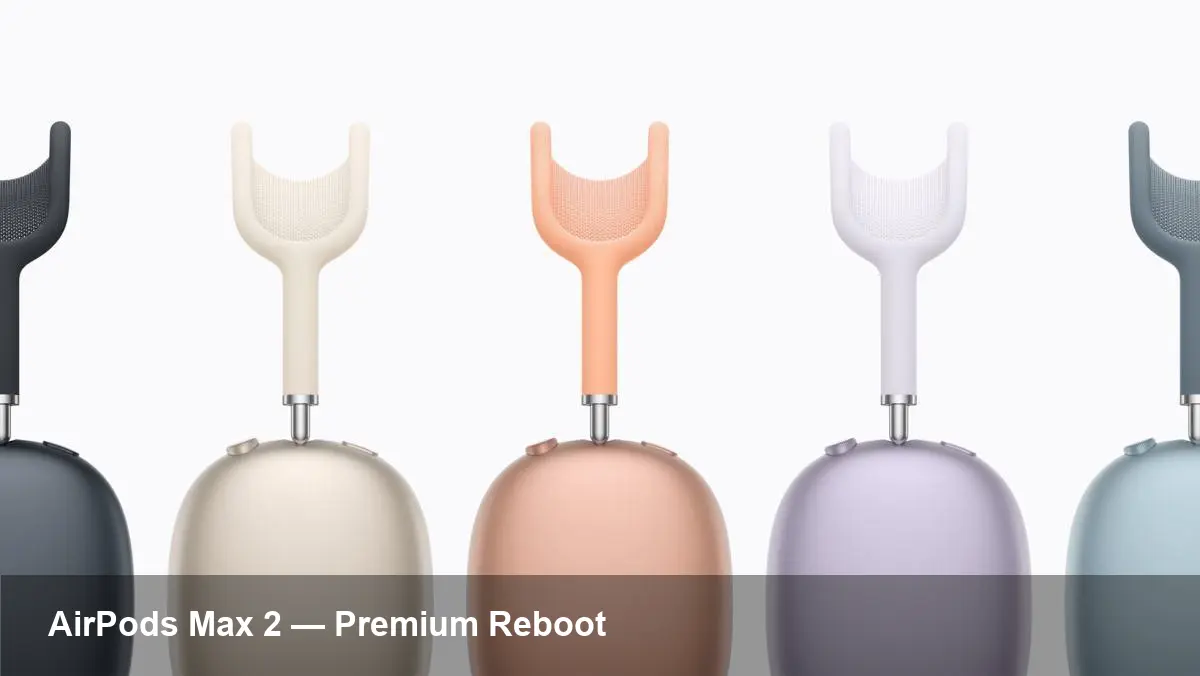
- Design and battery: The product maintains the premium build and finishing of the original AirPods Max. Battery expectations and charging behavior remain in the same professional range, while the company optimized power draw via the H2 chip.
At $549, the product slots into the upper tier of consumer headphones where sound quality and integration matter as much as price.
How it changes real-world use
- Commuting and travel: Enhanced ANC reduces fatigue on long flights and noisy commutes. Better ANC combined with spatial audio makes in-flight entertainment more immersive.
- Hybrid meetings and translation: Live translation is useful for international teams and travelers who need quick, private translation without routing audio to servers. In-situ interpretation can speed meetings, reduce friction in group conversations, and preserve privacy.
- Content creation and review: For podcasters, video editors, and sound designers who work within Apple’s ecosystem, improved tonal balance and low latency make these headphones a practical monitoring choice when precision matters but budget or portability prevents studio-grade gear.
- Fitness and daily use: While over-ear models aren’t ideal for sweaty workouts, the improved ANC and comfort design make them attractive for long listening sessions at home or in co-working spaces.
Concrete scenario: a product manager on a cross-border call can enable live translation to follow a colleague speaking in another language, capture key quotes for notes, and then switch to spatial audio for a walkthrough video — all without changing devices.
Developer and platform implications
- On-device processing focus: The H2 chip shows Apple doubling down on local compute for audio features. That reduces latency and enhances privacy, which is important for real-time features like translation and voice isolation.
- APIs and ecosystem: Developers building audio apps — from conferencing tools to language apps — can expect better platform-level support for low-latency audio effects and spatial rendering. Apple’s audio frameworks (AVFoundation, Core Audio, and new spatial audio APIs) will be central for integrating the Max 2’s capabilities.
- New use cases for telepresence: Unified audio processing opens doors for richer telepresence apps where spatial cues convey presence. Developers should experiment with mixed-source audio streams, dynamic head tracking, and selective microphone processing when targeting pro-level listeners.
Business and market context
Apple’s decision to refresh its flagship headphones without a major event is strategic: it keeps momentum in the premium audio space while avoiding the marketing cost of a headline launch. Pricing at $549 places the AirPods Max 2 against top-tier alternatives from Sony, Bose and Sennheiser.
For Apple, the product reinforces ecosystem lock-in: features like live translation and spatial audio work best with Apple devices, encouraging customers to stay in the ecosystem. For competitors, Apple’s emphasis on on-device AI raises the bar for privacy-preserving, low-latency features.
Pros, limitations and buying advice
Pros:
- Industry-leading integration with iPhone, iPad and Mac.
- Improved ANC and on-device features thanks to the H2 chip.
- Live translation adds practical value for international users and teams.
Limitations:
- $549 remains a premium price — buyers should compare features with similarly priced rivals.
- Over-ear design is premium but not ideal for active sports.
- Some pro audio engineers will still prefer studio headphones for absolute neutrality and flat response.
If you mostly listen within Apple’s ecosystem, travel frequently, or value privacy and low-latency features, the AirPods Max 2 are a compelling option. If you need absolute neutrality for mixing/mastering or want a lower-cost ANC headphone, competitor models may offer better value.
What this launch means for the next wave of audio devices
- On-device AI will become standard in premium audio. Expect more headphones to include dedicated silicon for tasks previously offloaded to phones or the cloud.
- Real-time translation will shift from novelty to expectation in business settings, especially for global teams and frequent travelers.
- The premium headphone market will continue to bifurcate: one segment focused on pure audio fidelity and studio neutrality, another emphasizing smart features, integration and convenience.
Apple’s AirPods Max 2 is a clear statement: the company intends to hold the premium headphone market by combining superior integration, on-device compute and user-facing features that go beyond simple playback. For audio-first businesses, developers and professionals, the device is worth evaluating as part of a broader workflow — particularly if low-latency processing, privacy and translation matter.
Consider testing translation and spatial features during your next cross-border call to see whether the convenience earns the premium price in your day-to-day work.