AI Sound Bubbles: The Future of Noise Canceling

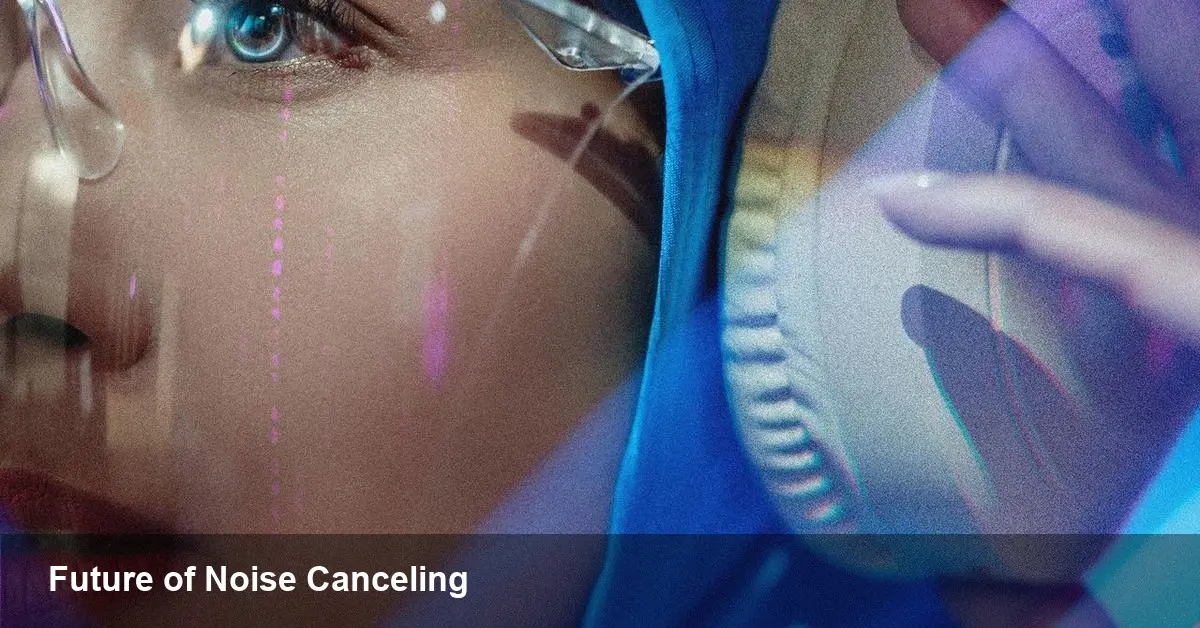
- Noise cancellation is moving beyond simple ANC to AI-driven, context-aware systems.
- Hearvana’s “sound bubble” uses on-device deep learning to amplify selected voices and suppress ambient noise.
- Apple, Bang & Olufsen, Sony, and Bose are adding hearing-health and adaptive features to headphones.
- New tech offers accessibility gains but raises questions about battery, privacy, and on-device processing.
What’s changing in noise cancellation
Noise canceling is shifting from broad-band suppression to selective, intelligence-driven audio control. Developers are training models to recognize sound types and human voices so devices can amplify what matters and mute what doesn’t.
Consumers still rely on Sony and Bose for “total cocoon” ANC, but headphone makers are pushing fine-grained control that adapts to context and protects hearing.
Apple and the mainstream of adaptive audio
Apple’s AirPods Pro (3rd gen) and AirPods Max set the standard for consumer features: Active Noise Canceling, Transparency Mode, Adaptive Audio, and Hearing Protection. Conversation Boost and Live Listen are practical accessibility tools that highlight speech while reducing background noise.
Those mainstream capabilities show how manufacturers can blend audio quality with health-focused features to reduce hearing damage and improve clarity in noisy environments.
Hearvana’s semantic hearing and the “sound bubble”
Seattle startup Hearvana, cofounded by Shyam Gollakota with Malek Itani and Tuochao Chen, attracted a $6 million pre-seed that included Amazon’s Alexa Fund. The team’s early prototype used six microphones across a headband and an Orange Pi microcontroller to run models trained to identify roughly 20 ambient sound classes.
Hearvana’s system—called semantic hearing—lets the user create a “spotlight” on specific sounds (a person speaking, ocean waves, a baby crying). Its signature feature, the sound bubble, amplifies speakers inside the bubble while suppressing other noise to about 49 dB, with latency under roughly 10–20 ms. Users can “enroll” a speaker by looking at them for a few seconds so the model learns their voice characteristics.
Industry focus: hearing health and context awareness
Miikka Tikander, head of audio at Bang & Olufsen, says brands are prioritizing hearing health and adaptive choices. He highlighted discussion at the AES Headphone Technology conference in Espoo, Finland, where manufacturers emphasized both ANC and hearing protection.
Brands want devices that can decide—if permitted by the user—when to block sound and when to restore ambient awareness.
What it means for users
The next wave of noise canceling promises better accessibility, smarter commuting, and more natural social interactions in noisy spaces. But it also raises practical concerns: battery life for on-device AI, latency, and privacy around voice models and enrollment.
For now, expect incremental rollouts: Apple, premium makers like Bang & Olufsen, and startups such as Hearvana will push features from lab prototypes into everyday headphones over the next few years.