Preparing for Google I/O 2026: decode the teaser and act

A puzzle starts the clock
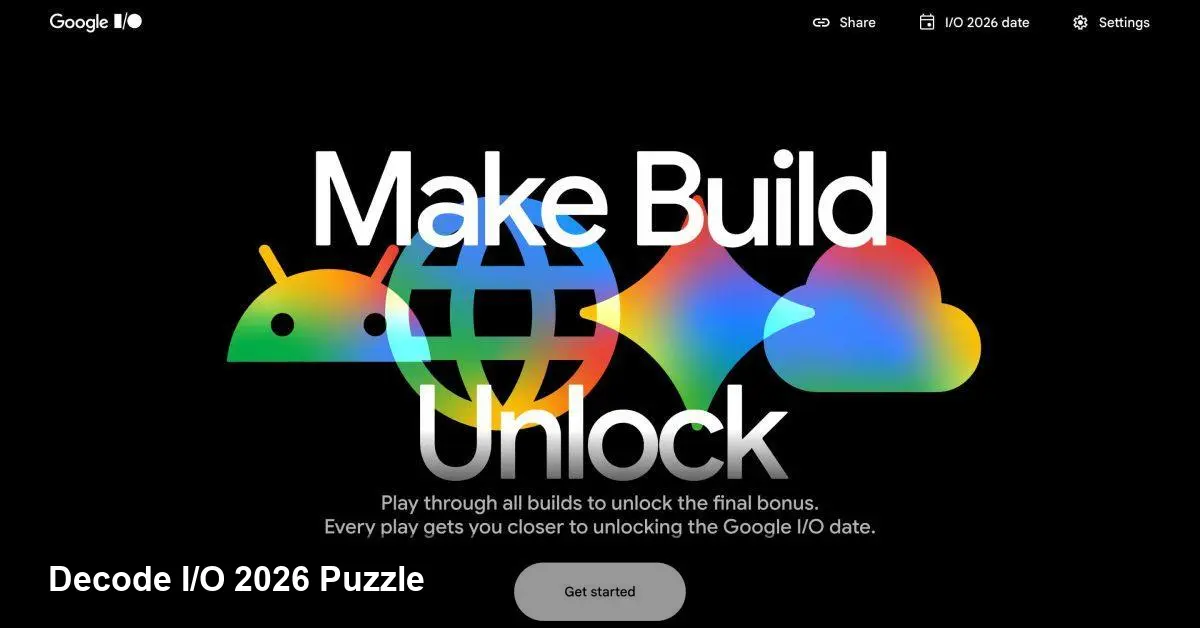
Google kicked off the I/O 2026 buzz with an interactive teaser called “Make Build Unlock.” Instead of a straight announcement, the puzzle is a deliberate nudge to developers and product teams: the conference is coming, and planning matters. Historically, Google I/O is where the company surfaces platform advances, new SDKs, major Android previews, cloud and AI tooling, and sometimes hardware. The teaser is less about theatre and more about signaling the start of the developer product cycle.
Why Google is using a puzzle (and why it matters)
Puzzles and scavenger hunts do three things for events like I/O:
- Create organic engagement across developer communities and social channels.
- Reward early followers with the concrete detail they need (dates, registration openings, call-for-proposals windows).
- Implicitly prime dev teams to think in terms of product roadmaps tied to the conference calendar.
If the teaser is solved to reveal dates, that gives teams a fixed deadline to align releases, demos, and marketing. That deadline becomes a forcing function: finish your SDK migration, finalize your API compatibility tests, or ship that keynote demo.
What Google I/O 2026 will likely focus on
Google’s themes at recent I/O events give a strong hint about what to expect:
- AI-first developer tooling: expanded APIs, copilots integrated into IDEs, and more model-serving options in cloud products.
- Android platform updates: developer previews, new APIs, and guidance on migrations for background work, permissions, and privacy.
- Frameworks and cross-platform tools: updates to Flutter, web tooling, and Firebase libraries.
- Cloud and observability improvements aimed at simplifying deployment, tracing and cost optimization for services running at scale.
- Developer productivity and security features—better CI/CD integrations, test harnesses, and privacy-preserving APIs.
All of this makes I/O a practical planning point. If you build for Android, the web, Google Cloud, or use Google’s ML ecosystem, expect actionable changes that you'll need to adopt or test.
Practical checklist for developers and startups
Treat the I/O teaser as your kickoff. Here’s a concrete checklist you can use over the next 6–10 weeks as details surface:
- Track the reveal channel. Follow the official I/O page, Google developer accounts, and the puzzle feed so you get dates and registration windows the moment they’re published.
- Reserve travel vs. virtual attendance. Don’t book non-refundable travel until dates and format are public, but block tentative budget and calendar space for the typical I/O window.
- Audit dependencies and target SDKs. Identify libraries that break on newer platform previews and create a migration plan. For Android, prepare branches to test against developer previews and update targetSdkVersion in your CI.
- Harden demos. If you plan a live demo or booth, isolate network dependencies and have fallbacks (recorded demo, local mock servers). Practice under constrained connectivity.
- Plan content and PR. Line up blog posts, release notes, and social teasers to hit immediately after the keynote—news cycles are short.
- Ensure observability. Add or extend tracing and error reporting around new code paths so you can quickly diagnose regressions when you test against previews.
- Apply for speaking or showcase spots. Keep pitch decks concise: problem, solution, technical depth, and demo plan.
- Sync with product/marketing. If you’re a startup, coordinate any fundraising or product announcements around the I/O calendar to maximize attention.
Two real-world scenarios
- Indie app developer: You rely on Google Play and Android APIs. When the I/O dates drop, you’ll want to immediately test your app on the new preview image. Create a checklist: install preview on emulator/device, run smoke tests, check permissions flow, and publish a compatibility report for users.
- Startup launching an AI feature: Use I/O to amplify the launch. Prepare a latency and cost analysis for the keynote demo, ensure production keys and rate limits are in place, and arrange backup demo scenarios in case of cloud hiccups.
How this changes workflows and priorities
I/O is increasingly a moment that accelerates platform changes rather than just announcing them. Expect the following shifts:
- Shorter windows between announcement and SDK availability. Teams should be ready to adopt previews quickly.
- Increased emphasis on reproducible demos and automated tests. Manual, ad-hoc validation is too brittle.
- Greater need for privacy-first design work and compliance checks as new platform APIs touch user data.
For engineering teams, that means building short validation sprints into your roadmap timed around the conference. For product and marketing, it means coordinating launch calendars to ride the wave of I/O coverage.
Opportunities beyond the keynote
Google I/O isn’t just about the big announcements. The surrounding ecosystem offers value:
- I/O Extended events and local meetups are great places to recruit contributors and beta testers.
- Codelabs and office hours can speed up adopting new APIs—schedule time for your engineers to attend specific sessions.
- Networking opportunities: If you plan to recruit, set up informal meet-and-greets during the event rather than relying solely on formal channels.
Looking past 2026: three quick implications
- AI becomes a baseline platform concern. Expect more runtime, tooling, and cost-management features aimed at making models production-ready.
- Developer experience will be a differentiator. Companies that reduce onboarding friction for new APIs and provide solid migration guides will win adoption.
- Events will continue to be hybrid and community-driven. Teasers like “Make Build Unlock” encourage that community involvement and make the lead-up to big conferences useful rather than just ceremonial.
If you’re part of a dev team or a startup, treat the puzzle as the starting gun. Use the time between the teaser and the confirmed dates to tighten tests, update your CI, rehearse demos, and coordinate your communication plan. When I/O’s keynote arrives, you’ll want your product to be ready to show—rather than scrambling to keep up.