Inside Apple’s 50th Anniversary: Gifts, Park Finale

A milestone staged for employees and the brand
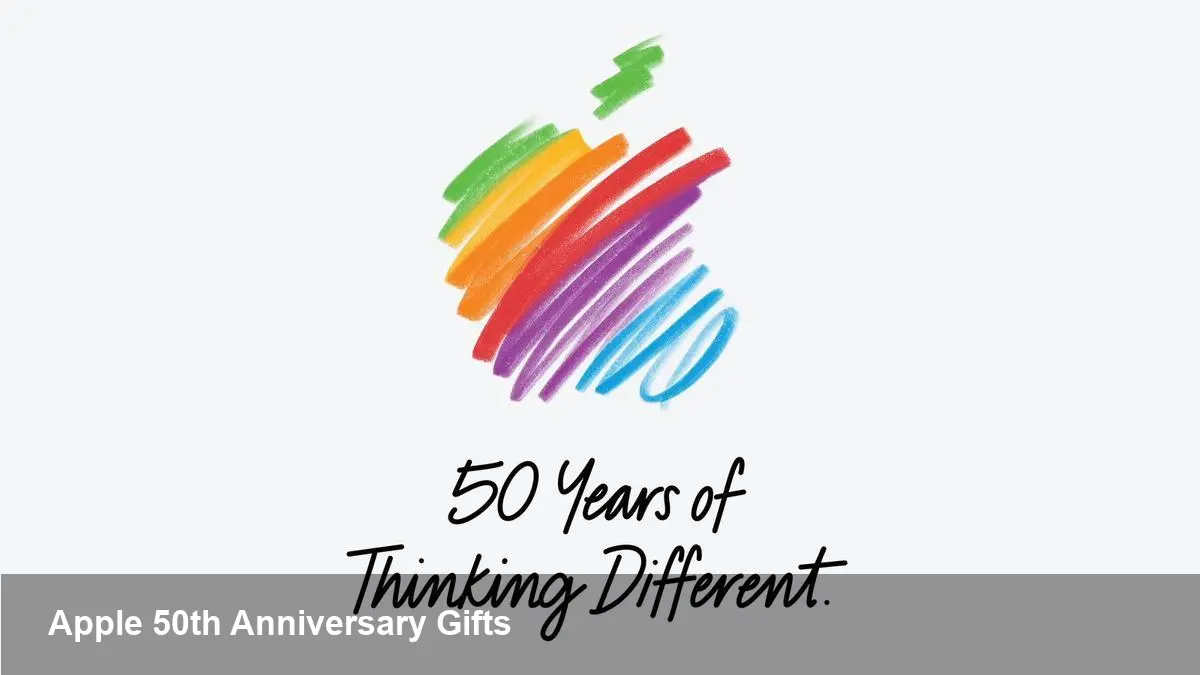
Apple turns 50 on April 1, 2026. For a company synonymous with product launches and consumer hype, this anniversary is playing out internally as a curated moment: employees are being handed commemorative keepsakes — a commemorative t-shirt, an enamel pin and a limited-edition poster — featuring the scribble-style rainbow Apple logo used across the anniversary artwork. The items are available to pick up at Apple Park, where signage describes the items as “crafted by hand,” and distribution runs through April 30. The company is also planning a finale concert at Apple Park to cap the celebrations.
This is more than a nostalgic gesture. It’s a coordinated exercise in culture, retention and public storytelling that tells us how big tech celebrates itself, and what other companies can learn from the playbook.
What employees actually receive (and why it matters)
- Commemorative t-shirt: wearable branding that turns staff into walking ambassadors. A simple piece of merch becomes a conversation starter in the office, at meetups and on social media.
- Enamel pin: low-cost, high-meaning item that appeals to collectors within the company. Pins are subtle, easy to distribute and often kept for years.
- Limited-edition poster: a visual artifact that works for desk cubicles, offices and home workspaces. Posters are a creative way to preserve a specific moment in a company’s timeline.
Making these items limited and visually distinct—the scribble-style rainbow motif—does two things. Internally, it gives employees a sense of inclusion in a landmark moment. Externally, it creates an identity cue the public recognizes when employees share photos. Because distribution runs until April 30, the company also creates scarcity and a time-limited call to action.
Real-world scenarios: how different teams experience the anniversary
- Engineering squads: a small team shipping a major iOS update might use the t-shirts as a celebratory reward after a release, reinforcing morale after crunch cycles. The enamel pin can signal membership in long-tenured teams during hack weeks.
- Retail staff: Apple Store employees often double as the public face of the brand. A limited-edition poster in-store windows or staff t-shirts will naturally attract customer attention and social posts, boosting store-level engagement.
- Operations and supply chain workers: distribution of physical swag to multiple global facilities requires logistics planning. That the items are labeled “crafted by hand” is a symbolic nod to craftsmanship, but the practical distribution for frontline manufacturing or distribution teams still matters.
The business logic behind corporate anniversaries
Celebrating a 50th anniversary is a PR and HR play. For HR, anniversaries are an inexpensive perk that can improve morale, reduce attrition and reinforce company values. For marketing, it offers an earned-media moment: photos of employees with commemorative merchandise, coverage of the finale concert at Apple Park, and social shares that amplify brand warmth without heavy ad spend.
There’s also an investor and market perception angle. A long-lived tech company celebrating a half-century signals stability and cultural staying power in an industry often focused on the new and disruptive. It’s a subtle reminder to customers and partners that Apple is a legacy business that continues to invest in culture.
Collectibility and secondary markets
Limited-run company merch often trickles into secondary markets. Collectors prize enamel pins and posters, especially when connected to milestone anniversaries. For Apple, which has a devoted collector community for devices and promotional items, these pieces may show up on auction sites and enthusiast forums — extending the anniversary’s public reach. That afterlife isn't just about fans; it underscores how corporate artifacts can become cultural artifacts.
Operational notes and inclusivity
Apple’s decision to allow pick-up through the end of April helps include employees on different schedules and in different time zones. Still, companies planning similar efforts should consider remote distribution, multiple pickup locations, and carefully managed inventory to avoid frustration. Labeling the products as “crafted by hand” adds a humanized layer to mass-produced merch, but the phrase should match reality — especially to avoid appearing performative to workers who participate in production and distribution.
Three implications for the future of corporate culture
- Physical moments still matter: Even in a digital-first world, tangible artifacts — shirts, pins, posters — create durable memories employees keep. Tech brands will continue blending physical and digital experiences to sustain loyalty.
- Events as recruitment tools: A public, celebratory event at Apple Park — especially one that gets media coverage — becomes a recruitment magnet. Prospective hires see a company that prizes history and employee experience, which can sway talent decisions as much as compensation packages.
- Narrative control through internal channels: When employees become the first storytellers (sharing unboxing photos, wearables at conferences, or selfies at the finale concert), companies get authentic narratives that are hard for paid campaigns to replicate.
What other companies can copy (and what to avoid)
Copying Apple doesn’t require a billion-dollar campus. Small and medium companies can: create limited-run items tied to specific dates, stage a hybrid in-person/virtual event, and offer multiple distribution channels. Avoid hollow gestures: real value comes from pairing swag with meaningful activities — town halls, founder Q&As, recognition awards — that explain why the milestone matters beyond the merch.
A cultural moment beyond the merchandise
Apple’s 50th anniversary is as much about storytelling as it is about the items employees keep. The commemorative t-shirt, enamel pin and limited-edition poster are tokens, but the larger effort — capped with a finale concert at Apple Park — is a way for Apple to narrate five decades of design, retail and ecosystem thinking back to its most important internal audience: employees.
For founders and leaders watching, the lesson is clear: anniversaries can be powerful levers for cohesion and brand storytelling if they combine authenticity, accessibility and memorable experiences.
Whether you’re an Apple engineer pulling on that commemorative t-shirt after a late-night ship or a store associate pinning the enamel badge to a lanyard on a busy weekend, these are the kinds of small rituals that help sustain organizational identity through the next 50 years.