Apple at 50: What founders and developers should know

Fifty years in: a quick frame
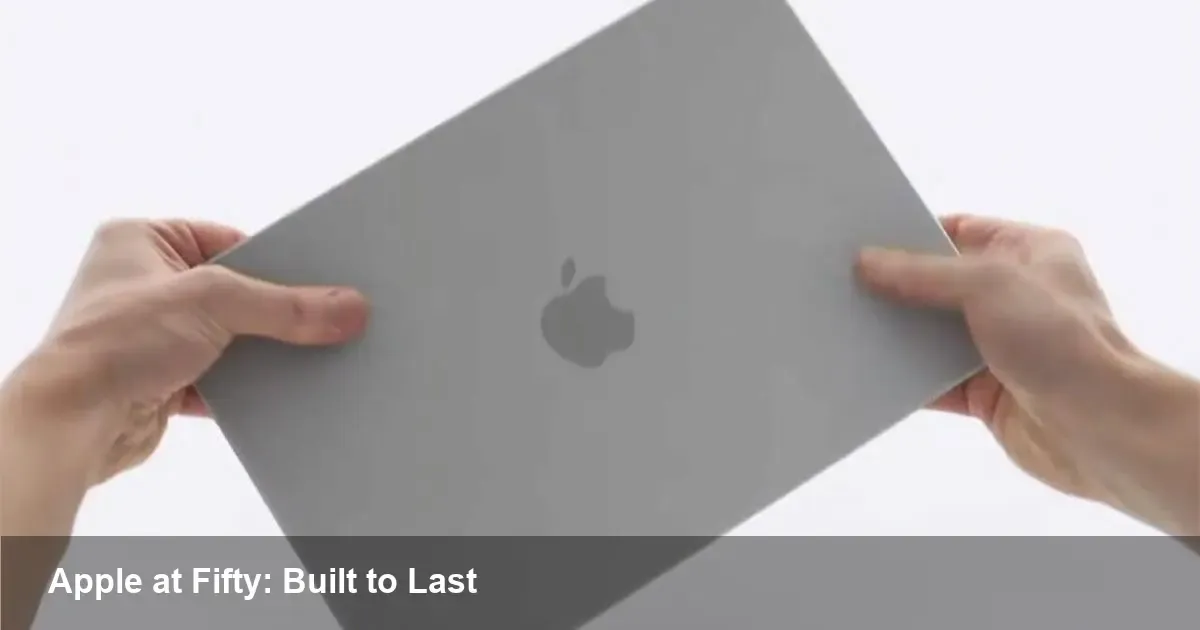
Apple turned 50 in 2026. Over five decades the company moved from a garage electronics project to one of the most influential technology firms on the planet. That arc is more than nostalgia; it shows a pattern of product-driven design, tight hardware-software integration, and an escalating services layer that now defines how businesses and developers make money on Apple platforms.
How Apple’s milestones changed product and developer priorities
Understanding Apple’s timeline helps explain its present behavior and what that means for building businesses on its platforms.
- Early era (1976–1996): hobbyist machines to the Macintosh. Apple set expectations for consumer-focused computing and GUI-driven products.
- Reinvention (1997–2006): Steve Jobs’ return, iMac and the focus on design and integrated experiences.
- iEra and ecosystems (2001–2014): iPod, iPhone (2007), App Store (2008). Mobile-first product thinking and an app economy appeared.
- Platform expansion (2014–2020): Swift, SwiftUI beginnings, and a growing services business (iCloud, Apple Music, Apple TV+, App Store subscriptions).
- Silicon & spatial (2020–2026): Apple Silicon (M1, M2, M3) re-architected Macs; Vision Pro and the move into spatial computing began to broaden what “Apple hardware” can mean.
For founders and developers, each era rewired priorities: UX matters more than ever, shipping native performance became a differentiator, and service revenue models shifted how products are monetized.
Practical examples: three real-world scenarios
- Mobile-first consumer startup: If you’re launching a social or utility app, expect iOS users to demand polish and fast performance. Use Swift and SwiftUI to get the best battery and UI outcomes on Apple Silicon and iPhones. Plan for App Store submission rules, subscription models, and the platform’s review cycles when forecasting revenue.
- B2B SaaS selling to enterprises: Apple’s Macs and iPads are now a standard in many verticals. Support device management (MDM), provide single sign-on (SSO) and enterprise-ready provisioning, and test on Apple Silicon Macs. Consider a native macOS client for power users while keeping web-first workflows for broader compatibility.
- AR/Spatial product team: Vision Pro established a premium spatial-computing market. For most startups it’s sensible to build ARKit-enabled features for iPhone/iPad first — much larger user base, lower hardware cost — and design spatial UX that can be ported to Vision-class devices as adoption grows.
Developer economics and platform friction
Apple’s tight integration delivers remarkable device performance and user experience, but it also defines how businesses make money and what constraints they face.
- Revenue models: App Store subscriptions and in-app purchases are mature ways to monetize, but Apple’s fees and rules shape pricing strategy. Many startups adopt a hybrid model: web sign-up for lower fees and in-app purchases for convenience.
- Tooling and migration: Xcode, Swift, and SwiftUI provide a productive stack, but platform lock-in is real. The transition to Apple Silicon showed this: universal binaries and Rosetta saved many apps, yet native optimization unlocked significant battery and performance wins.
- Privacy as product differentiator: Apple’s emphasis on data minimization and on-device processing influences app architecture. Use on-device ML where possible to align with user expectations and minimize regulatory exposure.
Trade-offs every founder should weigh
- Control vs. reach: Apple controls the app experience tightly, which favors products that prioritize polish and hardware-specific features. But if your priority is scale across platforms, a web-first approach can reduce dependence.
- Revenue vs. rules: The App Store offers enormous distribution but comes with policies and fees. Factor these into unit economics early.
- Future-proofing: Investing in native Apple technologies (Swift, SwiftUI, Metal) often pays off in user experience, but it raises the cost of porting to other platforms.
Three implications for the next five years
- On-device AI becomes a competitive baseline. Apple’s silicon roadmap prioritizes neural compute. Expect more ML workloads to run locally, shifting product architecture away from cloud-only inference for latency- and privacy-sensitive features.
- Spatial computing will broaden product categories. Vision-class devices will create new UX primitives (gaze, gesture, spatial audio) that reframe how apps are designed — but mainstream adoption will be gradual, so multi-tier strategies (phone/tablet first, spatial later) will win.
- Regulatory pressure will reshape distribution economics. Antitrust scrutiny, right-to-repair movements, and regional rules will continue to nudge Apple toward more openness in some areas. That can change monetization paths and reduce single-vendor risk for developers.
Tactical checklist for the next product cycle
- Prioritize native performance on Apple Silicon for apps where responsiveness and battery life impact retention.
- Design for privacy-first ML: leverage on-device frameworks and minimize server-side PII where possible.
- Plan a staged hardware strategy: phone/tablet first, then spatial/vision support where meaningful.
- Build flexible monetization: support web and in-app flows and test which converts better for your audience.
Apple at 50 is not an endpoint. It’s a reflection of a company that doubled down on integrated products and a curated ecosystem. For founders and developers that means opportunities — and clear constraints. The smart bet is to take Apple’s strengths (UX, privacy, performance) and design a product strategy that can also survive — and thrive — if platform rules shift.