Samsung Aims to Make Exynos Dominant Over Snapdragon

- Key Takeaways:
- Samsung’s Exynos 2600 is built on its 2nm GAA process and initially reported ~50% yields.
- Qualcomm supplies ~75% of Galaxy S26 chips (Snapdragon 8 Elite Gen 5); Exynos occupies the remaining 25%.
- Analyst Samir Khazaka says Samsung won’t invest heavily in custom CPU/GPU designs unless it plans Exynos for a larger share.
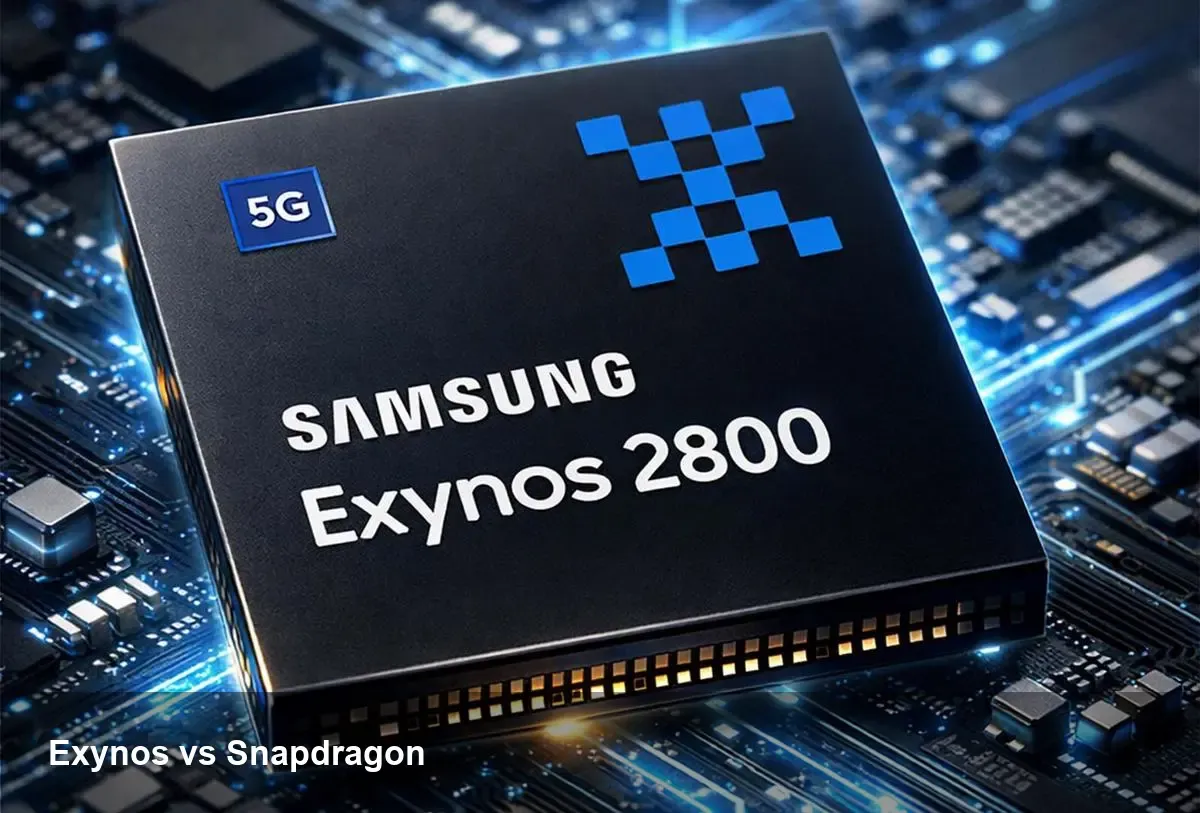
- Exynos 2600 already ships with an AMD-based Xclipse 960 GPU (MGFX4); Exynos 2800 may add Samsung’s in-house CPU and GPU.
Why Samsung is rethinking its SoC strategy
Samsung’s recent Exynos 2600 launch, manufactured on its 2nm GAA node, signals a push to regain control over high-end mobile silicon. The company faces pressure to reduce reliance on Qualcomm’s Snapdragon line and the licence premiums that come with it.
Yields and market share are the immediate limits
Early reports put Exynos 2600 yields at roughly 50 percent during initial mass production. Improving yields is the first technical hurdle Samsung must clear to increase supply. Commercial reality is complicated by an existing agreement with Qualcomm: about 75 percent of Galaxy S26 shipments will use the Snapdragon 8 Elite Gen 5.
Money, risk and the case for in-house cores
Analyst Samir Khazaka argues Samsung would not pour “millions” into custom CPU and GPU development if the Exynos line were destined for a minority role. The point underlines the scale of investment required to design competitive in-house CPU cores and GPUs and to justify those costs with volume.
Technology moves: AMD partnership and MGFX4
Samsung has already advanced its graphics roadmap with the Exynos 2600’s Xclipse 960 GPU, which uses AMD’s customized RDNA 4 architecture (MGFX4). That AMD collaboration gives Samsung a performance boost while it works on broader in-house GPU ambitions.
What to expect from Exynos 2800
Industry reports indicate the Exynos 2800 could be the first SoC combining Samsung’s new 2nm manufacturing with internal CPU and GPU designs. If Samsung succeeds, the Exynos 2800 could claim a higher fraction of Galaxy S series shipments—especially once Qualcomm’s supply agreement lapses.
Commercial pressure from Qualcomm pricing
Part of Samsung’s motivation is cost: the Snapdragon 8 Elite Gen 5 is estimated to cost about $280 per unit, and next-gen chips could exceed $300. Reducing third-party margins would help Samsung improve device-level economics and control product differentiation.
Bottom line
Samsung is positioning Exynos beyond a niche fallback. Between yield improvements, AMD GPU collaboration and a push for in-house CPU/GPU IP, the company appears to be aiming for a dominant role in future Galaxy SoC supply. Analyst commentary suggests this strategy only makes sense if Samsung intends Exynos to power the bulk of its flagship shipments, not a minority share.