Exynos 2700 Ulysses: SF2P, ARM C2, LPDDR6 & UFS5 Details

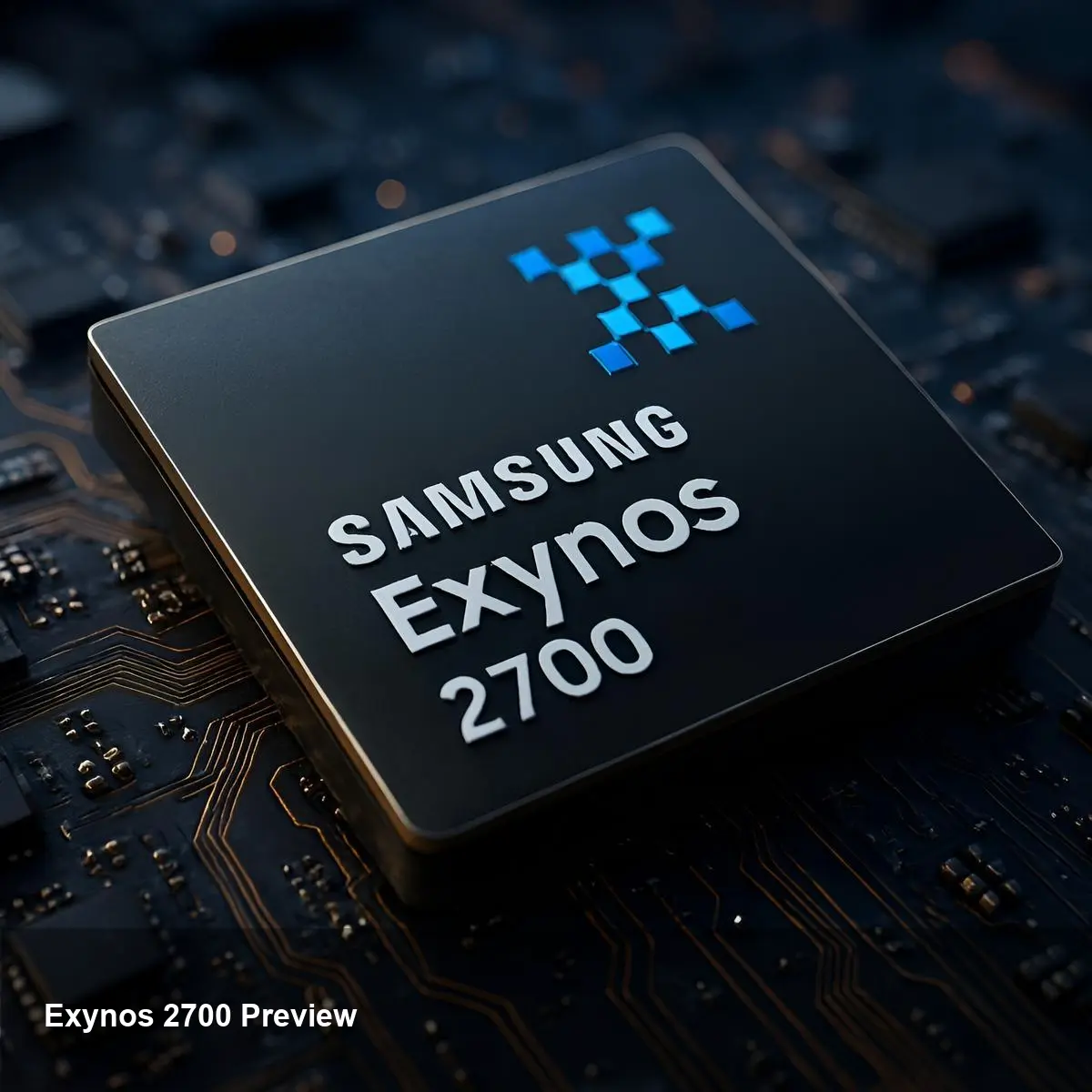
- Exynos 2700 (codename "Ulysses") reportedly uses Samsung's SF2P 2nm GAA process for ~12% performance and ~25% energy gains.
- ARM C2 cores (C2‑Ultra/C2‑Pro) expected, with a prime core clock near 4.20GHz and an IPC uplift of ~35%.
- New FOWLP-SbS packaging introduces a unified Heat Path Block (HPB) for the AP and DRAM to improve thermal headroom.
- LPDDR6 (up to 14.4 Gbps), UFS 5.0 and AMD-based Xclipse GPU promise 30–40% bandwidth and graphics gains.
What the leaks say
A Samsung-focused tipster — amplified by a known leaker on X — spilled high-level specs for the 2027-targeted Exynos 2700. The internal codename is reportedly "Ulysses." These details remain unconfirmed by Samsung but fit industry trends around 2nm GAA and ARM's core rebrand.
Process and CPU
The Exynos 2700 is said to be built on Samsung's SF2P node, the next-gen evolution of its 2nm Gate-All-Around (GAA) process. Early estimates suggest a roughly 12% gross performance improvement and a 25% reduction in power versus the prior SF2 node.
ARM's new C2 family will likely power the CPU cluster, reportedly in a 1+3+6 arrangement similar to the Exynos 2600. The prime core could reach 4.20GHz, which alongside a projected ~35% IPC boost could push single-core and multi-core scores substantially higher.
Thermals and packaging
Samsung is reportedly adopting FOWLP-Side-by-Side (SbS) packaging that places DRAM and the AP closer and uses a unified Heat Path Block (HPB). This copper-based HPB would cover the full AP die and the DRAM, improving heat spread compared with the partial-contact sink used on Exynos 2600.
Better thermal coupling can raise sustained performance and reduce throttling during extended high-load tasks like gaming or AI inference.
Memory, storage and GPU
On the memory side, Exynos 2700 is expected to support LPDDR6 — up to 14.4 Gbps — and UFS 5.0 storage. Those bandwidth upgrades, paired with an AMD-architecture Xclipse GPU, are estimated to deliver a 30–40% jump in real-world throughput and graphics performance.
Samsung may retain the Xclipse RDNA-based GPU for this generation though separate reports hint at an in-house GPU arriving in a later Exynos 2800.
Unknowns and trade-offs
Key unknowns include whether Samsung will integrate a modem on-die or stick to an external modem. Integrated modems are more power-efficient but complicate die fabrication and yield.
Market impact
If these specs hold, Exynos 2700 could reassert Samsung's competitiveness against Qualcomm's flagship Snapdragon family, narrowing the performance and efficiency gap for Galaxy devices.
Until Samsung confirms specs and tapes out silicon, treat these leaks as plausible but provisional.