ASUS: RTX 5070 Ti Production Halted; NVIDIA Reprioritizes

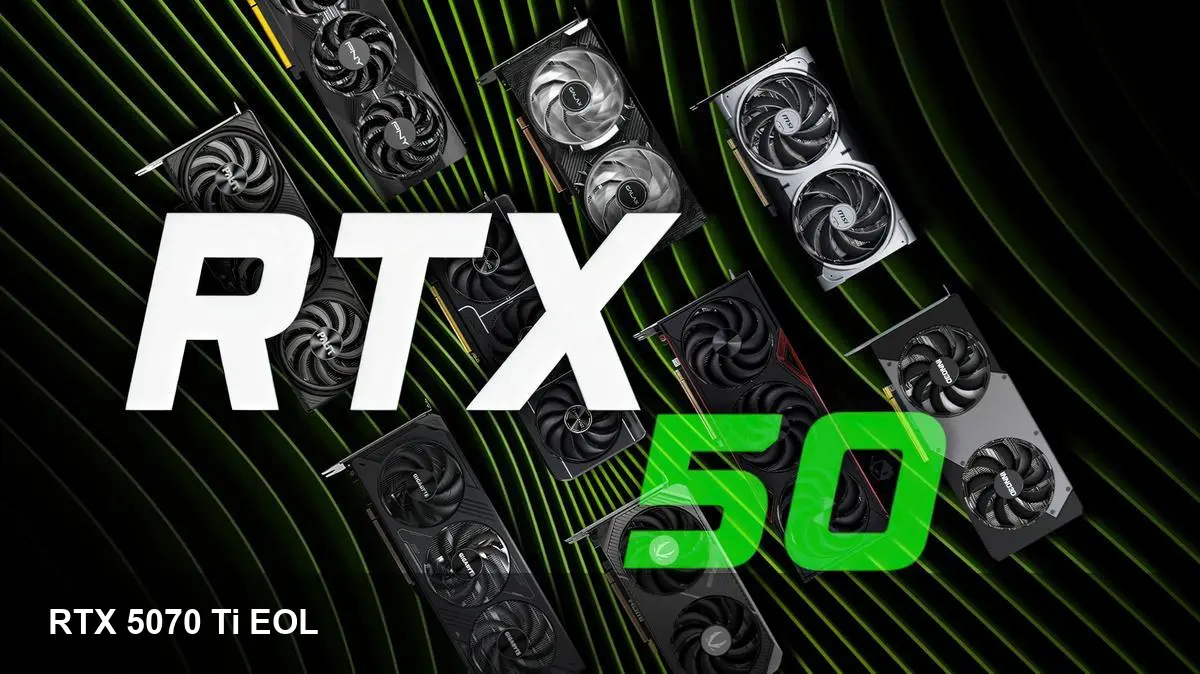
- ASUS confirms RTX 5070 Ti production has stopped and the card is listed as EOL.
- NVIDIA is reallocating RTX 50 series supply toward specific 8GB SKUs and higher-tier 16GB models because of a global memory (VRAM) shortage.
- Retailers in some regions (Australia reported) cannot secure RTX 5070 Ti stock; disruptions may persist through Q1.
- NVIDIA appears to be prioritizing RTX 5060 Ti 8GB, RTX 5080, RTX 5090 D v2 and RTX 5090 while reducing supply for several 16GB variants.
What happened
ASUS has added the GeForce RTX 5070 Ti to its end-of-life (EOL) list after it could no longer place orders with NVIDIA. Hardware Unboxed reported the supply cut and retailer checks in Australia found distributors unable to fulfill RTX 5070 Ti requests.
NVIDIA, according to partner disclosures shared on social channels and industry outlets, is adjusting allocation across the RTX 50 family to manage limited VRAM supply.
Why NVIDIA is realigning production
The immediate driver is a shortage of graphics memory (VRAM) components that feed multiple RTX 50 SKUs. When memory types and capacities are constrained, chip makers and board partners prioritize SKUs that deliver the most market value or fit strategic goals.
NVIDIA’s move reflects a pragmatic supply-chain decision: concentrate constrained memory on either higher-selling 8GB variants or higher-tier models where margins and demand justify continued allocation.
Which models are affected
Industry reports indicate several explicit shifts:
Prioritization rules reported by partners
If two variants share the same VRAM capacity, the higher-tier model within that capacity gets preference (for example, an RTX 5060 Ti 8GB over an RTX 5060 8GB). When multiple 16GB models compete, the highest-tier among them (RTX 5080) receives priority.
Reported production changes include the end of supply for RTX 5070 Ti 16GB and RTX 5060 Ti 16GB, with a broader push toward 8GB versions like the RTX 5060 Ti 8GB.
Market impact and prices
Retail availability is already uneven: some Newegg and Amazon listings show wide price spreads across RTX 50 cards, and anecdotal checks in Australia reveal empty distributor stock for models such as the 5070 Ti.
Expect further price volatility and selective shortages while allocations shift. High-end cards (RTX 5080/5090) are less affected by the prioritization rule but still face constrained volumes due to the same memory shortage.
What buyers and retailers should expect
If you’re shopping for an RTX 50 card, consider flexibility on VRAM capacity and model. Sellers may prioritize stocking 8GB SKUs or fewer high-end models.
For builders with tight upgrade timelines, expand your search to multiple retailers and consider waiting if you need a discontinued SKU like the RTX 5070 Ti.
Sources include ASUS confirmations, Hardware Unboxed reporting, partner posts shared on social channels, and market-price snapshots from major retailers.