Apple Shifts Majority of iPhone RAM Orders to Samsung

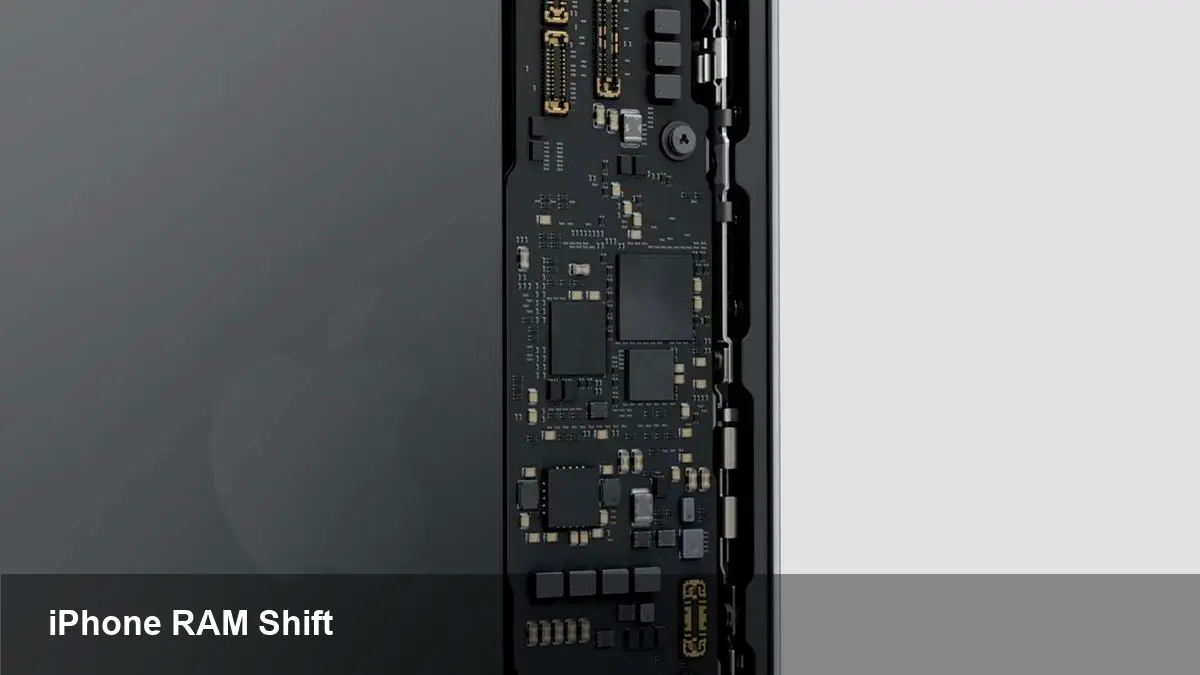
- Apple will source about 60%–70% of iPhone 17 LPDDR from Samsung, per industry reports.
- LPDDR5X module prices jumped from roughly $30 to about $70 in 2025, tightening margins.
- SK Hynix and Micron are redirecting capacity toward HBM for AI/data-center demand, reducing LPDDR supply.
- Apple’s A19/A19 Pro chips and tight performance tolerance make supplier scale and consistency critical.
Why Apple is reallocating iPhone memory orders
Apple has reportedly increased the share of iPhone memory sourced from Samsung as global LPDDR supply tightens. The move — cited by The Korea Economic Daily and relayed by industry outlets — is driven by both price volatility and supplier capacity shifts.
Samsung is expected to supply roughly 60%–70% of the low-power DRAM (LPDDR) used in the iPhone 17, up from a more even split with SK Hynix in prior generations.
Supply dynamics: LPDDR vs HBM
Memory makers SK Hynix and Micron have been reallocating wafer and packaging capacity toward high-bandwidth memory (HBM), which is seeing surging demand from AI accelerators and hyperscale data centers. That pivot has constrained their output of mobile-focused LPDDR.
By contrast, Samsung has maintained larger production volumes for general-purpose and mobile DRAM, making it better positioned to meet Apple’s scale and delivery predictability requirements.
Price pressure and Apple's procurement strategy
Prices for a 12GB LPDDR5X module — used in models such as the iPhone Air and iPhone 17 Pro — reportedly rose from around $30 early in 2025 to roughly $70 by year-end. That sharp increase has elevated the importance of multi-year supply agreements and supplier reliability.
Apple negotiates large, long-term contracts to smooth short-term volatility, but when component costs spike this dramatically, securing predictable volumes becomes paramount. Concentrating a larger share of orders with Samsung may reduce logistical risk and improve pricing leverage through scale.
Performance sensitivity and quality demands
Apple’s latest A-series chips, including the A19 and A19 Pro, are said to be sensitive to momentary voltage spikes. That sensitivity increases the need for memory that performs consistently across very large production runs.
Suppliers must meet tight electrical and thermal tolerances to avoid system-level issues, which favors manufacturers that can guarantee uniformity at scale.
What this means for consumers and the market
For consumers, the immediate impact is likely limited: shipments and device performance should remain stable. But higher memory costs may put upward pressure on component expenses for future iPhone models.
For the chip industry, the shift underscores how AI-driven demand for HBM is reshaping supplier mixes and prompting major customers like Apple to rework sourcing to balance cost, capacity and consistency.