Meta’s VR Gap: Why Eye Tracking Matters

- Key Takeaways:
- Meta removed eye-tracking after the Quest Pro and hasn’t shipped it as a default feature since.
- Apple, Valve and Google are centering new headsets on eye tracking for UI, efficiency and avatars.
- Missing eye tracking limits platform scale: it’s the equivalent of a mouse for spatial computing.
- Meta’s strategy shift to gaming and avatars risks ceding fundamental input tech to competitors.
Eye tracking: the input Meta paused
Mark Zuckerberg acknowledged in 2024 that “Apple's eye tracking is really nice” and noted Meta previously had those sensors in the Quest Pro but removed them for Quest 3. That omission is now a defining gap in Meta’s headset roadmap.
Why eye tracking matters for VR platforms
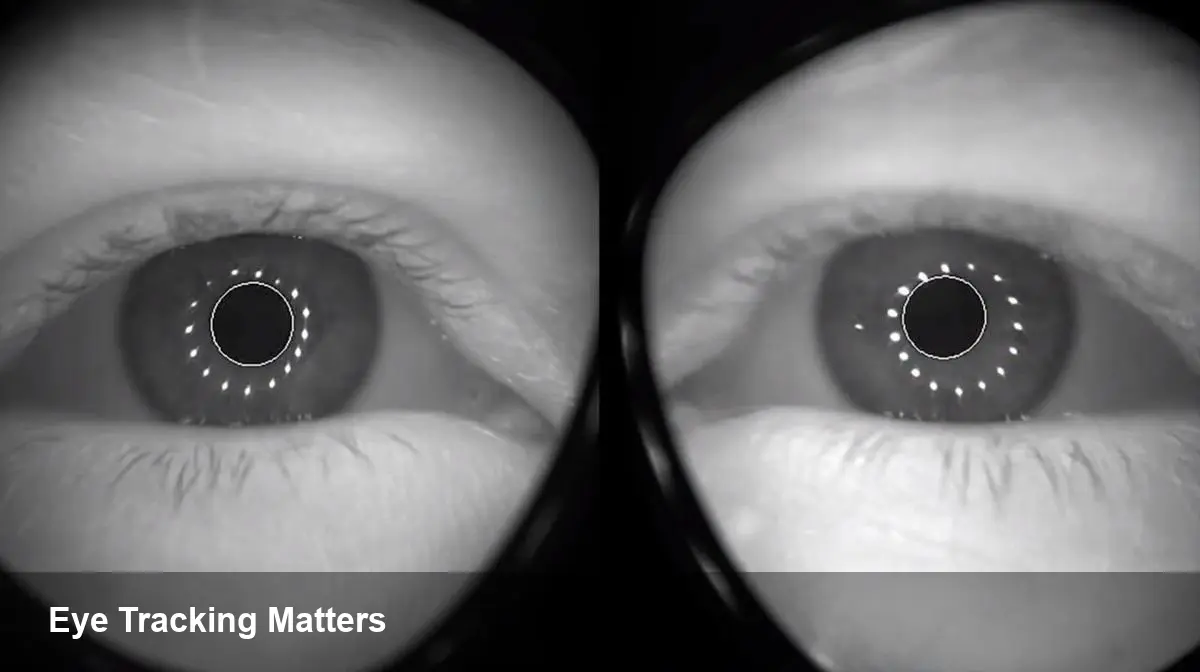
Eye tracking reduces bandwidth and compute by rendering only where users look (foveated rendering), and it provides a natural, low-effort pointer for spatial interfaces. Apple, Valve (Steam Frame) and Google are integrating eye tracking as a core UX and system capability.
Input, avatars and social presence
Vision Pro uses eye data for precise targeting, Persona avatars, and outward-facing displays — turning eye tracking into both a UI primitive and a social signal. Without it, headsets struggle to deliver convincing avatars or fast, intuitive interaction models.
Platform and product consequences
Meta shipped the Quest Pro in 2022 with eye tracking then pivoted away for subsequent mainstream devices. That five-year gap between eye-tracked releases allowed Apple and other rivals to bake the technology into their OS-level experiences, strengthening their platform positions.
Meta’s strategic trade-offs
After acquiring Oculus in 2014 Meta invested heavily in long-term research. But recent shifts — mass layoffs in 2026 and a focus on games and Horizon initiatives — suggest a short-term push that deprioritized eye-tracking hardware.
Gaming vs. platform building
Buying studios and focusing on titles like Beat Saber built content, but did not guarantee platform control. Eye tracking is a foundational input; neglecting it risks the company ceding the equivalent of the mouse and keyboard to competitors.
Where Meta goes next
Meta has signaled it may return to eye tracking in future hardware, and it has hired senior talent from Apple. Still, the market now expects eye tracking as a baseline for premium spatial computing — a capability Meta must reintroduce to compete with Apple Vision Pro, Valve’s Steam Frame, and Google’s XR efforts.
In short: eye tracking is less a luxury feature and more a platform requirement. Meta’s pause costs time, developer mindshare, and the chance to define the spatial input layer for the next decade.