Will OpenAI Build Alexa Before Amazon Matches ChatGPT?

Why this matchup matters
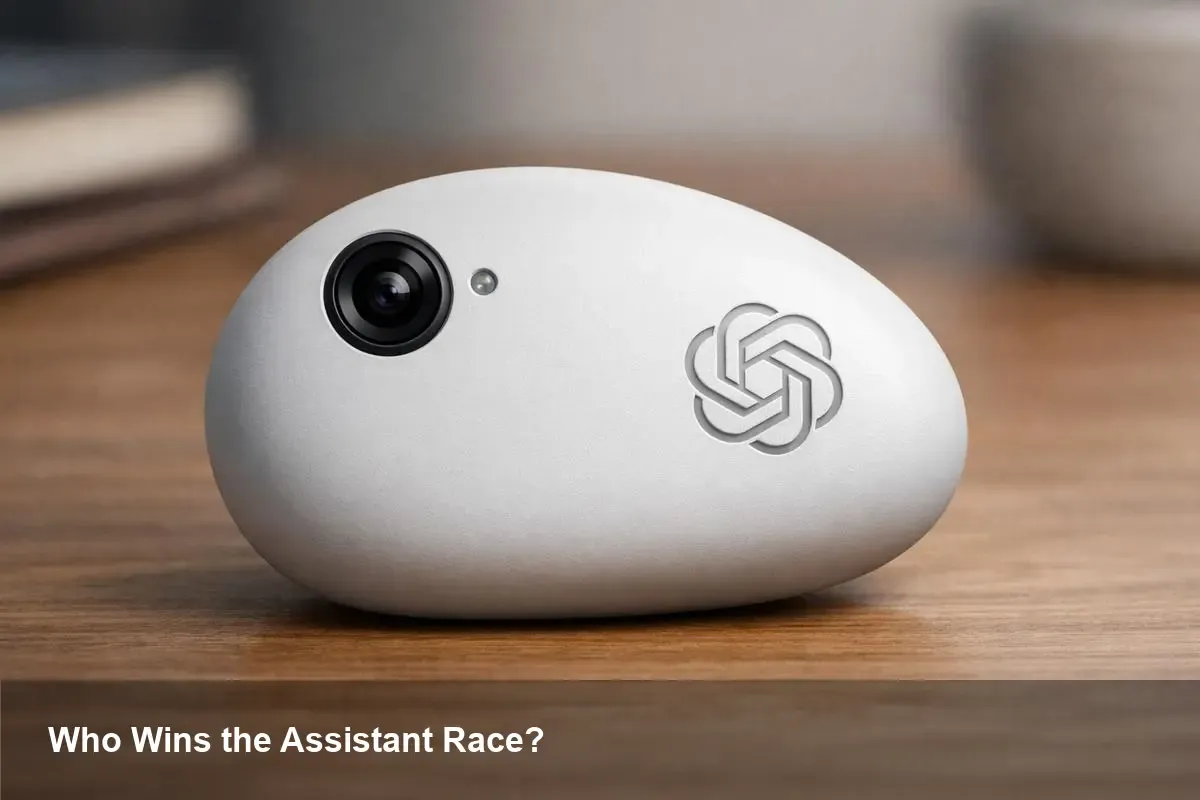
The contest between OpenAI and Amazon is less about headlines and more about how people will interact with computing over the next decade. OpenAI popularized conversational large language models with ChatGPT (launched in late 2022 and grown through iterative models such as GPT-4), while Amazon built a mainstream voice assistant with Alexa (introduced in 2014) that sits in millions of homes. The question—could OpenAI build an Alexa-like voice assistant before Amazon can ship a ChatGPT-equivalent experience—cuts to architecture, business models, developer ecosystems, and real-world constraints like latency, privacy, and hardware.
For developers and founders, the implications are practical: who will own the primary interface to users, who will control the monetization layers, and which platform will allow richer integrations for apps and services?
Where OpenAI and Amazon are starting from
OpenAI's strength is in models and developer-facing APIs. ChatGPT transformed expectations for conversational AI by combining contextual understanding, multi-turn memory, and a surprisingly general set of capabilities (from coding to content creation). OpenAI’s iterative releases have emphasized model quality, multimodal inputs, and plug-in architectures that extend capabilities with external data and services.
Amazon brings decades of experience in hardware, voice user interface design, e-commerce integrations, and an existing install base of Alexa-enabled devices. Alexa's ecosystem—skills, voice commerce hooks, and smart home connectors—is a real asset. Amazon also has AWS, which offers services (infrastructure, MLOps platforms like Bedrock) that make deploying AI at scale practical for enterprises.
The technical trade-offs are clear. OpenAI has a leading large language model pedigree, but deploying a low-latency, always-on voice assistant at global scale requires voice front-ends, wake-word accuracy, local inference for privacy and speed, and decades of UX tuning. Amazon can deploy models closer to the edge and owns first-party access to user audio flows, but historically its core models were not as conversationally flexible as the latest LLMs.
Three concrete scenarios that show how the race will play out
1) Smart home troubleshooting
- Current Alexa: A homeowner says, “Alexa, why won’t my thermostat connect?” Alexa walks through a skill script, asks a few clarifying questions, and triggers device-level diagnostics or directs a repair appointment.
- OpenAI-first assistant: The AI can ingest the thermostat’s logs, triage probable causes, suggest targeted fixes, and draft follow-up text or email. It can also synthesize an escalation plan: “If this persists after X steps, book a certified technician and send me a summary.”
The latter is richer but requires secure access to device logs and low-latency integration with home routers and manufacturer APIs.
2) Customer support for a subscription product
- Alexa-style approach works well for guided flows and transactional tasks.
- A ChatGPT-style assistant can summarize long issue histories, propose tailored fixes, and dynamically generate troubleshooting content that maps to a company’s internal KB. Here the key is access to private enterprise knowledge and safe guardrails against hallucination.
3) Everyday productivity on the phone
- Voice-first interactions that are deeply conversational (e.g., plan my week, summarize my meetings, email follow-ups) need both voice interaction quality and high contextual continuity. That’s where OpenAI’s memory and reasoning capabilities shine—if privacy and device integration are solved.
These scenarios highlight two crucial gaps each company must close: OpenAI needs robust voice and device interfaces, while Amazon needs to integrate more powerful reasoning models and open developer primitives for flexible, context-rich workflows.
Developer and business implications
- Integration versus control: Developers want robust APIs, predictable pricing, and the ability to run logic where it makes sense (cloud, edge, or on-prem). OpenAI offers strong model APIs and plugin patterns; Amazon offers extensive device reach and commerce hooks. The practical choice will depend on whether you prioritize model quality or platform control.
- Privacy and latency trade-offs: Voice experiences need quick responses and often must keep sensitive data local. Companies that crack hybrid architectures—running lightweight models on-device for common queries and routing complex tasks to cloud LLMs—will have an advantage.
- Monetization and discovery: Alexa’s commerce integration is a competitive moat for transactional use cases. Conversely, a ChatGPT-like assistant that can be embedded across apps could shift commerce to partners or new intermediaries. Businesses should plan for multiple monetization paths: subscription, transaction fees, or value-added services.
- Testing and safety: As assistants gain agency—booking, purchasing, making recommendations—robust testing frameworks and safety checks become essential. Firms must invest in guardrails to prevent erroneous actions and to enforce compliance with data policies.
Practical steps for startups and product teams
- Prototype hybrid flows: Start with a cloud LLM for reasoning and a local voice front-end for wake-word and quick responses. This reduces latency while keeping the conversational power.
- Map data access: Define explicit contracts for what device telemetry and user context your assistant can access. This reduces integration friction with device manufacturers.
- Prepare for multimodal UX: Design for voice-first but multimodal fallback—visual confirmations, transcripts, and editable drafts help when the assistant needs to take action.
- Instrument for auditability: Log decisions, sources used for answers, and confidence levels. This aids debugging and trust-building with users.
What to watch next
- Platform moves: Partnerships and first-party offerings will be decisive. If OpenAI inks deeper integrations with hardware vendors or phone makers, it could accelerate voice adoption. If Amazon layers advanced LLMs into Alexa and opens richer developer hooks, it can maintain its device advantage.
- Edge model evolution: Efficient, on-device LLMs will shift the calculus for voice assistants. Expect a hybrid future where larger models handle reasoning in the cloud and smaller models run locally for privacy-sensitive tasks.
- Regulation and user expectations: As assistants perform more actions on users’ behalf, regulatory scrutiny on consent, liability, and transparency will increase.
Both companies can plausibly ship the other's missing piece—OpenAI adding polished voice and device interfaces, Amazon adopting modern LLM reasoning—but the winner for any specific use case will be the one that best balances latency, privacy, developer experience, and commercial integration.
If you’re building an assistant today, aim to be platform-agnostic: design for hybrid compute, prioritize auditable decision-making, and keep your product flexible enough to leverage whichever model or device ecosystem gives you the best user experience next quarter.