Why Apple Is Turning Siri to Google Cloud AI

A short background: what changed and why it matters
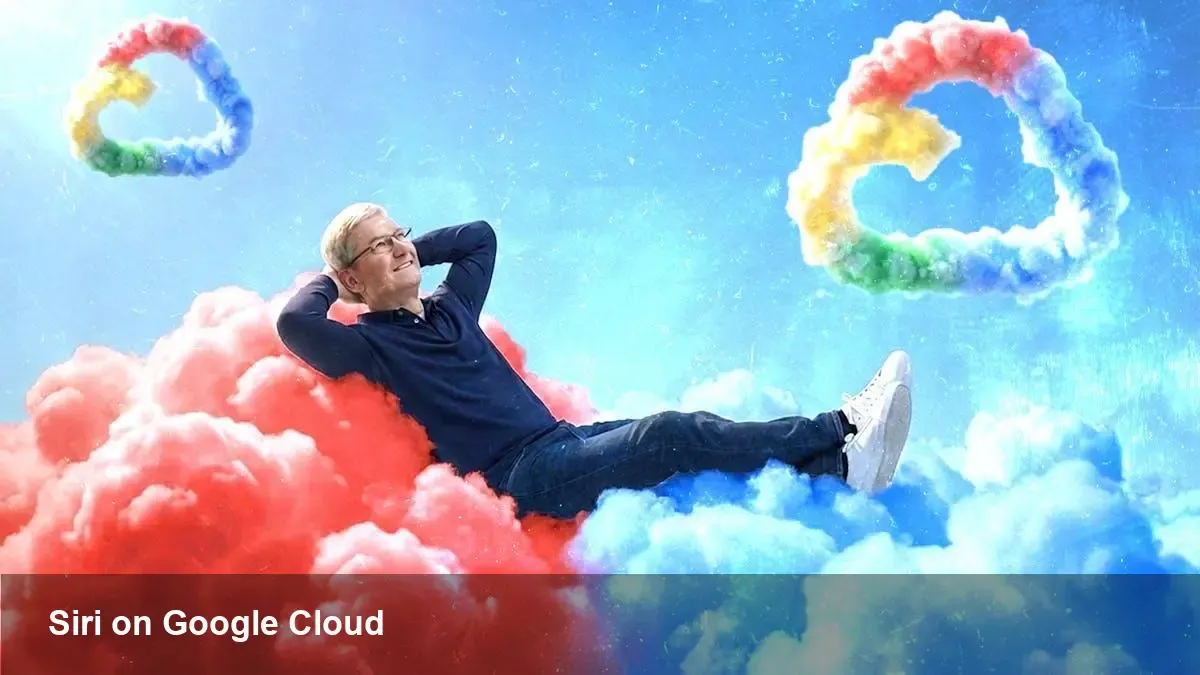
In January 2024 Apple announced a notable shift: it would use Google’s Gemini large language models to power some of Siri’s next-generation capabilities. That signaled a meaningful change in Apple’s long-standing strategy of prioritizing on-device processing. Instead of trying to run every advanced AI feature on iPhones and Macs, Apple is offloading some of the heavy lifting to Google Cloud-hosted models.
For consumers this is mostly invisible: faster, smarter responses from Siri and better generative features across iOS and macOS. For developers, startups and enterprises the move exposes fresh opportunities — and new trade-offs — around latency, privacy, vendor dependence, and product design.
The practical shift: on-device vs. server-held models
Historically, Apple emphasized on-device processing to limit data leaving users’ phones, relying on its silicon (A-series, M-series chips) to run machine learning models locally. On-device models maximize privacy and reduce round-trip latency, but they’re constrained by power, thermals, and model size.
Cloud-hosted models like Gemini remove those limits: developers and Apple can tap models that are far larger and more capable than what current consumer devices can hold. That means better natural language understanding, longer-context conversations, and more complex reasoning inside Siri. But it also means network dependency and the need to route some user data off the device.
Real-world scenarios where cloud hosting helps
- Complex travel planning: Ask Siri to plan a multi-city trip with flights, hotels and timing conflicts. A cloud model can synthesize far more data sources and constraints than an on-device model, returning itineraries, trade-offs and prioritized suggestions in one pass.
- Document summarization for work: Point Siri at a 30-page PDF and ask for a one-paragraph brief. Cloud models can handle long contexts and produce higher-quality summaries and extraction than trimmed local models.
- Accessibility assistants: Real-time audio-to-text and context-aware coaching for users with disabilities often requires massive models that are more accurate when server-hosted.
These are not hypothetical: they’re the kinds of features Apple wants to sell as differentiators for iPhones and Macs.
What this means for developers and integrations
For third-party app developers and SaaS companies, Apple’s move has three immediate implications:
1) New extension points. Apple will likely expose APIs or SDKs to let apps leverage server-side generative capabilities via Siri or system services. That opens ways for apps to request summaries, rephrasing, or complex prompts without packaging models themselves.
2) Design for latency and offline. Features that depend on cloud-hosted models must account for network variability. Developers should implement graceful fallbacks (simpler on-device models or cached responses) to preserve UX when connectivity is poor.
3) Data governance and compliance. If app data can be processed by models hosted by Google, teams must map data flows for GDPR, CCPA, and enterprise compliance. That means updating privacy notices, consent flows, and possibly offering enterprise customers options to keep processing in private environments.
Example workflow: a note-taking app could call a system API that forwards an encrypted blob to a hosted Gemini instance for summarization. The app receives a summarized payload and attaches it to the note, while Apple and Google’s contractual terms dictate retention and access controls.
The business trade-offs: speed, cost, and vendor lock
Using Google Cloud is faster than Apple reinventing server-side infrastructure, but it comes with business implications:
- Cost: Running large models at scale is expensive. Apple will absorb some costs, but if these capabilities expand into third-party apps, it could structure usage quotas or pass costs through to developers or enterprise customers.
- Vendor dependence: Relying on Google for core AI functionality creates dependency on a competitor. That’s manageable short-term, but Apple will likely hedge by investing in internal model research and multi-provider strategies.
- Competitive advantage: Apple gains immediate capability improvements. Competitors who already use server-side models (e.g., Android OEMs, Google Assistant) will have to respond with differentiated features.
Privacy and trust: the subtle balancing act
Apple’s brand hinges on privacy. Moving to cloud-hosted models creates friction with that narrative. Apple can mitigate concerns in three ways:
- Strong encryption and minimal payloads: only send task-relevant data, use ephemeral tokens, and clean logs rapidly.
- Transparency: provide clear indicators when queries are routed off-device and offer user controls to opt out or restrict certain data classes.
- Enterprise controls: allow businesses an option to process data in customer-controlled clouds (hybrid models) or to disable cloud-based features entirely.
From a user perspective, better Siri responses might justify the trade for many people, but privacy-sensitive users and regulated industries will push back or require stronger contractual guarantees.
Limitations and technical caveats
- Latency sensitivity: Voice assistants need low perceived latency. Cloud calls that take hundreds of milliseconds to seconds feel sluggish. Apple will need to optimize edge routing, caching, and partial on-device responses.
- Model hallucination and safety: Larger models are powerful but can produce confident-sounding inaccuracies. Apple must integrate verification layers, retrieval-augmented generation (RAG) techniques, and domain-specific constraints to reduce mistakes.
- Regulatory risk: Antitrust and national security scrutiny can affect cross-company dependencies, particularly given Google and Apple’s dominant positions.
What founders and product leads should consider
If you build consumer or enterprise apps that might benefit from smarter assistant capabilities, start by:
- Mapping which features could be meaningfully improved by server-side models versus lightweight local models.
- Planning for hybrid UX: design flows that work both offline and online with graceful degradation.
- Updating privacy documents and considering enterprise-tier offerings where processing stays in customer-controlled environments.
For startups, this is an opportunity: companies that build complementary tools (e.g., prompt engineering platforms, secure mediation layers, verification and fact-checking services) could see demand as Apple integrates third-party LLM features into its platform.
Looking ahead: three implications for the next 24 months
1) Faster AI adoption in mobile apps: Moving heavy models to the cloud lowers the barrier for apps to include advanced generative features, accelerating the ecosystem.
2) Hybrid architectures will dominate: The most practical solutions blend local lightweight models for latency and basic privacy guarantees with server-hosted large models for deep reasoning.
3) New enterprise offerings and controls: Expect Apple and partners to introduce business-focused controls — explicit data residency, logging rules, and private-cloud options — to win large customers.
Apple’s decision to place some of Siri’s intelligence on Google-hosted models is a pragmatic pivot. It trades aspects of strict on-device purity for immediate capability gains. For users, that means a smarter assistant; for developers, a richer set of system-level primitives; and for businesses, both new opportunities and new governance obligations. The next wave of useful mobile AI will come from balancing cloud power with local sensibility—who designs the handoff well will capture the value.