Waymo Standoff in San Francisco: Why Three Cars Stopped

Key Takeaways:
- Three Waymo driverless vehicles briefly blocked a dead-end street in San Francisco’s South of Market (SoMa) neighborhood.
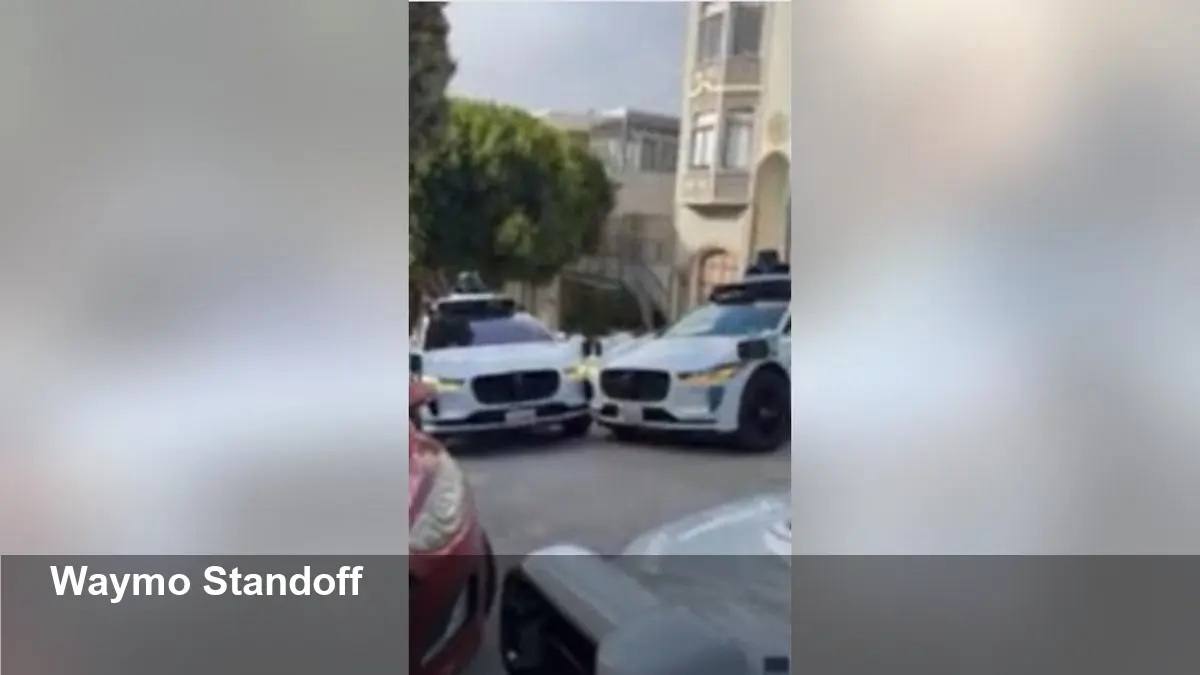
- A TikTok video posted Dec. 6 by @chii_rinna has more than 3 million views showing the incident.
- Waymo says two cars made "minor contact at low speed" during a multi-point turn; the vehicles were unoccupied and the company is investigating.
- Experts call such events "growing pains" as autonomous fleets expand in complex urban settings.
What happened
A short video posted to TikTok by user @chii_rinna captured three Waymo vehicles stopped on a dead-end street on Dec. 6, creating a traffic backup in the South of Market neighborhood. Residents recorded the scene as a man exited his garage and referred to the cluster as a "Waymo standoff."
The clip has drawn millions of views and local attention because all three vehicles are fully driverless Waymo cars operating without occupants.
Video and local reaction
Onlookers in the footage describe the scene as a traffic jam, with one resident saying the vehicles were "stuck" and blocking garage access for several floors. Neighbors told reporters Waymo-related slowdowns and parking issues have been recurring in the area.
Residents also emphasized real-world impacts: when autonomous vehicles block a street, drivers and people with time-sensitive needs can face delays of 10–15 minutes, according to witnesses.
Waymo's response
Waymo issued a statement saying two vehicles made "minor contact at low speed" while performing a multi-point turn on the dead-end street. The company confirmed the cars were unoccupied and that it is "looking into this further." Waymo added: "When we encounter situations like this, we are able to learn from them and make improvements."
Company representatives have also engaged with neighbors and provided follow-up information about the post-incident checks.
Expert perspective
Professor Billy Riggs, an autonomous vehicle expert at San Francisco State University, described such incidents as expected "growing pains" when introducing sophisticated driving software into dense city environments. He noted engineers can update fleet software quickly when edge cases are identified.
Riggs also highlighted a safety trade-off: while AVs may cause occasional inconvenience, they tend to drive in less distracted and more rule-based ways than many human drivers.
Emergency protocols and city response
San Francisco first responders have previously said they adapt incident response for autonomous vehicles and maintain lines of communication with AV companies. Fire officials note companies provide 24-hour contact resources so operators can take control of a vehicle remotely if needed.
Bottom line
The viral SoMa clip underlines public sensitivity to autonomous vehicle behavior in tight urban streets. Waymo calls the event a minor low-speed contact during a maneuver and says it will investigate and apply lessons across its fleet. As driverless cars scale up, experts expect more high-profile, low-harm incidents while systems improve through software updates and operator oversight.