Siri that multi-tasks: Apple tests multi-command voice requests

Why this matters now
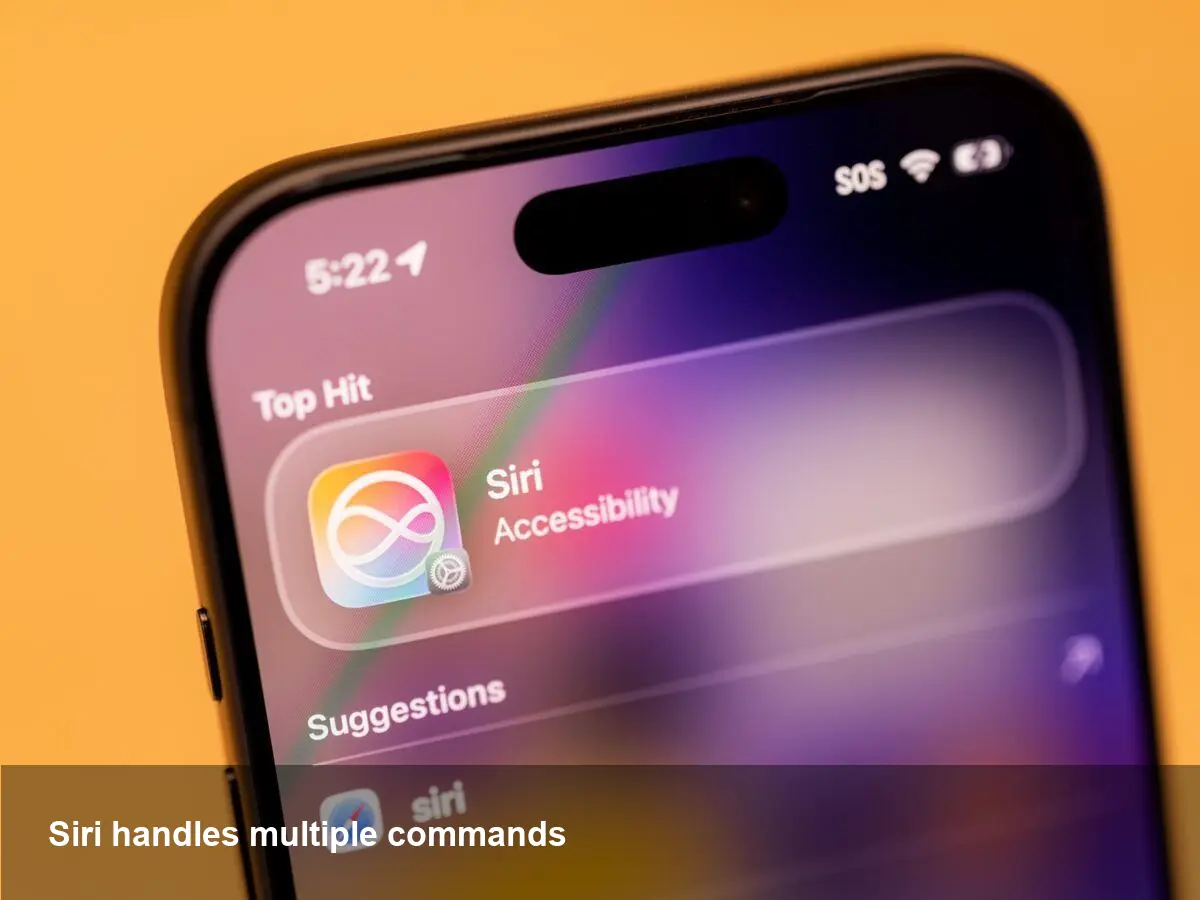
Apple is experimenting with an upgrade to Siri that lets the assistant handle several instructions in a single spoken request. For users and developers this is more than a convenience tweak — it changes how people interact with voice assistants, how apps expose functionality, and how privacy and on-device compute get balanced.
The idea is simple: instead of issuing three separate prompts — “Turn on the living room lights,” “Set a 20-minute timer,” “Remind me to check the oven” — you could say one compound instruction and have Siri execute each piece in order. That seems small, but it shortens workflows and opens up composable actions that can be stitched together across apps.
Quick background on Siri and where it sits today
Siri launched more than a decade ago and has steadily evolved from simple command-response behavior to more context-aware, proactive assistance. Apple has continuously pushed Siri toward deeper integration with iOS, HomeKit, and third-party apps through APIs like SiriKit and Shortcuts. Apple also stresses privacy, often preferring on-device processing via its Neural Engine when possible. This new multi-command behavior builds on those investments: it requires better intent parsing, cross-app coordination, and contextual disambiguation.
How multi-command Siri changes day-to-day use
Here are practical scenarios where the ability to bundle requests into a single utterance makes a real difference:
- Morning routine: “Hey Siri, open the blinds, read my messages, and start brewing coffee.” Rather than firing three separate prompts, Siri understands the sequence and triggers HomeKit, Messages, and a connected smart coffee maker (via HomeKit or a third-party integration).
- Travel prep: “Hey Siri, show my next flight, send my ETA to Jess, and add a note to pack the charger.” That chains together calendar, messaging, and a notes app action with one utterance.
- Cooking and timing: “Hey Siri, set a 20-minute timer, turn on the exhaust fan, and add ‘buy lemons’ to my grocery list.” In the kitchen this reduces friction when hands are busy.
- Workflows for power users: Compound commands can invoke shortcuts or cross-app sequences — for example, “start focus mode, open my daily standup doc, and mute notifications for 30 minutes.” This duplicates what many people already automate with the Shortcuts app, but using natural speech.
Those examples also show where combined commands are immediately useful: hands-free situations, multitasking, accessibility scenarios for users who rely on voice, and quick context switches.
What developers and platform teams need to think about
Allowing multi-part requests affects three development areas:
- Intent design and conflict resolution: Developers will need to expose clearer, composable intents and define priorities when actions overlap. If two apps both handle “play music,” which one takes precedence? Apps should register explicit intent mappings and support fallback behaviors.
- Transaction and error handling: Executing multiple actions atomically or in sequence raises questions: should one failure abort the whole sequence, or should Siri continue and report partial results? Developers must design idempotent intents and descriptive error responses so Siri can surface useful, user-friendly feedback.
- Privacy and data flow: Chaining commands often requires passing discrete pieces of user data across app boundaries (a calendar event, a contact, a location). Apple’s usual privacy constraints mean developers will need to be explicit about what data an intent consumes and whether processing happens on-device or in the cloud.
Business implications and competitive landscape
For Apple, improving Siri’s ability to handle compound requests strengthens the iOS ecosystem. It increases lock-in value for users who want reliable, privacy-aware voice automation across iPhone, iPad, Apple Watch, and HomePod. For businesses, better voice-driven workflows open B2B opportunities: enterprise apps can make routine tasks voice-first (e.g., logistics teams updating delivery status by voice), and consumer services can differentiate through voice integration.
Competitors like Google Assistant and Amazon Alexa have emphasized multi-step routines for a while. Apple’s take will likely be judged on three axes: natural language understanding, integration depth with third-party apps, and privacy. Where Apple can stand out is by combining on-device intelligence with tight hooks into system features (Focus, Wallet, HomeKit) and developer intent frameworks.
Limitations and likely trade-offs
The feature won’t be a silver bullet. Expect these practical limitations early on:
- Ambiguity in long utterances: People often speak colloquially; parsing complex compound sentences reliably is hard.
- Latency and compute: Multi-intent processing could increase CPU and network usage, especially when cloud verification or third-party API calls are involved. Apple may route more to its Neural Engine, but not all intents can run fully on-device.
- Privacy vs. capability trade-offs: Actions that require server-side models or third-party tokens will need careful user consent and UI affordances.
- Developer adoption: If exposing composable intents is too complex, third-party apps will lag and Siri’s power will be limited to first-party or well-integrated apps.
What this means for users and the future of voice
A multi-command Siri is a step toward voice interfaces behaving more like programmable assistants rather than single-command tools. Two broader implications to watch:
- Voice becomes a first-class automation surface: If people can reliably express multi-step workflows naturally, voice will join or even supplant UI-driven automation for many everyday tasks.
- Conversational context expands: Handling sequences requires maintaining state across actions (what “it” refers to, which calendar was meant), pushing Apple to invest more in short-term context windows and memory.
- Platform-level APIs and standards will matter: For cross-app voice chaining to scale, Apple will need robust developer tooling and clear patterns for intent composition and privacy-preserving data sharing.
How to prepare (for users and developers)
Users: start thinking in routines. Try Shortcuts to prototype voice-first workflows; that will give you a sense of what multi-command Siri could do and expose gaps in your connected devices and apps.
Developers: audit your SiriKit/Shortcuts integrations, make intents more granular and composable, and improve error messages so a voice assistant can surface meaningful feedback. Test sequences of actions and define fallback strategies.
Apple’s multi-command experiment nudges voice assistants closer to being true digital butlers — not by replacing screens, but by making spoken language a practical, productive interface for chaining work across devices and services. Whether it becomes a seamless part of daily life depends on both Apple’s NLU improvements and how quickly the developer ecosystem adopts composable intents.