Satya Nadella: Build AI That Amplifies Humans, Not Replaces

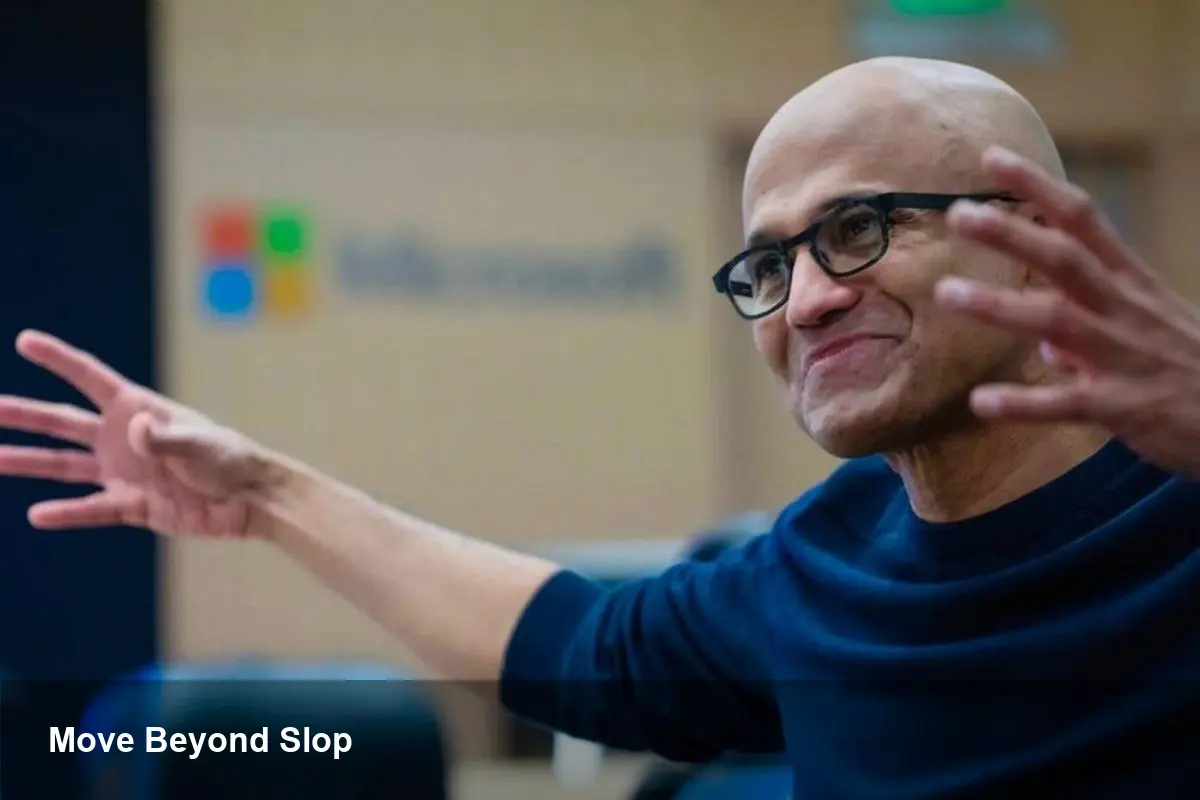
- Key Takeaways:
- Satya Nadella says AI is entering a phase of widespread diffusion and urges a shift from discovery to deployment.
- He outlines three priorities for 2026: design AI as human-amplifying tools, move from standalone models to integrated systems, and make strategic choices about where to apply scarce compute and talent.
- Nadella framed the moment as "the opening miles of a marathon," stressing practical application over model power.
Why Microsoft’s CEO is steering the AI conversation
Microsoft CEO Satya Nadella used a LinkedIn post and a blog entry on "sn scratchpad" to push a practical agenda for AI in 2026. His message aims to reassure customers and investors as Microsoft scales Copilot subscriptions and cloud AI while managing data-center capital costs.
From discovery to diffusion
Nadella writes that "we have moved past the initial phase of discovery and are entering a phase of widespread diffusion." He adds that "we are still in the opening miles of a marathon," emphasizing long-term effort over short-term headlines.
Three priorities for AI to deliver real value
1) Treat AI as a human-amplifying tool
Nadella urges a "theory of mind" that designs products around AI as a lever for people, invoking the spirit of Steve Jobs' idea of computers as "bicycles for the mind." He warns against framing AI solely as a substitute for labor and references Microsoft research on AI’s labor impact to temper job-displacement fears.
2) Move from models to systems
Rather than idolizing the raw power of individual models, Nadella advocates building "rich scaffolds that orchestrate multiple models and agents," with capabilities such as memory, entitlements, and safe tools use. The goal is more reliable, composable agentic systems that work together to solve tasks.
3) Choose where to deploy scarce resources
He stresses that "the choices we make about where we apply our scarce energy, compute, and talent resources will matter," calling for societal and industry-level decisions to focus AI where it produces measurable real-world impact.
Context and implications
Public surveys, like Pew Research, show growing AI interaction—roughly 62% of U.S. adults now say they use AI regularly—yet paid adoption for services such as Microsoft Copilot remains a work in progress. Nadella’s framing is as much strategic communication to customers and investors as it is product philosophy.
What to watch in 2026
Expect Microsoft and other cloud providers to invest in orchestration platforms, agent reliability, and targeted deployments that can demonstrate ROI. The conversation will hinge on practical systems engineering, governance choices, and how businesses convert diffusion into revenue.