Oura's New AI for Women's Reproductive Health

Why this matters
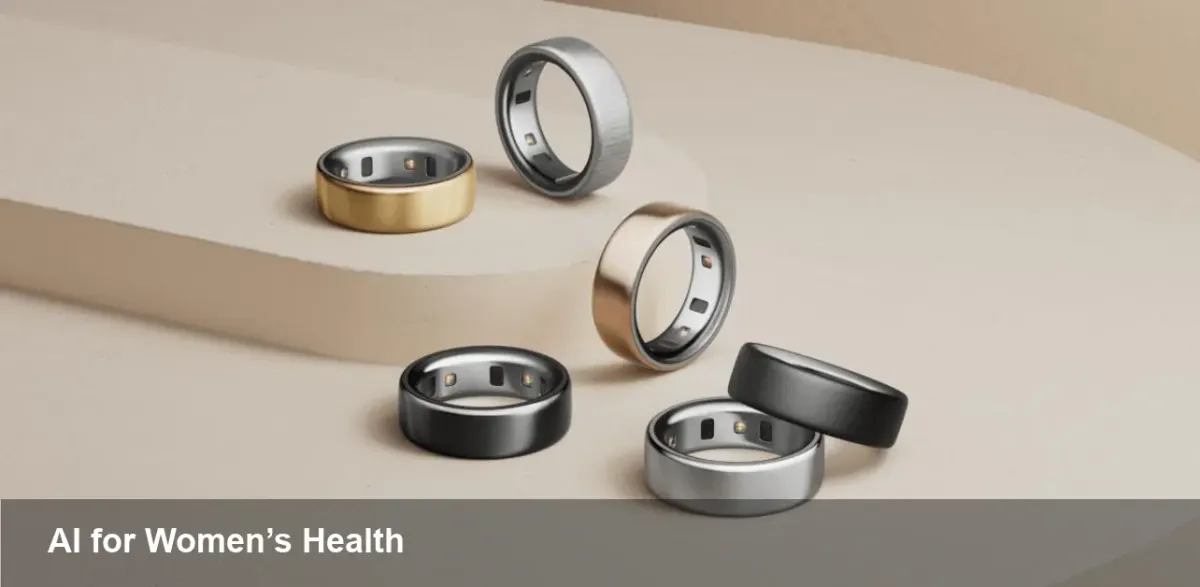
Oura — the company best known for its Oura Ring and readiness and sleep analytics — has introduced a proprietary AI model tailored specifically to women's reproductive health. Unlike generic health chatbots, this model is built to address questions spanning the reproductive life course, from early menstrual cycles through pregnancy, perimenopause and menopause. For users, developers and health-focused businesses, that focus shapes expectations around personalization, data handling and clinical utility.
Quick background on Oura and the technology
Oura started as a consumer wearable company focused on sleep, activity and biometric signals. Its product ecosystem centers on the Oura Ring and a companion app that harvests temperature, heart rate variability, sleep stages and activity data. The company has steadily expanded from sleep metrics to personalized coaching and health insights. Embedding a dedicated AI model for reproductive health is a logical next step: it pairs physiological signals with domain-specific guidance meant to be more relevant than a one-size-fits-all health assistant.
Technically, a domain-specific model means Oura trained or fine-tuned an AI system on reproductive-health topics, user-reported cycles and device sensor data, enabling the model to respond to nuanced questions — for example, how cycle phase might affect sleep or when to consult a clinician about irregular bleeding.
How this will show up for users — practical scenarios
- Symptom triage for cycles: A user tracking irregular cycles can ask how changes in menstrual length might interact with stress, sleep or exercise, and get context-aware suggestions (e.g., monitor a pattern for two more cycles, log symptoms, or contact a provider if heavy bleeding persists).
- Perimenopause support: Someone experiencing night sweats and fragmented sleep can receive tailored strategies (sleep hygiene adjustments, temperature-regulating tips, and when to consider hormone therapy conversations with a clinician).
- Pregnancy and postpartum considerations: The model can surface relevant sleep and readiness expectations, help spot warning signs that require medical attention, and suggest ways to conserve energy while maintaining wellbeing.
- Family planning and cycle insights: For users trying to conceive or avoid pregnancy, the model can clarify how biometrics and cycle data influence fertility signals and when to supplement tracking with ovulation kits or consult a specialist.
Concrete example: A 38-year-old Oura user notes shorter sleep and more nighttime waking. She asks the model whether perimenopause could be the cause. The AI evaluates her age, recent temperature shifts, sleep data and logged symptoms and offers a probabilistic explanation, a short plan to track trends, and guidance on when to seek medical evaluation.
For developers and product managers: integration thinking
- API and interoperability: If Oura exposes endpoints for the model (or a hosted assistant inside the app), developers can embed reproductive-health-aware responses into telehealth platforms, workplace wellness programs or personalized coaching apps. That provides a new data-rich layer of context but requires strict consent flows.
- Personalization vs. generalization: Teams must decide how much the model personalizes versus when it should default to conservative, general health advice. That boundary is critical for safety and liability.
- UX design: Presenting probabilistic answers and uncertainty is essential. Good UX will surface what data the model used (e.g., temperature trend, cycle history) and offer action steps rather than absolute diagnoses.
Business value and competitive positioning
For Oura, the model deepens product differentiation. Many wearables offer cycle tracking or general health tips; a proprietary AI focused on the reproductive lifecycle can make the app stickier, drive subscription upgrades and open partnerships with providers and employers. It also positions Oura as a player in women’s digital health, an area that has historically had gaps in data and tailored tools.
However, there’s also a strategic cost: domain-specific models demand ongoing maintenance, medical review, and investment in clinical validation to sustain credibility.
Privacy, bias and clinical validation — what to watch for
- Data privacy: Reproductive health is highly sensitive. Users must have clear consent controls, easy ways to opt out, and transparency about how their cycle and biometric information are stored, processed and shared.
- Clinical oversight: AI that gives health-adjacent guidance should be reviewed by clinicians and clearly labeled as informational, not diagnostic. For higher-risk signals (e.g., signs of preeclampsia or severe bleeding), the model needs conservative triage rules to prompt urgent medical care.
- Bias and representativeness: Reproductive health varies widely across ages, ethnicities and socioeconomic backgrounds. If model training data skew towards particular populations, recommendations may be less accurate for underrepresented groups. Oura will need to invest in diverse datasets and external validation.
Limitations users should keep in mind
An app-based AI can augment self-awareness but cannot replace clinical evaluation. Expect the model to be strongest at pattern recognition and education — and limited when it comes to definitive diagnosis or treatment decisions. Users should treat the AI’s output as guidance and use it to prepare better questions for clinicians, rather than a final answer.
What this means for the future of wearables and women’s health
- More embedded domain models: Expect other wearable makers and health apps to build or partner for domain-specific AI (sleep, cardiometabolic, or maternal health), making devices more context-aware.
- Closer ties between devices and care: With richer, model-driven insights, wearables are likelier to feed into telemedicine workflows and pre-visit triage, enhancing the continuity of care.
- Regulatory attention: As AI becomes more prescriptive in health contexts, regulators will put pressure on transparency, validation and labeling. Companies that prioritize clinical partnerships and clear governance will gain trust.
If you use Oura, treat this new capability as an advanced advisor: it can surface patterns and practical next steps, but it’s most useful when combined with your clinician’s judgment. For product teams and startups, the move highlights how focused AI — not just bigger models — is becoming a competitive engine in digital health.