Nvidia Launches DLSS 4.5 Transformer, DMFG in 2026

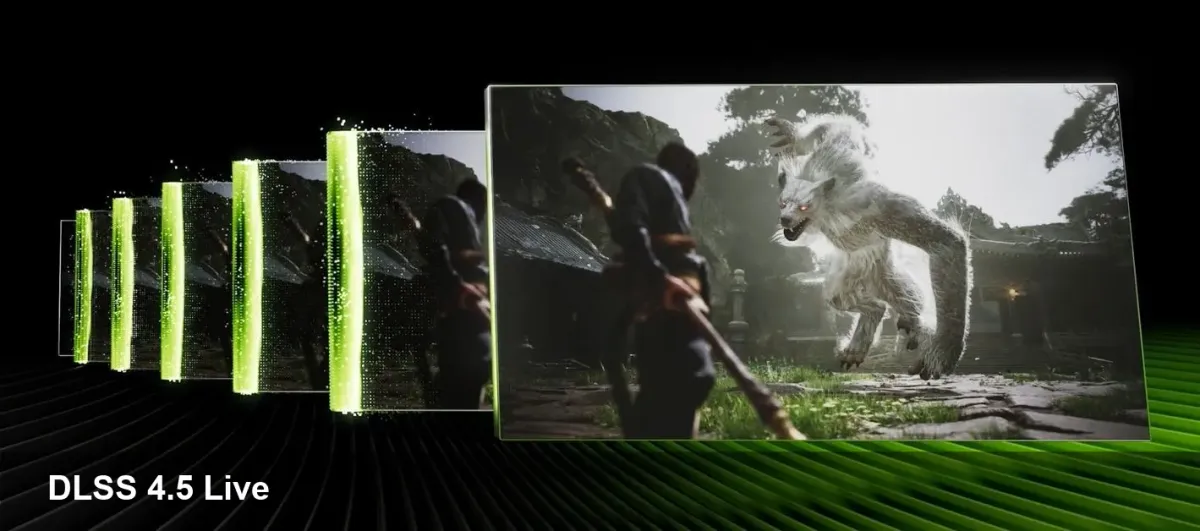
- DLSS 4.5’s second‑generation transformer model is available now for all RTX GPUs via the Nvidia App.
- Dynamic Multi‑Frame Generation (DMFG) — a Blackwell GPU exclusive — is slated for Spring 2026 and expands frame‑generation capabilities.
- Two transformer profiles (Model M and Model L) are included now; Nvidia says DLSS 4.5 uses more compute and leverages FP8 on Ada/Blackwell.
- Performance cost on older RTX cards remains unclear; Nvidia promises better frame‑pacing and image stability.
What Nvidia announced
Nvidia used its GeForce On presentation at CES to introduce DLSS 4.5, an update that spans two parts of its image‑reconstruction stack: a new transformer model available immediately and a more ambitious frame‑generation system arriving next spring as a Blackwell‑only feature.
Transformer model: available now
The second‑generation DLSS transformer model is live and can be enabled in DLSS 4‑compatible games through the Nvidia App. Nvidia ships two presets: "Model M" for general use and "Model L" for aggressive 4K ultra‑performance upscaling.
Company representatives say the updated transformer uses roughly five times the compute of the original 1.0 transformer and benefits from hardware FP8 support on Ada Lovelace and Blackwell GPUs for faster inference. Early demos highlight reduced ghosting, improved anti‑aliasing, and better handling of fine particles and dynamic lighting.
Dynamic Multi‑Frame Generation (DMFG): Blackwell exclusive
DLSS 4.5 also introduces Dynamic Multi‑Frame Generation, which Nvidia says will be exclusive to Blackwell‑class GPUs and arrive in Spring 2026. DMFG dynamically balances rendered and generated frames based on a user‑set target framerate and aims to improve frame‑pacing compared with earlier MFG systems.
Nvidia showed DMFG prototypes that increase the maximum frame‑generation multiplier and demonstrated up to five generated frames per source frame in some materials — surpassing DLSS 4’s three‑frame approach — while also advertising a higher theoretical generation cap in other modes.
How DMFG adapts and why it matters
DMFG’s “dynamic” behavior monitors the GPU’s ability to produce native frames and leans on frame generation when source frames dip. Nvidia claims this yields smoother frame‑time cadence and better visual stability, but full evaluation will require third‑party testing once the feature ships.
Performance, compatibility and caveats
Nvidia hasn’t published definitive performance costs for DLSS 4.5’s transformer on older RTX 20/30 series cards. Prior transformer models imposed a measurable penalty versus older CNN‑based DLSS, so users should expect varying impact depending on GPU and game.
FP8 support in Ada and Blackwell should accelerate the new transformer on newer hardware, but Blackwell GPUs will remain the only cards to receive DMFG when it launches.
Other highlights from the presentation
Nvidia also mentioned updates to Pulsar‑compatible monitors, RTX Remix Logic for richer mod effects, Nvidia ACE AI advisors in experimental game betas, and a Neural Texture Compression SDK update promising 20–40% inference gains for developers.
What to watch next
Expect hands‑on benchmarks and in‑game tests after DLSS 4.5 adoption grows. Key questions: how much runtime cost the new transformer imposes on older RTX cards, how well DMFG balances latency vs. smoothness, and which titles adopt the new models first.