Inside Bluesky’s New AI App and Why It Matters

A fresh play: Bluesky goes AI
Bluesky — the decentralized social project that grew out of Twitter's research efforts and now runs on the AT Protocol — has quietly added an AI-first consumer app to its lineup. The move ties together two of the biggest trends in social media: decentralized identity and feed control, and generative AI-powered experiences.
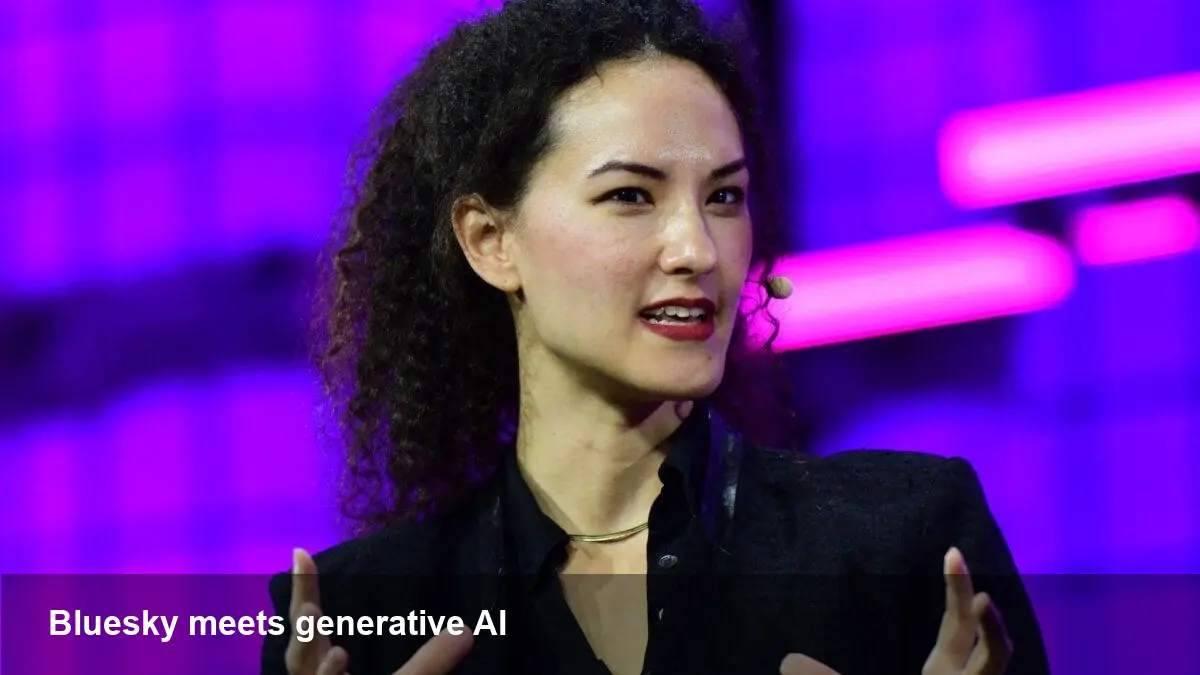
It’s worth noting that Jay Graber, who led Bluesky through its early public momentum, is no longer serving as CEO. That hasn’t stopped the team (and founders and builders connected with the project) from experimenting with new products that push on community moderation, content creation, and on-platform assistants.
What this new app is trying to do
At a high level, the app centers on bringing generative AI directly into conversations, discovery, and moderation flows on a network that emphasizes user control. That shows up in three practical ways:
- AI-assisted posting: drafts, thread summaries, and idea expansion tools to help creators and casual users write faster and cleaner posts.
- Conversational agents: chat-like interfaces that can answer questions, summarize long threads, or take actions like flagging content for review.
- Moderation and tagging helpers: AI that proposes labels, rationale, and provenance metadata for content — useful for moderators on federated instances that lack centralized teams.
These features are less about replacing human moderation or community rules and more about scaling and augmenting them. The app's design recognizes that on a federated or decentralized platform, community moderators often need tools rather than top-down enforcement.
Real-world scenarios
Here are concrete ways people and companies might use the app today:
- Independent creator: An author uses the AI-assisted drafting tool to expand a tweet-sized idea into a multi-part thread, generates image prompts, and gets suggested hashtags — then posts directly to their Bluesky identity.
- Community moderator: A volunteer moderation team receives AI-suggested labels and a short rationale for borderline posts. The suggestions speed triage and reduce moderator burnout while preserving human final decisions.
- Brand/social team: A small marketing team monitors mentions across federated instances. The AI app highlights emerging complaint clusters, suggests templated responses, and routes tricky issues to a human.
- Developer/experimenter: A startup plugs into the AT Protocol and builds a small bot that leverages the app’s assistant layer to summarize long technical discussions for newcomers.
These scenarios underline how an AI layer can both amplify productive behaviors (content creation, curation) and help contain harm (faster triage, clearer signals for moderation).
For developers: new integration points and responsibilities
Bluesky’s architecture and the AT Protocol change the calculus for how developers build social apps. If you’re a developer considering integrations or extensions, here are the practical things to keep in mind:
- Decentralized identity: Your integrations will need to work across federated instances — account resolution and identity flows are different from a single centralized API.
- Data costs and latency: Generative AI features are compute-hungry. Design for batching, progressive enhancement, and clear fallbacks so the UI remains useful when models are slow or rate-limited.
- Safety signals: Models will make mistakes. Surface provenance, confidence scores, and human-review hooks. Make moderation an explicit first-class feature of your UI/UX.
A concrete developer workflow could look like this: listen to AT Protocol events for new posts, pass content to a hosted model for summarization/labeling, display suggestion cards in the app, and expose an API endpoint for moderators to accept, reject, or refine AI recommendations.
Business value and monetization opportunities
Why should startups and brands care? Layering AI into a decentralized social stack opens new value paths:
- Differentiated user experience: AI tools that reduce friction in posting and discovery can increase engagement and time spent.
- New premium features: Advanced writing assistants, private moderation dashboards, or team collaboration tools are easy candidates for subscriptions.
- Enterprise monitoring: Brands can offer moderation-as-a-service to organizations that need to monitor federated networks without hiring large in-house teams.
That said, short-term costs (model inference, storage) and long-term trust issues (who controls the model and training data?) need solutions for these business models to be sustainable.
Limitations and risks you should weigh
The integration of generative AI with decentralized social media isn’t without trade-offs:
- Hallucinations: Generative models can invent facts. In a moderation or customer-support context, that’s dangerous unless there are strict verification and human oversight steps.
- Privacy and data flow: Passing user content to third-party models raises questions about consent, data retention, and compliance — particularly in federated networks where data ownership can vary by instance.
- Moderation complexity: Decentralization distributes authority. AI suggestions don’t resolve policy disagreements between different communities — they only speed the mechanics of enforcement.
Any team building on top of this app or similar architectures should bake in audit logging, opt-in model usage, and clear user consent flows.
Three implications to watch
1) Decentralized networks plus AI will alter whose rules matter. Tools will empower local communities to set and enforce policies faster, but they’ll also make it easier for actors to automate rule-gaming.
2) Monetization will bifurcate: consumer-facing convenience features vs. enterprise moderation and monitoring services. Businesses that can package reliability, provenance, and compliance will capture higher value.
3) Regulatory attention will follow. When AI-generated content mixes with a decentralized social graph, policymakers will demand clearer accountability — for platforms, model operators, or instance admins.
Where to start if you want to try it
If you’re a creator: experiment with AI-assisted drafts but verify facts and keep visible provenance. If you’re a developer: prototype a simple moderation assistant that annotates posts with confidence scores and human-review links. For brands: run a small pilot to measure how AI reduces triage time and scales monitoring.
Bluesky’s move to put generative intelligence into a decentralized social setting is an important experiment. It won’t answer every question today, but it shows a pathway where AI augments community governance, content creation, and discovery in a network that resists single-company control.