Google Translate brings live headphone translations to iOS

What changed
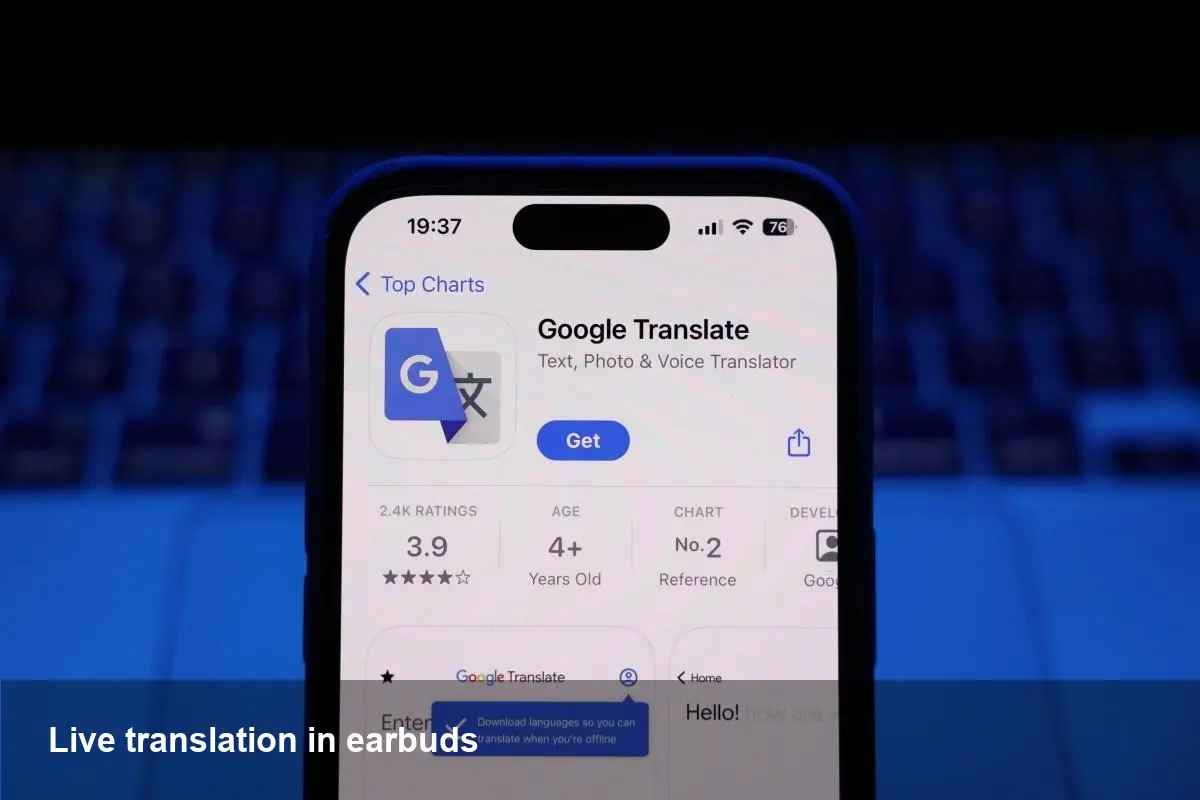
Google has broadened the reach of Google Translate’s real-time headphone translations, bringing the capability to iOS users and making it available in additional countries. The feature delivers live, on-the-fly translations through paired headphones while retaining each speaker’s tone, emphasis and cadence so conversations feel more natural.
This isn’t just a literal voice-to-text feed: Google is trying to preserve the rhythm and personality of speech so listeners can follow who is speaking and how something is said—not only what’s said.
Quick background: where this feature comes from
Google Translate has long been a go-to for quick text and camera translations. Over the past few years the app expanded into voice-first experiences: conversation mode for bilingual chats, camera translation for menus and signs, and hardware integrations such as Pixel Buds using low-latency audio translation.
The headphone translation experience grew out of that work. Early implementations focused on Android and Google’s own Pixel Buds, where tightly integrated firmware, OS hooks and on-device models reduced latency and preserved privacy. Expanding to iOS and to more regions means Google has adapted the feature to work across broader hardware and network conditions.
How real-time headphone translations actually feel and where they help
Imagine standing in a busy market and listening through your earbuds while a shopkeeper speaks another language. Instead of receiving a robotic monotone, you hear the shopkeeper’s sentence in your language with a cadence and emphasis that matches their delivery. That small preservation of prosody makes it easier to parse meaning, detect sarcasm or urgency, and keep track of who’s saying what in multi-person conversations.
Practical use cases:
- Travel: negotiations, directions and spontaneous conversations at transit hubs become more manageable when translations arrive with natural pacing.
- In-person business meetings: mixed-language stand-ups or client pitches can run smoother when attendees hear immediate translations rather than waiting for typed transcripts.
- Customer service and retail: staff can use headphones to assist customers in other languages without pulling out a bulky interpreter device.
- Field operations and emergency response: first responders working with multilingual communities can get faster contextual cues that matter for triage or directions.
How you (or your team) will typically use it
The exact UI will differ by platform and headphone model, but the user flow is straightforward:
- Pair a compatible Bluetooth headset or Pixel Buds to your phone.
- Open the Google Translate app and select conversation or live translation mode.
- Choose source and target languages.
- Position the phone to capture the other speaker (or rely on the headset mic) and listen through the earbuds.
Because the goal is low latency, Google may perform some processing locally on-device and offload heavier steps to cloud services depending on language, model availability and network quality.
Developer and business implications
If you run a startup, a call center, or a travel-focused product, this shift matters beyond casual travelers:
- Customer experience expectation: Users will increasingly expect immediate, in-ear translation as part of mobile experiences. If your product serves multilingual users (hospitality, transport, retail), plan for in-line translation features or smooth handoffs to human interpreters.
- Integration options: Google’s Cloud Translation and Speech-to-Text APIs already let developers build custom streaming translation pipelines. For companies that need branded or domain-specific translations, combining speech recognition with a controlled translation model lets you tune phrasing for industry jargon.
- Accessibility and differentiation: Embedding real-time translation into accessibility menus for events or physical spaces (museums, conferences) can make offerings genuinely inclusive and help you stand out.
Privacy, latency and quality trade-offs
Real-time translation requires balancing three technical realities:
- Latency: Listening through headphones demands near-instant results. On-device inferencing reduces round-trip time but requires capable chips and compact models.
- Privacy: Cloud-based translation can be more accurate for some languages but raises data residency and privacy questions. On-device processing keeps audio local but can limit language support.
- Quality vs. naturalness: Preserving prosody and speaker identity means synthesis pipelines that copy cadence and stress patterns; that can make translations feel more human but occasionally increases the risk of misrepresenting tone if the underlying transcription is wrong.
For businesses, this means any deployment should clarify where audio is processed, how long data is retained, and offer opt-outs for users who prefer cloud-only or local-only modes.
Tips to get better results today
- Use a quiet input source: Headset mics vary; move the mic closer to the speaker when possible.
- Prefer supported combos: Pixel Buds and Google’s Android stack often provide the lowest latency and highest accuracy; iOS will work but may vary by device.
- Keep expectations realistic: While prosody-aware translations feel more natural, they’re not a replacement for professional interpreters in legal, medical or high-stakes negotiations.
Where this trend is heading
- On-device models will improve: Expect more languages and higher-quality local inference as mobile chips and compact neural models get better.
- Hybrid interpreter workflows: Tools will combine fast AI translations for immediate comprehension and human interpreters for record-keeping, nuance and liability-critical conversations.
- New UX patterns: We’ll see apps design around “audio-first” workflows—microphone permissions, earbud-aware UIs, and contextual language switching—rather than forcing typed input.
For product teams and developers, the opportunity is to build features that use real-time translation as a baseline capability—then layer domain knowledge, moderation and human review where accuracy matters.
If you travel, run a multilingual business, or build customer-facing apps, this expansion of Google Translate to iOS and more countries lowers the barrier to natural, real-time cross-language conversation. Try it in a low-stakes setting first, and think about how a hybrid model (AI + human) could improve outcomes for complex interactions.