Gemini Preview Reveals How Apple’s New Siri Will Work

- Key takeaways: Gemini Personal Intelligence shows how a Gemini-powered Siri could access Mail, Calendar, Photos and more to personalize answers.
- Google’s feature is opt-in, cites data sources for transparency, and gives users a way to correct or remove personalization.
- Apple’s implementation is expected to use on-device processing and iCloud/Private Cloud Compute, limiting data to Apple’s ecosystem.
- The preview highlights both convenience (context-aware answers) and the need to manage hallucination and privacy risks.
What Gemini Personal Intelligence does
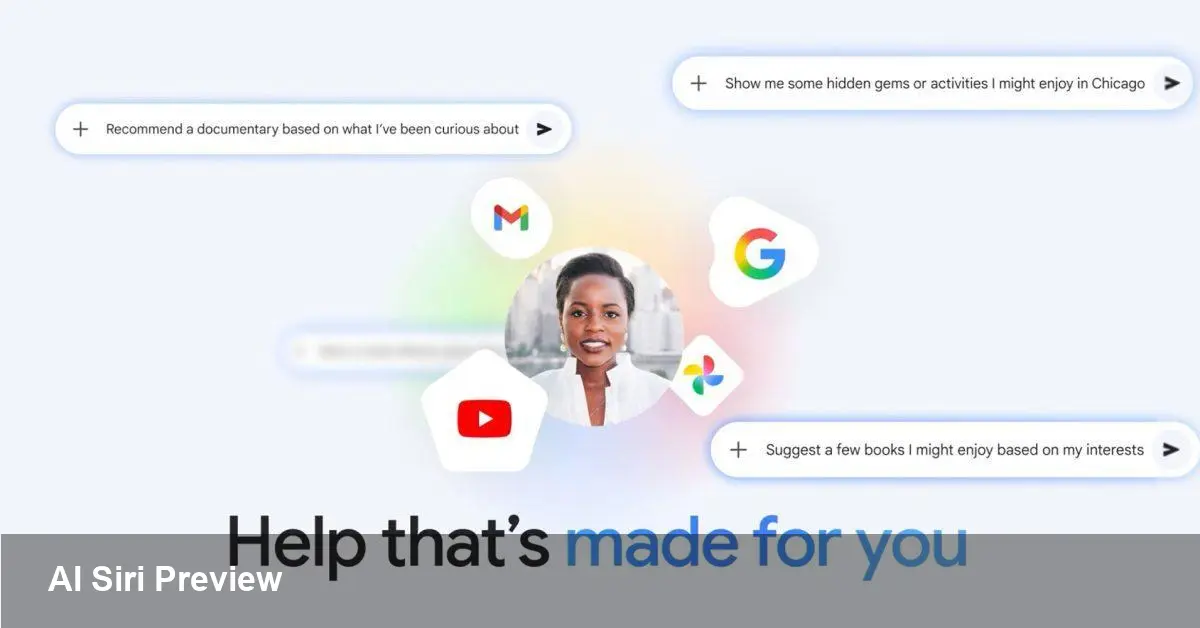
Google’s new Personal Intelligence beta demonstrates how a large language model can combine data from multiple apps to generate context-aware responses.
Gemini draws on Gmail, Calendar, Drive, Photos, YouTube history and Google Search activity to tailor answers and cite which sources it used.
Real-world example from Google
Gemini lead Josh Woodward described a practical test: while getting new tires, Gemini suggested tire options based on family road trips found in Google Photos and pulled ratings and prices.
He also said Gemini retrieved a license plate number from a photo and identified vehicle trim from Gmail without leaving the conversation: “Just like that, we were set.”
Why this matters for Siri
Apple confirmed many upcoming Siri features will be powered by Google’s Gemini models, so the Personal Intelligence demo acts as a working preview for Siri’s new capabilities.
On Apple devices the same pattern is expected: Siri will reference Mail, Calendar, Photos, Notes and other Apple apps and—depending on implementation—run on-device or via Apple’s Private Cloud Compute.
Addressing hallucinations and transparency
Google says Personal Intelligence will try to show the assumptions and sources behind each answer so users can verify details.
If an answer seems wrong, users can correct the assistant on the spot or ask for a non-personalized response, helping to reduce the risk of AI hallucinations when personal data is involved.
Privacy and user control
Personal Intelligence is opt-in and lets users choose which apps to connect. Google emphasizes data stays within its ecosystem, and Apple’s version will similarly draw only from data stored in iCloud and Apple apps.
That model aims to balance convenience and privacy, but it will still require clear controls and auditability to reassure users.
Bottom line
Gemini’s Personal Intelligence gives a concrete look at what a Gemini-backed Siri might offer: deeply personalized, context-aware help that cites sources and gives users control. The upside is significant convenience; the challenge will be maintaining accuracy and privacy as these assistants access ever more personal data.