Apple Picks Kingmaker Role Between Google and OpenAI

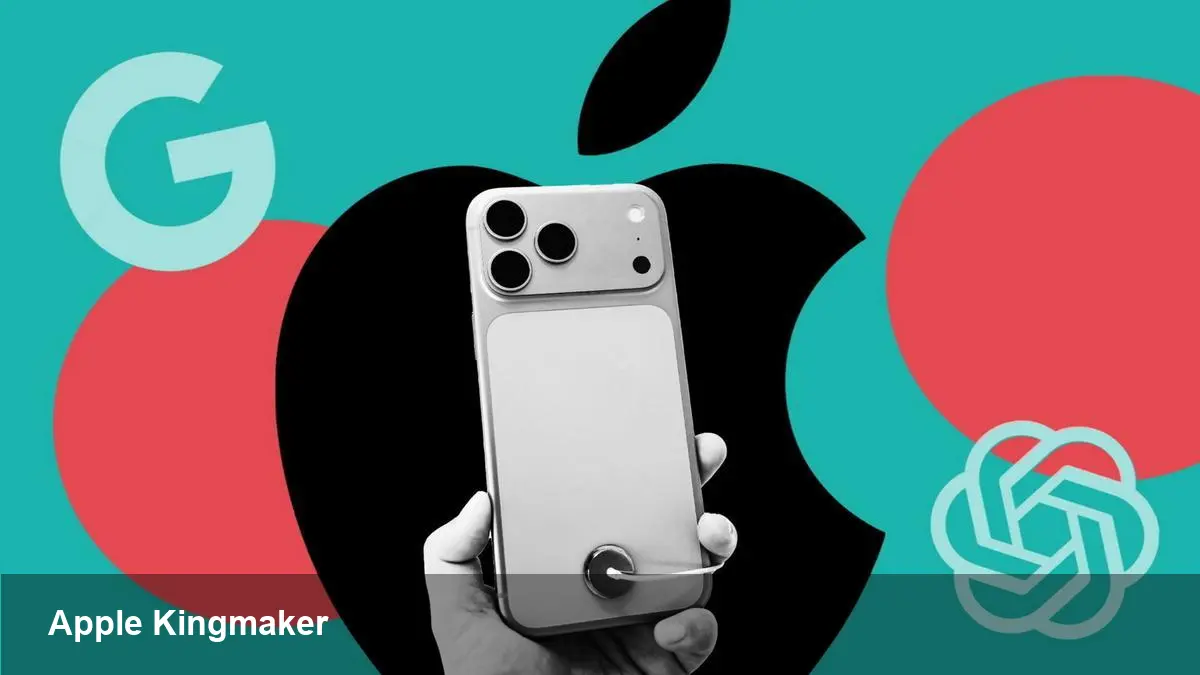
- Apple is avoiding an open AI arms race and prioritizing on‑device intelligence and privacy.
- Rather than racing to release large foundational models, Apple is positioning its platform to select which AI services get deep integration.
- Control of Siri, Safari, Spotlight and the App Store gives Apple leverage to shape how Google and OpenAI reach iPhone and Mac users.
- That strategy shifts the battleground from raw model performance to platform partnerships, privacy standards and distribution.
Apple’s cautious AI strategy
Apple has publicly emphasised privacy and tight hardware‑software integration as the foundation of its AI direction. At WWDC 2024 the company introduced expanded generative features branded around device intelligence, underlining on‑device processing where possible.
Rather than competing in a headline‑driven “arms race” to announce ever‑larger models, Apple appears to be investing in incremental, integrated experiences that run efficiently on Apple Silicon and respect user data policies.
Why Apple is not racing
Apple’s business model depends on hardware margins and ecosystem trust. Rapidly shipping large, cloud‑only foundation models would expose the company to new privacy, safety and regulatory risks.
Executives and analysts say Apple favours control over scale: tighter quality checks, privacy guarantees and closer integration with iOS and macOS apps rather than publishing a standalone large language model for public use.
Playing kingmaker: platform control as power
Even without its own public model, Apple can influence competition by deciding which AI services it embeds into core experiences. Siri, Spotlight, Safari and default search settings are distribution levers that can steer billions of interactions.
Deep OS‑level integrations, SDK access and App Store policies determine how smoothly third‑party AI like Google’s or OpenAI’s offerings run for end users. Granting prioritized APIs or native hooks effectively rewards partners that meet Apple’s privacy and performance bars.
What this means for Google and OpenAI
Google and OpenAI still compete on model capability, but Apple’s gatekeeping narrows the path to users. To secure privileged access or integrations they may need to adapt to Apple’s privacy constraints and integration requirements.
That favors companies able to offer configurable, privacy‑respecting deployments or those willing to meet platform engineering demands.
Implications for users and regulators
For users, Apple’s approach promises cohesive, privacy‑forward experiences but could limit choice if only selected providers get deep integration. Regulators will watch whether platform decisions distort competition or favor incumbents.
Apple’s strategy reframes the AI contest: raw model power remains important, but the near‑term winner may be the company that wins distribution and trust on the world’s most valuable consumer platform.